April Birth Flower: The Daisy-The most commonly picked flower by slaves?

Welcome to the fourth month in the calendar… Another birth flower has arrived.  With springtime everywhere, we are introducing the flower of the month of April (and for those of you who have been following us, this is no April Fool’s joke) – The flower of the month is the common daisy.  Read on!


The Everyday Daisy - April's Flower of the Month


Daisies belong to the Asteraceae plant family.   The Asteraceae family dates back fifty million years and includes over twenty thousand varieties. The family name derives from the Greek Aster, meaning a star shape.  The name daisy derives from the phrase Day’s Eye.  It’s a reference to the English daisies routine of closing their petals at night and opening again at daylight.  The Daisy’s meaning is said to be purity and innocence.  However, to Roman soldiers it often meant the difference between life and death.  The English daisy was widely used by the Romans for its astringent properties. Roman armies would have their slaves pick daisies incessantly in order to extract the juice.  Bandages were soaked in this juice and would help bind battle wounds.  Today the phrase just out picking daisies is not in reference to some forced labor but rather to depict a relaxing free time experience.  The term pushing daisies refers to the wild flowers that would sprout in the mound of dirt covering a fresh grave and signifies death.

English daisies have white, off-white, or sometimes slightly pink star-spread petals and a yellow center, with green stems and leaves.  Many varieties of daisies are clearly identifiable members of the daisy family with the typical English daisy appearance, such as the Shasta Daisy or Chrysanthemum.   Others like the popular Gerbera daisy (African daisy) have some of the identifiable traits such as central florets.  You can find its flowers in yellow, orange, pink, peach and red; they are prized for their large heads, long outer petals and intense colors. Dahlias, however, have the star-shaped petals without central florets.   Other varieties of daisies aren’t even flowers but edible plants such as artichokes.

Just a few thoughts  and  words about our sponsor… Blooming Thoughts is the blogging arm of Starbright Floral Design.  We are located in New York City in the heart of Manhattan in the heart of the Historic Flower District.  The wholesale florists on our block open at about 5am.  Give us a call and if you are up early, we will be happy  to give  you a walking tour of the flower district.  It is a great place to catch the scents and colors of the season.  I always tell people to walk our block at least four times a year so that they can enjoy and appreciate the seasons.

If you are not up that early, you can find us online at www.starflor.com or by stopping by and visiting us anytime before 8PM (seven days).  We are located at 150 West 28th Street in Studio 201.  Or you can give us a call at 800.520.8999.  We would love to hear from you!

The Official Florist

News Press Release

Starbright Floral Design Kicks Off the “Pearl Rose”.   The Most Significant Product Launch since the advent of air travel and genetic engineered plants.

NEW YORK — March 31, 2011At a press conference at Starbright headquarters in the heart of New York City’s historic flower district,  Nic Faitos , Starbright’s Managing Partner,  in association with the Dutch Flower Marketing Association (an industry group whose mission is to promote flower buying throughout the world), announced the availability of the “Pearl Rose”.  A new rose varietal conceived by creative minds and designed through many years of collaboration between the finest botanists in the world with Dr. Aprilia Anoitou as the lead scientist.

Today’s announcement that the “Pearl Rose” is available to retail customers of Starbright and volume licensing customers marks the beginning of the most significant product launch in our company’s history and perhaps since Barbara McClintock’s discovery of “Jumping Genes”.  The “Pearl Rose” will be available to retail customers effective immediately.  Availability to NYC organizations with volume license agreements will begin shortly as well.  However, initial supplies are limited to retail customers.  Volume customers will be supplied for orders FOB New York City for delivery before Mother’s Day and beyond.

Through chromosome engineering and radiation mutation, more fully discussed in the science section herein, Greece’s premier botanist Dr. Aprilia Anoitou was able to develop a rose with mollusk traits.  The result is the growth of a white pearl within the pedals of a red rose.  Different varieties of roses have yielded different levels of pearl quality.  Currently the Pearl Rose is limited to the Darling Flame variety of rose.  Accordingly, the price of the Pearl Rose is for upscale clientele.

Customer feedback through Starbright’s web site, starflor.com , guided product development.  “This is a game changing product,” Faitos said.  “It’s an incredible step forward in the floral industry with ramifications that are yet unknown but undoubtedly far reaching.  Accordingly, in a press release under separate cover, we’ve announced the formation of a joint venture between Starbright and The Dutch Flower Marketing Association to fully explore the wide ranging uses of this exciting innovation.” Said Faitos.

First Users See Clear Business Value

Joining Faitos at Starbright’s headquarters was Poisson D’Avril, the president of the Hospitality and Tourism Association of Greater New York.

“In the highly competitive and fast-moving hospitality industry, our advantage comes first from our people and second from everything NYC has to offer.  You can add the Pearl Rose to the list of incomparable NYC attractions.” Said D’Avril.  “Nic has allowed several of our higher end venues offer the Pearl Rose prior to its official release.  The response has been extraordinary.  Finally, something to give to that person who has everything!”

Original Science

“The ovules of a rose are megasporangia and typically develop into female gametophytes.  These gametophytes give rise to egg cells which, in a typical rose holds the pollen.”  Said Dr. Aprilia Anoitou.  “In the transgenic rose, called the Pearl Rose, through chromosome engineering and radiation mutation, our team was able to develop a rose that behaves like a typical mollusk.  The mature egg cells are split through chemical mutagens. The mature egg cells from radiated mollusks are combined with rose egg mutations through protoplast fusion.  The genetic recombination leads the rose to secrete nacre similar to that emitted by mollusks.  “  Dr. Aprilia Anoitou said.  Transcripts of Dr. Anoitou’s full procedures are available by request to Pearlrosepress@starflor.com.

On the Road to the Future

“During the last decade, Starbright has built an impeccable reputation in the floral industry with unsurpassed customer service.” Faitos said. “Although we have been at the forefront of technology, the new product announced today is the most innovative product we’ve ever been involved with, and I believe it signals the beginning of a new wave of innovation that will have a profound impact during the next decade.” Said Nic Faitos, President of Starbright Floral Design.

Located in the heart of NYC’s flower district and founded in 1994, Starbright Floral Design has established the gold standard for customer service within the floral industry.  The Company has grown steadily every year since its inception.  The Pearl Rose and other innovative products being worked on currently, has Starbright on the threshold of exponential growth for the coming years.

Web links, telephone numbers and titles were correct at time of publication, but may since have changed. For additional assistance or information, journalists and analysts may contact pearlrosepress@starflor.com.  To become a volume licensee, kindly contact pearlrosedealers@starflor.com.  Visit us on the web at starflor.com.


Pre-Press Conference Release

A major announcement will be made by Starbright Floral Design at 7PM today.  The event will be covered by industry and fashion editors.  Press coverage  will be extensive.

Starbright Floral Design has funded horticultural research in varietal roses.  These varieties will be introduced at the press conference  and will be posted on this blog as a press release immediately afterwards.  Stay tuned for more details.

Roses will be available to our retail clients by tomorrow for purchase and to volume buyers for pre-Mother’s Day ordering.

Hope you  visit back late this evening for the exciting news….

These thoughts are brought to you by The Official Florist.

The Official Florist is the blogging arm of Starbright Floral Design.  We are a full-service corporate and retail florist located in the heart of New York City’s Historic Flower District located at 150 West 28th Street (Studio 201).  To learn more about our organization and about the type of work that we do, please visit our website at www.starflor.com.

You may also order a gift by visiting our e-portal at www.starbrightnyc.com. Starbright is open seven days a week and we deliver flowers and other gifts in Manhattan and worldwide.  We invite you to give us a call or visit our website.

Thank you for visiting our blog.  Always “at your service”,

The Official Florist – Starbright Floral Design

“The Official Florist of the City that Never Sleeps”

t.800.520.8999

starflor.com

In the News: Starbright Floral Design

From an industry newsletter, we are sharing a bit of press coverage that we received recently.  Our Creative  Director, Tom Sebenius, worked with the production team of the Rachael Ray show to create some really fabulous bridal bouquets…

Read the post and click on THIS LINK to see the Rachael Ray excerpt!


These thoughts are brought to you by The Official Florist.

The Official Florist is the blogging arm of Starbright Floral Design.  We are a full-service corporate and retail florist located in the heart of New York City’s Historic Flower District located at 150 West 28th Street (Studio 201).  To learn more about our organization and about the type of work that we do, please visit our website at www.starflor.com.

You may also order a gift by visiting our e-portal at www.starbrightnyc.com. Starbright is open seven days a week and we deliver flowers and other gifts in Manhattan and worldwide.  We invite you to give us a call or visit our website.

Thank you for visiting our blog.  Always “at your service”,

The Official Florist – Starbright Floral Design

“The Official Florist of the City that Never Sleeps”

t.800.520.8999

starflor.com

Ficus Trees: Moody but Gorgeous

Ficus Trees...
Take special care of your ficus and you will have years of enjoyment!

Ficus trees are perhaps the most popular indoor decorative trees grown.  The ficus benjamina – weeping fig – in particular is one of the most popular of the 800 species available. Their popularity is certainly not as a result of its easy care but rather, its beauty.  Ficus trees are very temperamental requiring constant vigilance in its care.  Ficus trees can become stressed by simple actions such as moving from one room to another or even from one end of a room to another.  Proper ficus tree care is essential to keep these plants healthy.  The ficus’ popularity, coupled with their temperament, was a motivating factor in launching Starbright’s exclusive Plant Care Maintenance Program.

Ficus Tree Care:

The ficus tree is a true creature of habit.  It does not like change.  Consistency is the key factor in its care.

Sunlight: Bright sunlight during the day, but should not be in full sun all day.

Temperature: The optimum temperature is between 65 and 75 degrees Fahrenheit.  Consistency is key-ficus trees should not place next to heaters or vents that create varied temperatures.

Watering: The soil should be kept moist but not wet, in a well draining pot to prevent root rot. The rule of the green thumb is to water after the top inch or two of soil has dried. Avoid overwatering your ficus! The most common mistake people make is to add more water once the leaves begin to turn yellow. This is the opposite of what you should do.

Humidity: Misting the tree frequently while it is young or adjusting to a new location, can help it maintain its humidity.  Helpful time saving hint is to make a humidity tray by filling the plant saucer with gravel.  The runoff water will evaporate through the plant, providing additional humidity.

Fertilizer: During growth periods, feed the plant every three to four weeks. Use a regular liquid fertilizer for indoor plants diluted to half the strength recommended on the package label. Decrease fertilizing in autumn and do not fertilize during the winter.

Trouble shooting leaf loss: Proper ficus tree care can help minimize leaf loss. Ficus trees commonly lose up to a quarter of its leaves after an environmental change. Diligent care can help mitigate additional stress. If leaves turn yellow just prior to dropping off, it is a sign of over-watering. Dull leaves may indicate a need for fertilizer.

These tips are brought to you by The Official Florist.  The Official Florist is the blogging arm of Starbright Floral Design.  We are a full-service corporate and retail florist located in the heart of New York City’s Historic Flower District.  We are at 150 West 28th Street (Studio 201).  To learn more about our organization and about the type of work that we do, please visit our website at www.starflor.com.

You may also order a gift by visiting our e-portal at www.starbrightnyc.com. Starbright is open seven days a week and we deliver flowers and other gifts in Manhattan and worldwide.  We invite you to give us a call or visit our website.

Thank you for visiting our blog.  Always “at your service”,

The Official Florist – Starbright Floral Design

“The Official Florist of the City that Never Sleeps”

t.800.520.8999

starflor.com

Bromeliad Plants: Matricide is Natural?

A Classic Bromeliad by Starbright
Aechmea fasciata
A Bromeliad Classic by Starbright
Guzmania Rana

Bromeliads are members of a plant family containing over 3000 species.  The most well known bromeliad is the pineapple.  People have been using bromeliads for thousands of years for food, shelter and ceremonies by civilizations such as Incas, Maya and Aztecs.  Europeans were introduced to the pineapple when Spanish conquistadors returned with the pineapple.  The image of the pineapple became so popular that it was adapted into European art, sculpture, furniture and architecture.

The most popular office and house plant varieties are Aechmea fasciata (Silver-Vase, Urn Plant) and Guzmania Rana.

In general they are ideal indoor plants requiring very little care.  The mother plant will generally only produce one bloom in its lifetime.  Once it blooms it will produce new plantlets called “pups”. These pups will feed on the “mother” plant until they are large enough to set roots of their own and survive as a separate plant. The mother has done her job and will die off.  The green, leafy top of a pineapple is in fact a pup that may be removed and planted to start a new plant.

It can take a few years for the plant to reach mature blooming size. Once the plant reaches maturity you can force the plant to flower by placing the plant in a clear plastic bag and throw a ripe apple inside the bag for 7 to 10 days. The ripe apple will give off ethylene gas and will help force the plant to flower.

1)      Sunlight: bright indirect sun.  Ideally placed around windows with blinds.

2)      Water: Keep the soil evenly moist.  Watering once to twice a week is sufficient. DO NOT USE A METAL WATERING CAN.  THE METAL IS TOXIC TO BROMELIADS AND WILL KILL THEM.

3)      Temperature: Indoor temperatures are perfect for Bromeliads.

Replanting the Pups: Once a pup reaches one-third the size of the mother plant gently tug and separate the two plants.  If the pup doesn’t pull away easily cut it where it attaches to the mother plant. Before potting your new plant, let the cut area dry out by letting it sit for a day (not in the sun). Using a mixture of peat moss and prelate pot up the bromeliad cutting into a small pot (do not over pot) and follow the instructions above. If all the potting and work sounds too much to handle ask Star bright about our Plant Care Services or do nothing and enjoy the plant as is.

These tips are brought to you by The Official Florist.  The Official Florist is the blogging arm of Starbright Floral Design.  We are a full-service corporate and retail florist located in the heart of New York City’s Historic Flower District.  We are at 150 West 28th Street (Studio 201).  To learn more about our organization and about the type of work that we do, please  visit our website at www.starflor.com.  You may also order a gift by visiting our e-portal at www.starbrightnyc.com. Starbright is open seven days a week and we deliver flowers and other gifts in Manhattan and worldwide.  We invite you to give us a call or visit our website.

Thank you for visiting our blog.  Always “at your service”,

The Official Florist – Starbright Floral Design

“The Official Florist of the City that Never Sleeps”

t.800.520.8999

starflor.com


The Chinese Money Tree: Luck be a Tree Tonight

The Chinese money tree is a succulent ornamental houseplant that is said to bring luck to its recipient. Chinese money trees are aesthetically pleasing and low maintenance trees ideally suited for homes and offices.  Many people who decorate in the Feng Shui manner tend to incorporate this plant in their designs because of the five lobed leaves.  A Chinese money tree that has leaves in clusters of seven is considered especially lucky.  Another benefit of the plant for the busy office executive is that its leaves are edible.  No longer is time a reason to skip a meal.  Just reach over and grab a leaf!

Money Tree
NYC Money Trees-A Great Plant of All Seasons!

History

The Chinese have always believed strongly in the usefulness of lucky charms or symbols.  The Chinese Money tree is one of these symbols of luck.  Several stories tell the tale of origin of this tree’s symbolism.  One tale tells of a sculptor who placed fake money on a tree in order to trick villagers into cutting it down for him.   However, the tree was soon revered by the villagers as sacred.  It was believed that cutting it down would lead to their doom.  When the sculptor attempted to cut it down, the villagers paid him not to harm the tree.  Another story tells of an elderly man who gave a peasant a purported special seed.  The man told the farmer to plant the seed and water it daily with beads of his own sweat until it sprouted.  Once the seed sprouted the fledgling tree required drops of the farmer’s blood for survival.  The peasant did as he was instructed and the resulting plant grew up to be a “money tree”.  The peasant found that by shaking the tree, coins would fall to the ground.  Repeated harvests led to the peasant becoming rich.  The tree became a source of perpetual wealth.  The story can be taken literally.  However, today it is taken to mean that to become rich, it must be through hard work and one’s own sweat and blood.  The Money tree is a popular gift during the Chinese New Year.

Tree Care

1) Water:  Chinese money trees aren’t water hogs.  Typically they require a light watering once a week.  Feel the soil, if it is dry, time to water.  Do not spray mist.

2) Light: A young tree should not be subjected to direct sunlight.  Indirect sunlight for 4 hours a day is sufficient.  Mature plants can tolerate direct sun but prefer indirect.

3) Temperature: Chinese money tree grows well in typical indoor temperatures (60 to 85 degrees Fahrenheit).

4) Pruning:  Remove any damaged or dead leaves regularly thereby promoting new and healthy growth.

5) Fertilizer: Like any houseplant, a dose of fertilizer now on occasion is beneficial.  Be careful not to over fertilize.  Better to not fertilize rather than fertilize too much.

6) Repotting: The container of the money tree should not be undersized.  Typically every couple of years it’s time to repot the tree into a larger pot.  Make sure there are adequate drainage holes.  Inability to drain could lead to root rot.

This scribe is brought to you by Starbright Floral Design, “The Official Florist of the City that Never Sleeps”.  Along the way we try to find and write about the fun side of flowers.  Starbright delivers flowers all over the world for the endless romantics everywhere.

Starbright Floral Design is the “Official Florist of Romance” and most of the time we deliver flowers, love, passion and hope everywhere in Manhattan and worldwide.

Give us a call, visit our website or pop on in!  We would love to meet you….

Passionately yours,

The Official Florist

Starbright Floral Design

Located in the heart of New York City’s Historic Flower District

150 West 28th Street, Studio 201.

T. 800.520. 8999

Web: www. starflor.com

E-commerce portal: www.starbrightnyc.com

The Secret is Out! The History of Valentine’s Day (who created it and why)

For the endless romantic in all of us...
Valentine's Day.... Monday 14 February 2011

Those in the know claim that Valentine’s Day holiday celebrations are derived from Roman tradition. Many pagan traditions, such as Holloween, were adopted in some form by Christianity.  One legend has it derived from the ancient Roman festival of Lupercalis.  The festival involved the young women of Rome placing their names in an urn.  The young men would then draw a name of a woman who would be their sexual companion for the year.  In 496 AD the Pope in Rome declared it a Christian holiday to be observed on February 14 in honor of Saint Valentine, a Roman martyr who died in the third century.  The Roman Emperor Claudius II issued an edict forbidding marriage for young men.  Marriage made men emotionally attached to their family, therefore weak soldiers.  It is said Valentine was a Roman priest who was murdered because he held secret marriages in opposition to the emperor’s edict. Thus 14th of February became a day for all lovers and Valentine became its Patron Saint.

England climbed aboard the love train by the 18th century.  Gift-giving and exchanging hand-made cards on Valentine’s Day had become common. Hand-made valentine cards made of lace, ribbons, and featuring cupids and hearts became popular and handed to one’s love interest.  The tradition spread to the American colonies.  However, it wasn’t until the 1840’s when greeting cards were commercially produced that the holiday really caught on in the United States.  The first mass producer of the card were the brain child of Esther A. Howland.  The conspiracy theorist in me finds it extremely peculiar that the first mass marketer of Valentine’s Day, in an age when women’s rights were reserved to the right to keep quiet, was a woman.

Is it possible that Valentine’s Day was created by the sisterhood of women for the benefit of women for generations to come?  Here are some statistics:

85% of Valentine’s Day greetings cards are purchased by women-average price $1.99

75% of Valentine’s Day flowers are purchased by men-average price $85

75% of Valentine’s Day chocolates are purchased by men-average price $25

72% of Women polled would break up with their love interest if no gift is given on Valentine’s Day (the other 28% would accept a gift the day before or day after instead).

8% of men polled do not celebrate Valentine’s Day (100% of those men are alone)

Conclusion:  Valentine’s Day, from Roman times to today, created by women for women.  For that florists throughout say THANKS!

This scribe is brought to you by Starbright Floral Design, “The Official Florist of the City that Never Sleeps”.  Along the way we try to find and write about the fun side of flowers.  Starbright delivers flowers all over the world for the endless romantics everywhere.

Starbright Floral Design is the “Official Florist of Romance” and most of the time we deliver flowers, love, passion and hope everywhere in Manhattan and worldwide.  Sometimes we deliver yellow carnations.

Give us a call, visit our website or pop on in!  We would love to meet you….

Passionately yours,

The Official Florist

Starbright Floral Design

Located in the heart of New York City’s Historic Flower District

150 West 28th Street, Studio 201.

T. 800.520. 8999

Web: www. starflor.com

E-commerce portal: www.starbrightnyc.co


Starbright and the Leukemia & Lymphoma Society

Play some Blackjack and support a great cause!

For many years now we have been honored to be able to donate the floral decor for an amazing event that takes place to raise funds for a great cause.  Here are the details of the event as written by LLS:

Society Ties, The Leukemia & Lymphoma Society’s young professionals volunteer group is hosting their annual Black Tie & Black Jack Casino Night on February 26, 2011 at Capitale (130 Bowery Street) from 8:00 p.m. – Midnight.  A highly-anticipated annual event, Black Tie & Black Jack is attended by more than 800 young professionals from the New York City area.  The fun-filled evening features an open bar, dinner and gaming, including poker, black jack, roulette & craps—this year boasts the first-ever high stakes Texas Hold ‘Em poker tournament!  Attendees also have the opportunity to win prizes throughout the night and the chance to bid on incredible silent auction items.

All auction items, food and drink have been generously donated by sponsors of the evening.  The beautiful floral arrangements at the event have been provided by Starbright Floral Design, a loyal supporter of The Leukemia & Lymphoma Society and Society Ties for the past three years, THANK YOU STARBRIGHT FLORAL!

For more information or to purchase tickets, visit www.lls.org/nycblacktieblackjack or call 212-376-4765.  Tickets range from $180 for an individual ticket to $1,550 for a VIP package, which includes 10 tickets, $500 in gaming chips and entrance to the VIP lounge.

Come join in the fun, all while raising funds for The Leukemia & Lymphoma Society’s mission to cure leukemia, lymphoma, Hodgkin’s disease and myeloma and improve the quality of life of patients and their families.

This information is brought to you by The Official Florist.  The Official Florist is the blogging arm of Starbright Floral Design.  We are a full-service corporate and retail florist located in the heart of New York City’s Historic Flower District.  We are at 150 West 28th Street (Studio 201).  To learn more about our organization and about the type of work that we do, please  visit our website at www.starflor.com.  You may also order a gift by visiting our e-portal at www.starbrightnyc.com. Starbright is open seven days a week and we deliver flowers and other gifts in Manhattan and worldwide.  We invite you to give us a call or visit our website.

Thank you for visiting our blog.  Always “at your service”,

The Official Florist – Starbright Floral Design

“The Official Florist of the City that Never Sleeps”

t.800.520.8999

starflor.com

The Peace Lilly – Simple Care / Ideal Plant

What’s in a Name

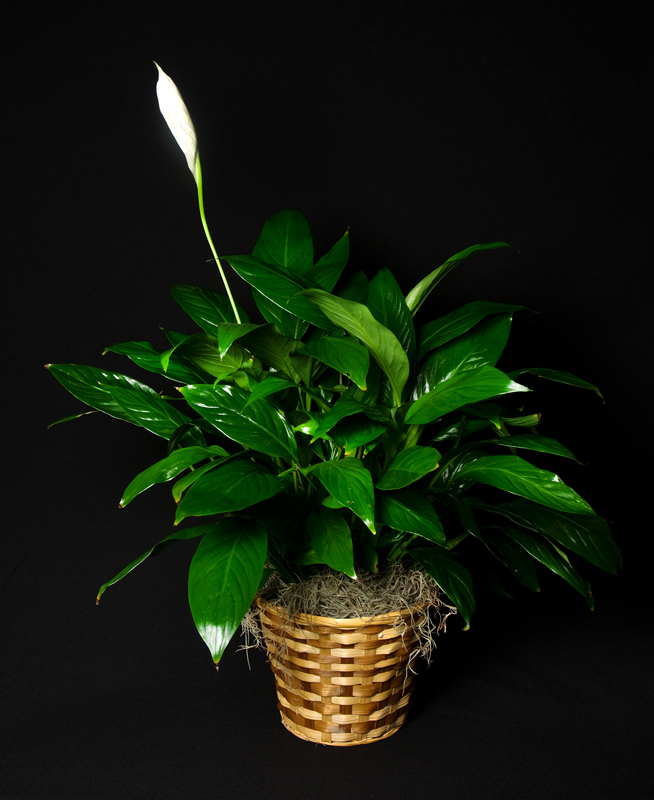
Being of Greek descent I like to relate everything back to the birthplace of civilization, Greece.  With most flowers/plants there is an interesting story rooted in Greek mythology or Greek history giving the plant its name.  The Peace Lily, I would expect, would be no different.  Perhaps its name derived from their use to adorn an Olympic event.  Or perhaps the plant was given as a gift of appreciation to the great Alexander as he heroically brought civilization to the lands of savages.    Sadly I was disappointed to find that its name is nothing more than a reflection of its appearance. The white spathe represents a raised white flag of surrender.  This plant’s name is not rooted in Greek history but that of the French.

Watering

The peace lily belongs to the Spathiphyllum family.  Its flowers may be white or yellow with long bright green leaves. This plant is at peace when it is watered regularly.  Typically two or three times a week is sufficient.  Check the soil and make sure its moist.  If its dry, or the leaves are wilting or browning its been too long between watering.  In addition to regular watering, this plant likes its leaves misted.  The misting helps prevent red spider mite infestation.  If you see tiny spider webs treat the leaves with alcohol and spray with an insecticidal soap.

CAUTION FOR NYC RESIDENTS and others with chlorinated water supplies.   This plant is very sensitive to chlorinated water.  Either water with distilled water (unlikely) or let the tap water sit overnight thereby dissipating the chlorine.

Sunlight

One reason why this plant is so well equipped for office life is that it is not a sunbather.  The plant prefers natural filtered light.  Exposing the plant to direct sunlight will brown the leaves and create problems.

Ancillary Care

The roots of a Peace Lily like to be tightly confined but will normally overfill their initial pot within 1 year.  However, they do not usually require a pot larger than 10 inches.  Although the plant is simple to care for, it still needs to be fertilized occasionally. However, be sure that the fertilizer is not too strong or the leaves will brown and the root hairs will be killed.  Err on the side of a milder mix to be safe.  Rule of a green thumb is a fertilizer mix of 20-20-20.

If your plant was beautiful and healthy when purchased and you’ve maintained it as discussed herein, but it doesn’t bloom or has deformed shaped leaves you need to show some patience.  It is possible it was purchased from a discount retailer who artificially induced the plant into bloom for sale.  Your plant is simply said a drug addict.  It is looking for a dose of the hormone gibberellic acid.  Don’t be an enabler.  Let it beat the habit with your love and care and eventually it will live out a normal cycle.  The lesson here is to purchase your plants from a respectable retailer such as Starbright.

We highly recommend the Peace Lily for a variety of uses:

It is a great plant to send someone as a gift (personal or corporate).

We use them to decorate venues for events (plant rental).

We offer weekly maintenance on plants for offices and we take care of many Peace Lilies throughout New York City.

These tips are brought to you by The Official Florist.  The Official Florist is the blogging arm of Starbright Floral Design.  We are a full-service corporate and retail florist located in the heart of New York City’s Historic Flower District.  We are at 150 West 28th Street (Studio 201).  To learn more about our organization and about the type of work that we do, please  visit our website at www.starflor.com.  You may also order a gift by visiting our e-portal at www.starbrightnyc.com. Starbright is open seven days a week and we deliver flowers and other gifts in Manhattan and worldwide.  We invite you to give us a call or visit our website.

Thank you for visiting our blog.  Always “at your service”,

The Official Florist – Starbright Floral Design

“The Official Florist of the City that Never Sleeps”

t.800.520.8999

starflor.com