Glorious Greens – NYC, have you stopped to smell the myrtle today?

Glorious Greens
From Left : 1.Spiral Eucalyptus 2.African Boxwood 3.Myrtle 4.Italian Ruscus 5.Pittosporum                                           6.Acacia 7.Seeded Eucalyptus 8.Broadleaf Dusty Miller 9.Lace Dusty Miller

Glorious Greens

So, design. When it’s good, it’s usually great – and when it’s bad, it’s usually “ugh, awful, no way!” This is true across the board – fashion, graphic design, food, flowers, you name it. Many people think that the trick to good design is “having a great concept” – those people aren’t wrong, but they’re missing the secret: a good design covers all the details. When it comes to flowers, one of the details we almost never hear customer’s mention is the Green Stuff.  But any floral designer with an attention to detail knows better.  Starbright’s designer’s are fully aware what a difference upscale greens can make in an elegant flower arrangement for NYC floral consumers.

They may not be the star of the show, but these glorious greens can have a huge impact on the “vibe” of an arrangement. They are also a great way to personalize the standard Valentine’s Day fare of “a dozen roses”. Whether your looking to send something light and airy or lush and full – the greenery is a great place to make it your own.

Some of Starbright Floral Design’s favorite greens :

1. Spiral Eucalyptus : These “dusty” green shoots are ideal for filling in lofty arrangements and adding height. One of Starbright Floral Design’s favorite uses of seeded eucalyptus is with long-stem roses. This classic combination creates an airy elegance perfect for the minimalist in your life.

2. African Boxwood : Notable for it’s fine-toothed leaves and reddish tint, this green is a great compliment to all sorts of arrangements. The little, but lush clusters of leaves will fill in a lot of space and add a slightly “fresh-from-the-garden” feel to your arrangement. Boxwood has a long-vase life and will dry-out nicely as well.

3. Myrtle : This is another fantastic green to accompany your long-stem roses for Valentine’s Day. The bright jewel-green leaves and wood-like stems also have a sharp, clean smell and will stand up nicely in taller arrangements. In ancient Greco-Roman times, Myrtle was considered sacred to Venus, the goddess of love, and used to decorate wreaths and make garlands.

4. Italian Ruscus : Ruscus is an interesting addition to any arrangement. The large leaf-like cladodes are a brilliant green that matches the green stem; the tonal color makes these waxy greens look almost too perfect to be real.

5. Pittosporum : These are one of the more common greens that appear in short and mid-height arrangements. The plain leaves are bright green while the variegated variety is a softer shade of green with ivory details around the edges. But our favorite part about working with this green at Starbright Floral Design is the sweetly scented leaves.

6. Acacia : This unique green isn’t as common around the shop as some of the others, but it’s always worth asking. Acacia has a unique appearance that makes it great for tall arrangements. The thin branches are entirely covered in sharp triangular leaves, while pre-flowering yellow pods sprout wildly on the top third. In the language of flowers, the acacia signifies secret love. Check it how Starbright Floral Design used acacia in this arrangement to add height and texture :

Acacia
Acacia makes a fantastic backdrop for delicate flowers while adding height

7. Seeded Eucalyptus : This eucalyptus variety has a softer appearance than the spiral eucalyptus. The leaves of this variety are slightly larger and droop romantically around cluster of lighter, and brighter seeds. If you’re looking for something softer that could potentially be described as “dreamy” – this is the eucalyptus for you.

8. Broadleaf Dusty Miller : These leaves are prized for their uniquely sliver appearance and soft felt-like texture. Another “romantic” green, broadleaf dusty miller looks great in low arrangements where it’s short stems can get to water.

9. Lace Dusty Miller : Another variety of dusty miller, known as silver ragwort, which is perfect for adding extra romance to an arrangement. The leaves of this variety also have a soft felt-like feel and silvery color.
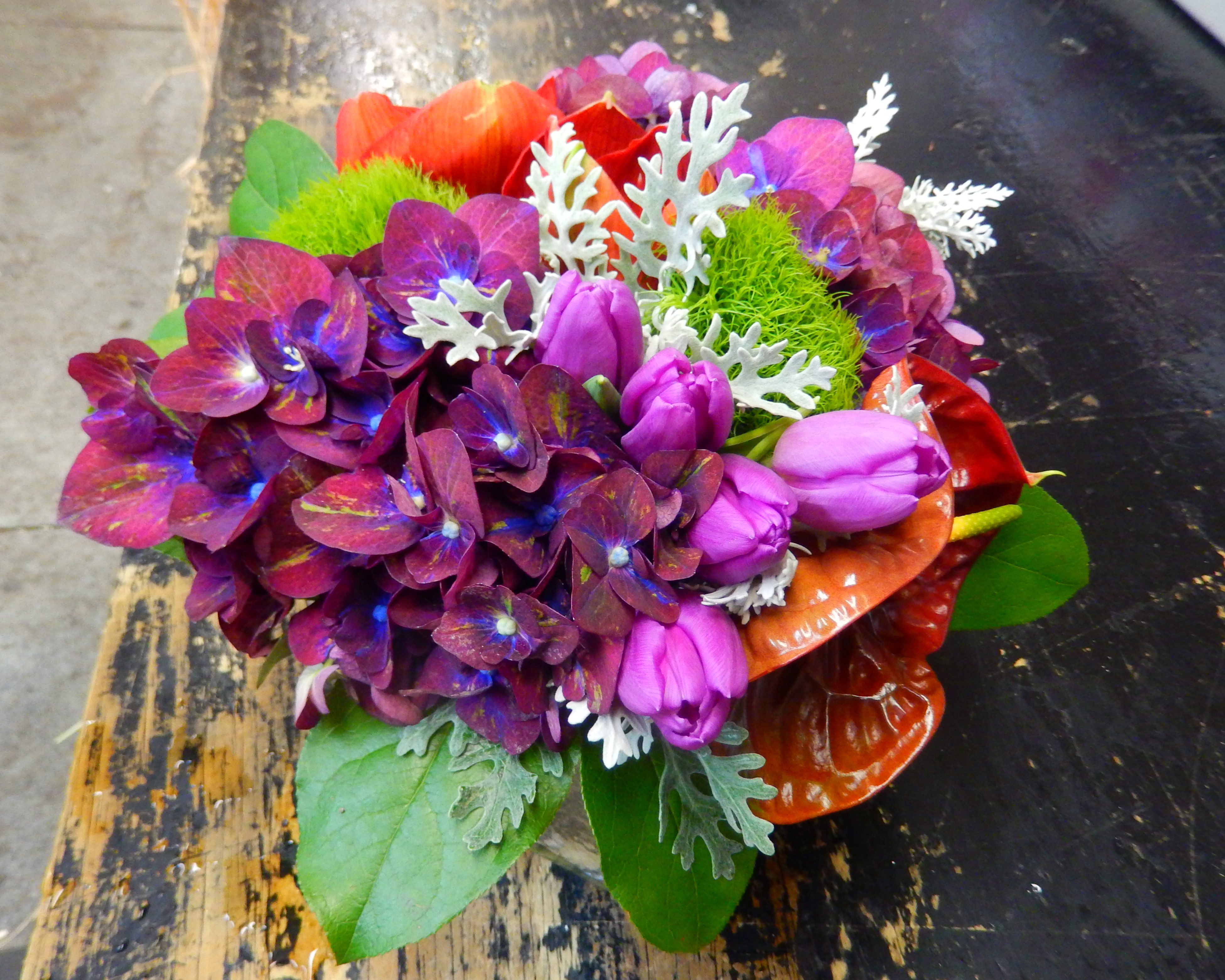
Dusty Miller
Dusty Miller adds a complimentary “softness” to any arrangement


Next time you call the shop and order some flowers, feel free to give us some hints about the whole arrangement. We want you to be 100% happy with your flower purchase – the best way for us to do that is to give you exactly what you want!


Starbright Logo


Looking for flowers in New York City? Visit our Event Gallery for inspiration. Or see our daily selection at Starbrightnyc.com.

Starbright NYC Flower Files: Genisteae

Genisteae

Common Broom
Genisteae, Common Broom

Broom Commercial Use /

With it’s small flowers and slender greens, genisteae, also known as broom, has a uniquely airy appearance and sweet smell. Cut broom will last about a week in an arrangement. Top Florists in NYC, including Starbright Floral design, love to use this accent flower in arrangements calling for fragrance. To guarantee longevity of cut broom, and many other flowers, keep these blooms away from ripe fruits and drafty windows.

Broom Notes /

The Broom family of plants include evergreens (plants that are green year-round), semi-evergreens (plants that keep their leaves through winter, replacing them in spring), and deciduous shrubs. The Genisteae family – Brooms are a member – dates all the way back to the Paleogene Period. Genistae are native to many continents in one form or another, but the greatest diversity found among broom plants can be found in the Mediterranean. But wherever they grow, many broom plants share similar characteristics – small leaves and fragrant flowers fixed to flexible slender green stems. The broom flowers are generally yellow, white, orange, red, pink or purple.  

Broom History/

Wayyyy back in the 12th century Geoffrey V, the Count of Anjou, leaned over and plucked a yellow broom plant from the rocky ground and fixed it into his helmet before leading his men into battle. This gesture led to the nickname Geoffrey Plantagenet – Plantaganet can roughly be translated as “Plant Genistrae.” When Geoffrey V later became the Duke of Normandy through conquest, and then the husband of empress dowager Matilda, he became the father of the Plantagenet family. The Plantagenets would go on to rule Britain for 300 years. The conflict that ended their rule was called, believe it or not, the “War of the Roses.”

Inside Info /

Broom has a number of applications, here are some of our favorites :

  • Broom contains tannin, which once-upon-a-time was used to curing leather.
  • Broom branches are slender and flexible. This made them ideal for early sweeping utensils and basket weaving.
  • Though we now consider broom toxic, the seeds were once roasted and used as a substitute for coffee; young shoots were used to replace hops in beer production.
  • Broom can actually help the environment by removing nitrogen from the air.

Starbright Logo

Looking for flowers in New York City? Visit our Event Gallery for inspiration. Or see our daily selection at Starbrightnyc.com.

The Language Of Flowers – Part 1

“I’ll Be The One Wearing A Red Carnation, Because I Find You Fascinating”: How Flowers Can Send Secret Messages


Flowers aren’t just beautiful blooms with pleasing scents – the variety of plants available has led to the use of flowers to send coded messages at many points throughout human history. The practice of sending flower messages is called floriography.  NYC flower lovers have been practicing floriography since before there was a flower market in NYC.  The messages may be seem subtle and cryptic but Valentine’s Day flowers in NYC by Starbright delivers the message loud and proud for all to see “I love you!”.

References to flower codes go back as far as the Ancient Greeks, but very little is known about what the codes actually were – chances are the codes were passed on orally, their meaning transferred from one illiterate message-sender to another by word of mouth. Romans, Egyptians and Persians also used flower-codes to send messages, but just like the Greeks we know little about the codes themselves.

The Victorian-era world was obsessed with flowers – and Victorian-era England was obsessed with the Ottoman Empire. The Ottoman Empire, in the early half of the 18th century, was going wild for tulips – and had started using tulips to send very complex notes, with colors standing in for words and arrangement standing in for grammar. As England’s interest in botany grew, so did interest in the more dramatic side of flower history.

Lady Mary Morley Montagu is the woman credited with bringing flower codes to the British court. From 1716-1718 Lady Mary lived in the Ottoman Empire with her husband Lord Edward Montagu, British ambassador to the Ottoman Court. She wrote wildly-detailed letters back home to friends in London, capturing Ottoman life with a deeply revealing lens. Her letters detailed many mysteries – bath houses, women’s rights and flower codes. The flower codes captured Georgian-Victorian era attentions – by 1809, Joseph Hammer-Pugstall’s Dictionnaire du Language des Fleurs would present the formal code used by nobles across Europe, driving further adoption (and further dictionaries!) There were literally hundreds of dictionaries about – we found one digitized on archive.org. Let’s take a look inside for some ideas to personalize your Valentine’s Day floral gifts!

Flower power
Flowers in NYC from Starbright Floral Design

Calla Lily – Magnificent Beauty – It’s clear how these flowers got their symbolic meaning, they’re simply magnificent!

Yellow Tulips – Hopeless Love – These are the perfect gift for your partner-in-life – sometimes, “hopeless” can be a good thing. If these are for you check out Solar Flair.

Amaryllis – Pride, Timidity, Splendid Beauty – These are a great gift for someone who likes to grow flowers inside their New York City apartment. Uptown, downtown, East Side, West Side – these flowers will do great anywhere. Starbright offers these blooms in both arrangements and potted. Check out this post for tips on taking care of an amaryllis plant in NYC.

Red Roses – Pure and Lovely – Note that these meanings are typically intended for lovers…if you’re giving roses to a family member, according to this book, it’s best to go with white (which means “innocence”) or bouquet of mixed colors. No matter the color, size, or shape – roses in NYC are a Valentine’s Day favorite. Check out this post for a look at the value of roses through history.

Dwarf Sunflower – Adoration – They must’ve chosen this one because the lil’ guys are so adorable! These guys are available in summer and fall, but they’re such a favorite that we wanted to include them anyway.

Next week we’ll take a look at some of the floriography traditions from Asian cultures!


Starbright Logo


Looking for flowers in New York City? Visit our Event Gallery for inspiration. Or see our daily selection at Starbrightnyc.com.


Flower File : Kochia Scoparia

Kochia
Kochia Scoparia

Kochia Scoparia

Commercial Use/

Discerning NYC flowers buyers incorporate the Kochia as an accent green to flower arrangements. The Kochia is sought after for its color and texture.  Starbright’s NYC Flowers collection has many examples of the effect the inclusion of the Kochia has on flower arrangements.

Kochia Information/

Sometimes called burningbush, ragweed, or summer cypress, Kochia is probably most recognizable in it’s tumbleweed form. Kochia can grow over six feet tall and has stems that are highly branched and often tinted green or red. In the spring and summer, Kochia has fuzzy green/grey small leaves or lobes. In the fall, the grey/green color becomes a vibrant red before drying out. Once Kochia fully dries out, the plant breaks off at the stem and tumbles away to spread its seeds. The seeds that are spread by the tumbleweed have about a year to germinate – and they do! In many places, Kochia is a difficult to stop weed, but at Starbright Floral Design we love the texture of this plant and wish it was around more often!


Kochia History/

Kochia scoparia isn’t just any weed. Native to Eurasia, this plant has seen a lot of use. In Japan, the seeds of the Kochia are used for a food garnish called tonburi. In traditional Chinese medicine, Kochia has been used to help regulate disorders like hypertension and obesity.


Kochia Fun Facts /

  • Kochia has been suggested as an agent of phytoremediation because it is able to grow in soil with high levels of elements like mercury, silver, zinc, and uranium. Phytoremediation is treating environmental issues through plants.
  • Kochia is also a great weed for areas suffering soil erosion.

Starbright Logo

Looking for flowers in New York City? Visit our Event Gallery for inspiration. Or see our daily selection at Starbrightnyc.com.

NYC West Village Flowers- Starbright’s Inspirations Series

Inspired by NYC's West Village
Inspired by NYC’s West Village

New York City flower arrangements and floral designer’s draw their inspiration from all that is beautiful.  NYC neighborhoods each have their own distinct vibe and beauty.  It is this vibe and beauty that our floral designers aim to capture in their NYC flower arrangements.  In this series, Starbright’s Floral designers bring their personal style to the table and mix up something special for their favorite neighborhoods in New York City. The above is an illustration of NYC West Village Flowers inspired by our designer’s artistic floral interpretation of the West Village in NYC available for flower delivery to the West Village NYC!   Watch as an original NYC flowers arrangement is crafted from beginning to end by one of our talented designers.

This week, Byron brings tropicals out to celebrate the life, love, and energy, which makes up the spirit of the West Village in New York City with flowers. First he begins with a classic layer of lemon leaves, followed by hydrangea, amaryllis, bells of Ireland, roses, calla lilies, anthurium, and orchids.

Starbright Logo

Looking for flowers in New York City? Visit our Event Gallery for inspiration. Or see our daily selection at Starbrightnyc.com.

NYC, The Roses are coming, the roses are coming!

NYC beware, Valentine’s Day is coming up.  Soon, roses in NYC will number in the millions.  Starbright Floral Design, is keenly aware of how roses in NYC are an integral part of Valentine’s Day floral gift giving.  In fact, Valentine’s Day flowers in NYC and red roses in NYC are synonymous to many New Yorkers.     Therefore we thought it’d be a good time to go over some rose history and get to know how some deep rooted traditions sprang up around these flowers that has NYC oh-ing and ah-ing come Valentine’s Day.

Roses
the appeal of red roses is pretty obvious to us!

Why are Roses sent

Roses in History

Roses are one of humanity’s oldest commodity goods. There are two main families of rose – Mediterranean and Oriental. The Mediterranean rose was extensively harvested by societies in Ancient Egypt, Ancient Rome and the Greek City States. In general, the ancient world used the rose as decoration – in addition to a lovely visual, a rose also offers a strong fragrance, so it makes sense that the bloom would be adopted early as a go-to cultivar.

With the fall of the Roman Empire we would expect to see a fall of the rose – and in a sense, we sort of do. At this point in human history, monks and their monasteries are popping up to hold on to/pass-on the ancient world’s medicinal secrets – and the rose has a starring role. Rose oil, pressed from rose hips, has curative properties that ease many stomach concerns, and also help manage blood pressure. NOTE: YOU ARE NOT A MEDIEVAL MONK – IF YOU NEED MEDICAL ADVICE, YOU SHOULD SEE YOUR DOCTOR, NOT READ OUR BLOG! WE DO NOT SUGGEST YOU ACTUALLY TAKE ROSE HIP OIL WITHOUT CONSULTING YOUR PHYSICIAN. This is very, very lucky for the rose – as Europe transitioned out of the Dark Ages and into the Medieval era, monasteries became the nodes that the rest of society would rebuild around. Think about it – you’re a merchant, your country has just about seen the last of the bubonic plague, and it’s time to go consolidate populations a little bit like ya do, when over half of the population gets wiped out by the plague. Where are you going to go? You’re probably going to set up near one of those medicine- and beer- and cheese-producing monasteries, because medicine, beer and cheese are all necessary things. This is where you’re going to get your flowers, too – and that’s where the rose comes in.

Roses are one of the prime commodity goods exchanged by upper-class European citizens from about 500CE-1875CE. They have utility (medicine), they are relatively hardy, and most importantly they can be endlessly hybridized. When you’re looking at a commodity’s value, what’s happening is you’re evaluating the average cost of that good in the market, in comparison to the quality of the good in front of you. With rose plants, you need to keep in mind that while the rose originally comes from warm climates, most of Europe is cold. Many hybrids make the plant hardier or longer-blooming, or maybe they’ll bloom more times per year, or maybe the hips are big enough that a short grow season isn’t awful, or…Roses are an interesting commodity. Today there are lots of varieties and lots of colors and even a lot of shapes and sizes.

The rose’s history as a commodity good is not dissimilar to that of an engagement ring. Both goods were originally given to help provide an economic foundation in times of extreme stress. With an engagement ring, for example, it was understood that the provider in the marriage might die. In that event, the ring could be sold and a new living situation could be arranged. Roses, too, are high-value gifts – although in the modern era, we cut our flowers, so this symbolism has been obscured by all the other romance of the occasion. Extravagance for extravagance’s sake never hurt anybody!

2015 Valentine’s Day Roses in NYC

Roses cleaning
Alex finds a new love for rosesValentine’s Day Roses 2015

So why are we bringing all of this to your attention? Nic Faitos, the founder of Starbright, has given us permission to clue you in, dear reader – the roses are going to be cheaper if you order them before January 20th. Roses are an “inelastic commodity” – there are only going to be as many roses available for purchase on February 14th as there were grown, picked and shipped by February 13th, and no matter what the vast majority of consumers will be after some roses. In this scenario – “there’s a rush on a thing who’s quantity is finite” – the single best move you can make is to get in early, so you can maximize your dollar’s value.

Rose Cleaning
Patti Ann cleaning roses at Starbright Floral Design

Right now, roses in NYC within e-commerce websites are being sold without regard to the inevitable demand driven cost increases.  The skyrocketing wholesale cost of the roses have a corresponding effect on consumer prices.   So if you have a special person you’re planning to send long stemmed red roses in NYC for this upcoming Valentine’s Day, placing an order with Starbright sooner rather than later can help you stretch your resources.


Starbright Logo


Looking for flowers in New York City? Visit our Event Gallery for inspiration. Or see our daily selection at Starbrightnyc.com.

FLOWER FILE : CARNATION

Carnation
Carnation

Carnations

Flower Notes /

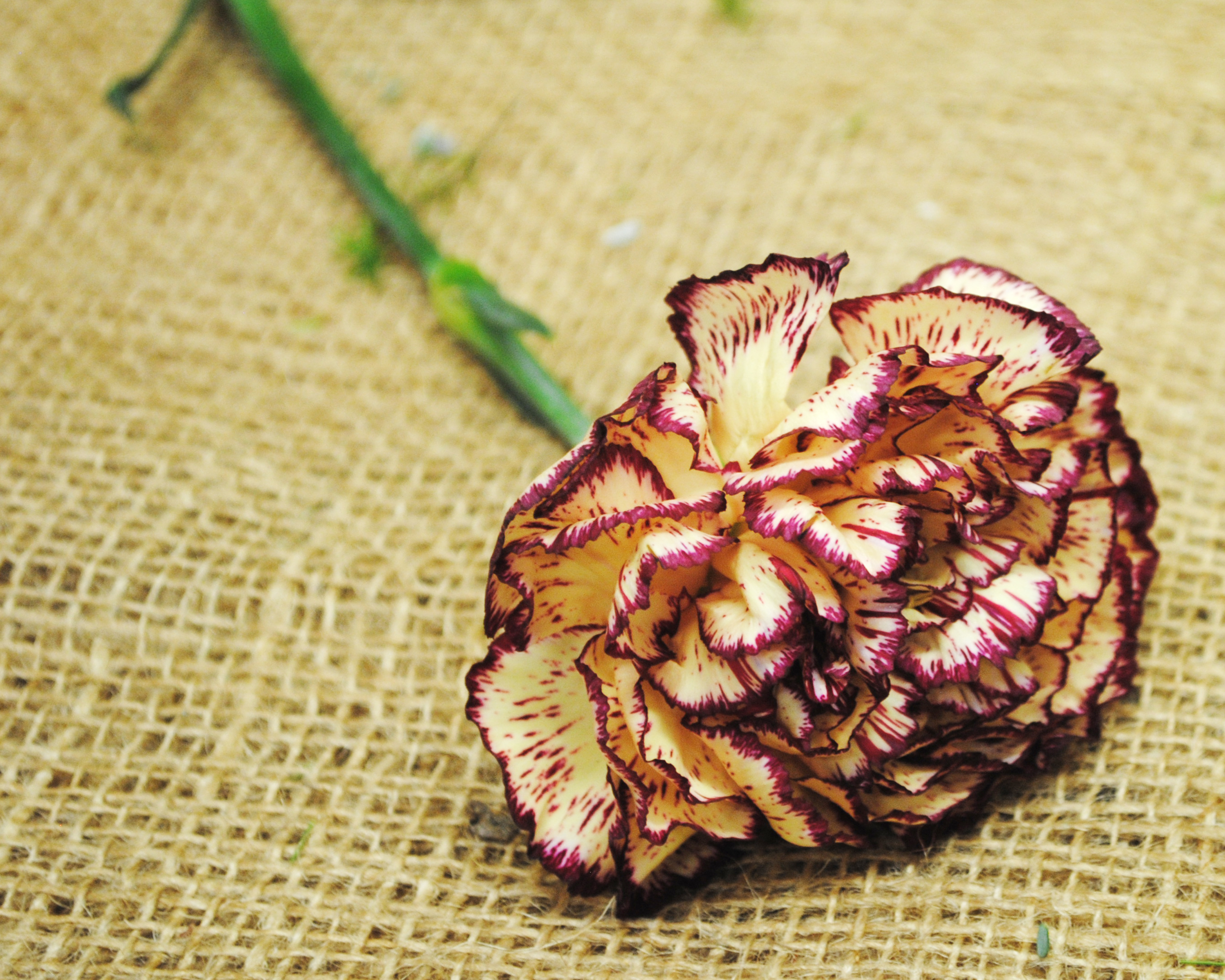
Probably native to the Mediterranean, the carnation has been continuously harvested for over 2,000 years – along with jasmine and roses, carnations are among the three oldest “beauty” crops cultivated by ancient man. Carnations are very, very easy to grow – all they need is full sun, loose neutral soil and a little water. They’re full of symbolism, too – get them in white for someone who could use good luck, like a recent graduate, or for a going-away gift when someone changes jobs. The pink carnation stands for unforgettable love – especially from Mom! The purple carnation symbolizes unpredictability and wit, so it’s good for a birthday or bridal shower. Striped carnations symbolize regret – they’re ideal for funerals. The yellow blooms signify disappointment – this is the perfect bloom for a bouquet that says “I don’t want to date you anymore” (say it with flowers, right?) Be careful giving red carnations – while they stand for “deep love,” they also stand for “socialist” and “irregular military member,” depending on where you are.

Visual Notes:

Some people say that carnations almost look like folded tissue-paper, cinched in the middle and “fluffed up” around the cinch. Other people say these paper flowers look like carnations. Either way, carnations have a unique appearance and are available in a range of colors and patterns – this lets them stand alone in a simple arrangement, star in a busier arrangement, and support their fellow flowers when it’s another bloom’s turn to shine. They are the Ian McKellen of the flower world – they’re great in everything, and your grandmother probably loves them. And in case all the symbolism didn’t make it clear, carnations come in many different colors – your florist should be able to help you source exactly what you’re after.

Flower History Notes:

Since first being cultivated over 2,000 years ago carnations have become one of the most popular flowers in the world. The name comes from (most likely) one of two places – either from the ancient greek  “corone,” or flower garlands worn during formal ceremonies, or from the Latin word “caro,” which means “flesh” (the first carnations were light-pink). Not to get too political, but carnations are among the first GMO-crops – it didn’t take long before ancient farmer-scientists figured out how to breed (repeatedly and reliably!) a whole range of carnation colors.

Carnation Flower Fun For Kids or DYI Decor Needs :

You can make your own color changing carnations! All you need is some food dye, a glass of water (or two, for a special trick) and a white carnation. The basic principle is simple – cut flowers drink the water, the water carries the dye, the dye gets left in the petals. If you split the stem in two (make sure you use a good knife or pair of scissors – and make sure an adult does this part!) and stick it in two glasses with two different colors of water, you’ll get a two-colored flower. You can tell your young’n that the flower is drinking in response to evaporation. The plant is basically like a sponge – as water evaporates off the plant’s leaves and petals, more water moves up the stem to take the evaporated water’s place.


Starbright Logo


Looking for flowers in New York City? Visit our Event Gallery for inspiration. Or see our daily selection at Starbrightnyc.com.


Starbright NYC Floral Color Trends From The 2015 Pantone Colors

Floral Color Trends for 2015

Whether you prefer roses to wildflowers or herbs to orchids, stay on point with 2015’s most trending colors.

Finding Marsala in Florals

Marsala
Marsala

This year, we’re looking towards the healing hues, especially with Pantone’s color of the year Marsala. Balancing somewhere between the color red, coral, and brown, this warm earth tone can be both boldly impactful or subtly interesting. Though the color Marsala is not naturally present in many flowers, we love how the hues and shades of similar colors can be integrated into floral arrangements to create the feelings of warmth and comfort.

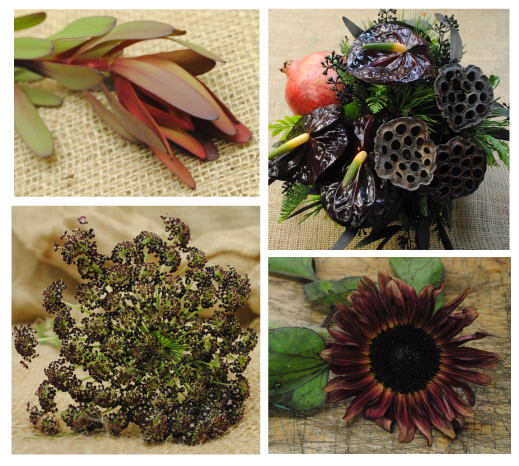
Some Flowers available in shades of Marsala

  • Alstroemeria
  • Anthurium
  • Carnation
  • Chocolate Queen Anne’s Lace
  • Dahlia
  • Freesia
  • Orchids
  • Protea
  • Roses
  • Sunflowers
  • Tulips


Shades of Marsala
Shades of Marsala


And Tangerine…

Tangerine
Tangerine


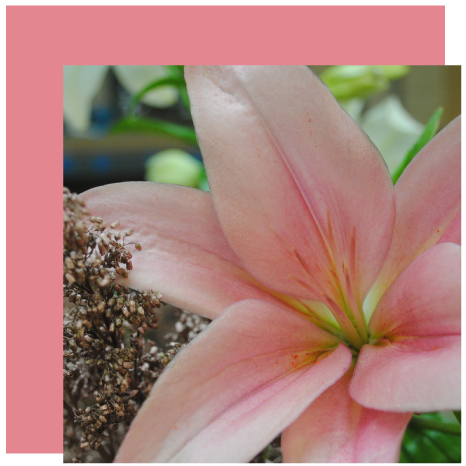
A shade of orange that balances the energy of brighter citrus colors with coral’s softer appearance. This fun-loving color is easy on the eye and easy to add to an arrangement. This is a great color to consider when sending flowers to friends or family members.

Some flowers available in shades of Tangerine

  • Alstroemeria
  • Calla Lily
  • Dahlia
  • Gerbera Daisy
  • Lilies
  • Orchids
  • Ranunculus
  • Roses
  • Snapdragon
  • Many More!

And Strawberry Ice…

Strawberry Ice
Strawberry Ice

Strawberry Ice is a sweet shade of pink that has more substance than the candy shades and less punch than the brighter shades. This refreshing shade pairs nicely with Tangerine or warm Almond shades. Starbright Floral Design in NYC suggests considering this color for something sweet.

Some flowers available in shades of Strawberry Ice

  • Alstroemeria
  • Amaryllis
  • Anthurium
  • Calla Lily
  • Dahlia
  • Gerbera Daisy
  • Lilies
  • Snapdragons
  • Many more!

And Classic Blue…

Classic Blue
Classic Blue

Starbright Floral Design loves classic shades of blue for inspiring confidence and reliability. A cool shade, blue is thought to be calming and relaxing. Most blue flowers are more purple than blue…and sorry! blue roses don’t exist in nature (but there’s always spray paint and flower dye if you insist)

Some flowers available in shades of Classic Blue

  • Agapanthus
  • Anemone
  • Delphinium
  • Hydrangea
  • Veronica
  • And a couple others!


And Glacier Gray…

Glacier Grey
Glacier Grey


This unobtrusive grey enhances surrounding colors while adding an air of peace and relaxation. This neutral puts a new spin on masculine when coordinated with white, black or one bold color. It is also a great way to add an air of dreamy romance to an arrangement featuring soft shades.

Some flowers available in shades of Glacier Gray

  • Brunia
  • Dusty Miller
  • Hydrangea
  • And a couple others!


We’re looking forward to highlighting these colors in 2015! Happy New Year!

Starbright Logo


Looking for flowers in New York City? Visit our Event Gallery for inspiration. Or see our daily selection at Starbrightnyc.com.


Flower Files: Holly

Holly
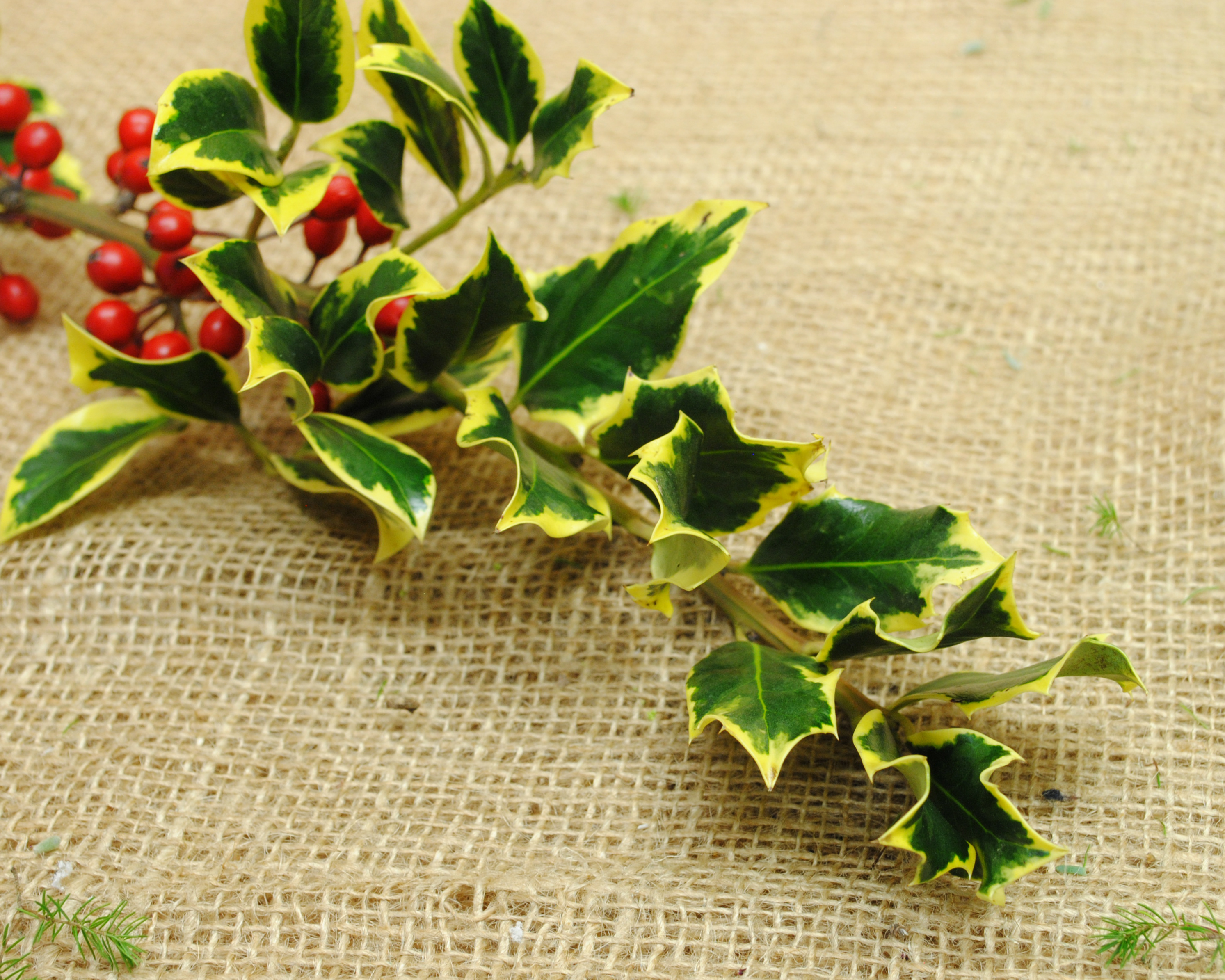
Variegated Holly
Quick Notes /

Whether you call it holly, winterberry, inkberry, or yaupon this colorful green is a favorite through the winter. Holly is the general name used for a large number of deciduous and evergreen shrubs and tress that belong to the Aquifoliaceae family and grow in the tropics as well as temperate zones worldwide. The evergreen varieties tend to be more hearty and have a longer vase life than their deciduous counterparts. Holly are notable for their thick, leather-like leaves as well as the bright berries produced by the female holly plant.

Holly History/

Holly have a long history! The variety we know and love, begins to appear about 50 million years ago, while some of the older varieties are now extinct. Holly emerged from the laurel forest, which once covered much of the worlds surface and was able to spread and adapt to all sorts of climates. It’s bright colors and hardy nature captured the interest of many of our ancestors. It was particularly popular in Europe and considered good luck by ancient Druids. Holly was also significant to the ancient Romans who used holly boughs to decorate for the feast of Saturnalia. The practice of using holly boughs as winter decorations continues today in many countries around the word.

Holly Fun Facts /
  • Both the female and male plants produce white flowers, but only the female plants produce berries.
  • A holly tree can live up to 300 years!
  • Have you ever tried Yerba Mate tea? This is a product of the South American holly Ilex paraguarensis


Starbright Logo

Looking for flowers in New York City? Visit our Event Gallery for inspiration. Or see our daily selection at Starbrightnyc.com.
A Great Floral Holiday Home Gift For NYC

Amaryllis Home Gifts are made For NYC’s Holiday Hosts

Blooming Amaryllis

Be the most welcomed guest this Holiday Season when you arrive with a potted amaryllis home gift!

Here at Starbright Floral Design potted amaryllis are flying off the shelves. Available in shades that range from Red to White, these potted plants are some the easiest to bring to bloom year after year.

In last week’s flower file, we reviewed some facts about Amaryllis blooms; like how they ended up with two names and where the name Amaryllis stems from. Popular during the holidays, these potted plants are an easy to care for lively addition to any home.

An amaryllis plant will keep you with a company of blooms for about 7-10 weeks. They’ll bloom for a longer time during the winter than if they open later in the spring.

Read on for instructions on how to care for an amaryllis plant. 
Potted Amaryliis
Potted Amaryliis

How to Care For An Amaryllis Plant

When the plant is in bloom

Through the holiday season keep potted amaryllis is a place with diffused light and cooler temperatures. When watering the amaryllis plant, be careful not to get the part of the bulb or plant that sticks above the soil wet. Keep the soil moist and fertilize as frequently as your favorite floral fertilizer suggests.

After the blooms have wilted

Later in the winter, the amaryllis will stop blooming. Cut the old flowers from the stem a bit below the wilted blooms. You’ll be left with some sword-like leaves and a long stem. As soon as the stem starts to sag, cut it off about an inch above the bulb. This triggers a growth period. Move the amaryllis plant to a sunny location.Continue to water and fertilize the potted bulb as normal for at least five to six months so that the leaves can reach their full potential.

When the plant is ready for storage

When the leaves begin to yellow cut them back to about two inches above the bulb. After the leaves are cut, remove the bulb from the soil and gently clean it off before storing it in the bottom drawer of the refrigerator for a minimum of six weeks.

WARNING : Don’t store amaryllis bulbs in the same space as apples. Apples will sterilize the bulb.

When the plant is ready to be potted

When it is about two months prior to when you desire the bulb to bloom again, plant the bulbs in fertilized soil. If the steam begins to droop under the weight of the flowers securing it to stick will support the steam. Then enjoy the beauty of the blooms as they open over during the

The bloom will appear again and again as long as these easy steps are followed. It’s a rinse and repeat process that will be enjoyed year after year.

If you’re not sure about how to best bring or send a host gift for the home check out this blog (Saying Thanks With Flowers) for some suggestions. Situated in the heart of NYC, we’re ready for your last minute orders in Manhattan.

Starbright Logo


Visit us online or give us a call at 800.520.8999