Sometimes refereed to as Queen-of-the-vines, clematis is a member of the Ranunculaceae (buttercup) family. It can be found in most countries in the Northern Hemisphere. Clematis grows naturally as a climbing vine / lianasand has been harvested by many cultures for it’s medicinal values. But be careful! Clematis are toxic if eaten.
Visual Notes /
With over 250 cultivars grown around the world, the clematis flower is visually varied. All varieties feature a number of leafy petals clustered around the center of the flower. The colors range widely, but blue-purple, white and pink are especially popular.
History /
Because it’s found everywhere, Clematis is one of the first flowers early botanists and genetic researchers really took note of. As a result, it was widely used in early genetic experiments. Many of the British cultivars are the result of this early groundwork in understanding genetics.
Clematis
Insider Info /
– The name Clematis comes from the Greek word “klematis,” meaning vine.
– Clematis are scented, but their scent is rarely strong enough for perfume making.
– A few clematis varieties change color when between blooming. This is caused by environmental factors, like sunlight.
Looking for flowers in New York City? Visit our Event Gallery for inspiration. Or see our daily selection at Starbrightnyc.com.
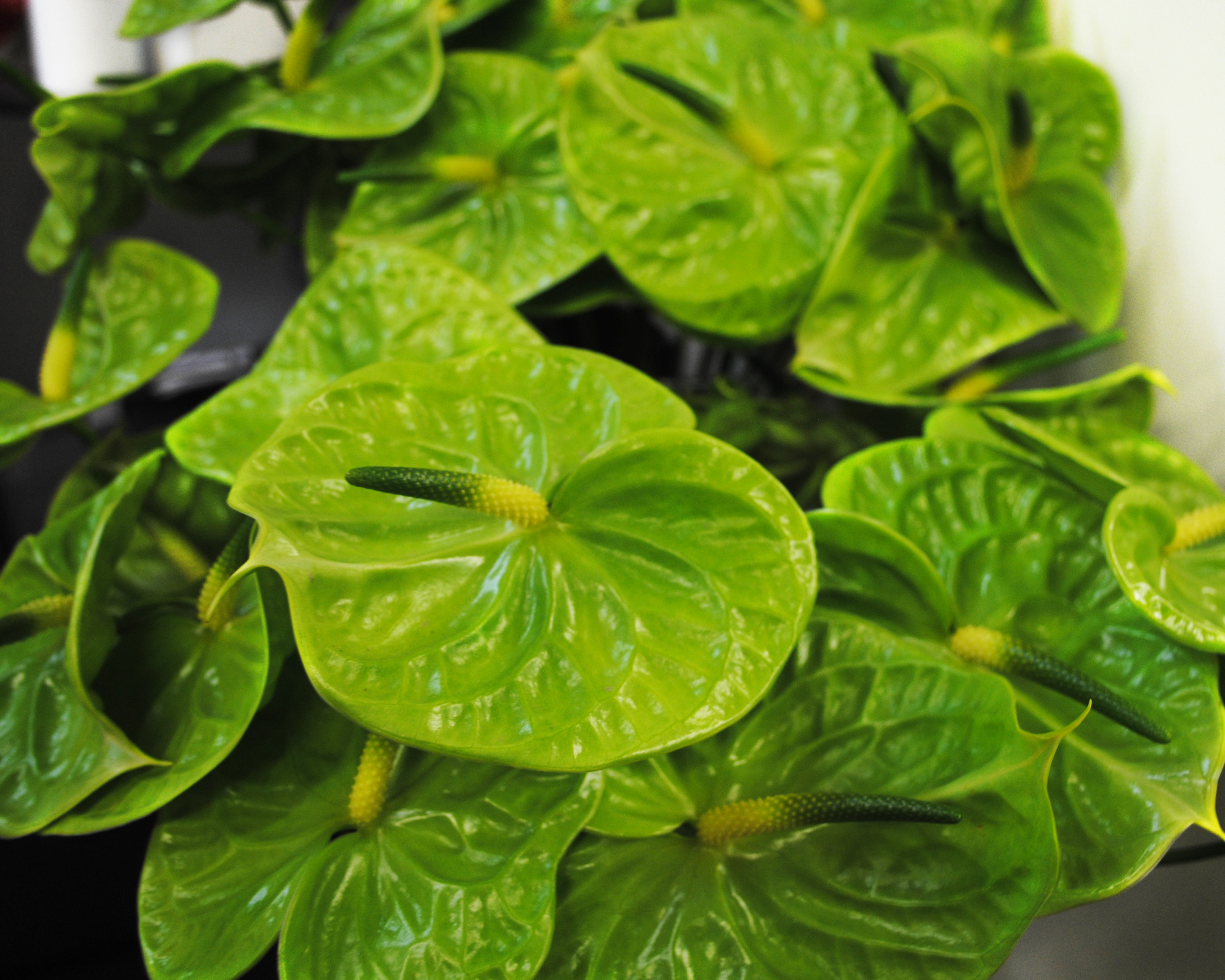
Technically an herb, Anthurium is found across Mexico, northern South America and the Caribbean. It features a tall, thin flower in the hip of a broad, flat leaf. Great for floral arrangements, anthurium will last a while.
Visual Notes /
Anthurium comes in a wide range of colors, across over 163 species. With anthurium, the sky’s the limit! Most typically, you’ll see the waxy leaves in green, white or red, with the flower usually being matching or yellow in color.
History /
In 1889, the first anthurium was brought to Hawaii from London. For over 120 years, the anthurium has been Hawaii’s most-exported decorative item – this includes beating sales of hula skirts, ukuleles and hula-ing bobble women.
Inside Info /
These are poisonous plants! Not a good call for environments with small children, pets or college kids experimenting with veganism.
Over at Starbright Floral Design, we get to work with lots of colors everyday and all of us have our favorites. But why are they our favorites and what does that say? Up this week, Marcela’s favorite :
Green is the easiest color for the eye to see and therefore considered balanced. Environments are significantly enhanced by the presence of plenty of green. On a primitive level, greenery reminds us of water and growth, and is associated by color psychologists with good-taste and a sense of security. Psysiologically, green helps balance emotions and creates a sense of calm. Consider a pair of green tinted shades – one study found that reading through a green tinted transparent sheet increased participants speed and comprehension!
For the Home
Give us a call to talk about bringing living greens into your space – we offer select seasonal varieties of . Green is a cool color and has a calming effect. Green is also a reassuring color. In the presence of greenery, people are subconsciously reminded of the presence of water – or the absence of famine.
Money Tree
For the Teacher
Starbright Floral Design’s succulent gardens are a low maintenance solution for a busy teacher. And worth your while as well! A study at The Royal College of Agriculture in Circencester, England, found that students demonstrate 70 percent greater attentiveness when they’re taught in rooms containing plants. The same study reported that classrooms with plants reported higher attendance than those without plants. This effect carried over into a study that showed that students were more likely to join and continue to participate in after school programs and activities that took place outdoors or had greenery present.
The Greenhouse
For the office
What works for students works for me. Green plants in an office space promote concentration and perspective. And why stop at plants? Starbright Floral Design also offers a number of green floral arrangements to satisfy a person’s need for green.
Take Me To The River
Looking for flowers in New York City? Visit our Event Gallery for inspiration. Or see our daily selection at Starbrightnyc.com.
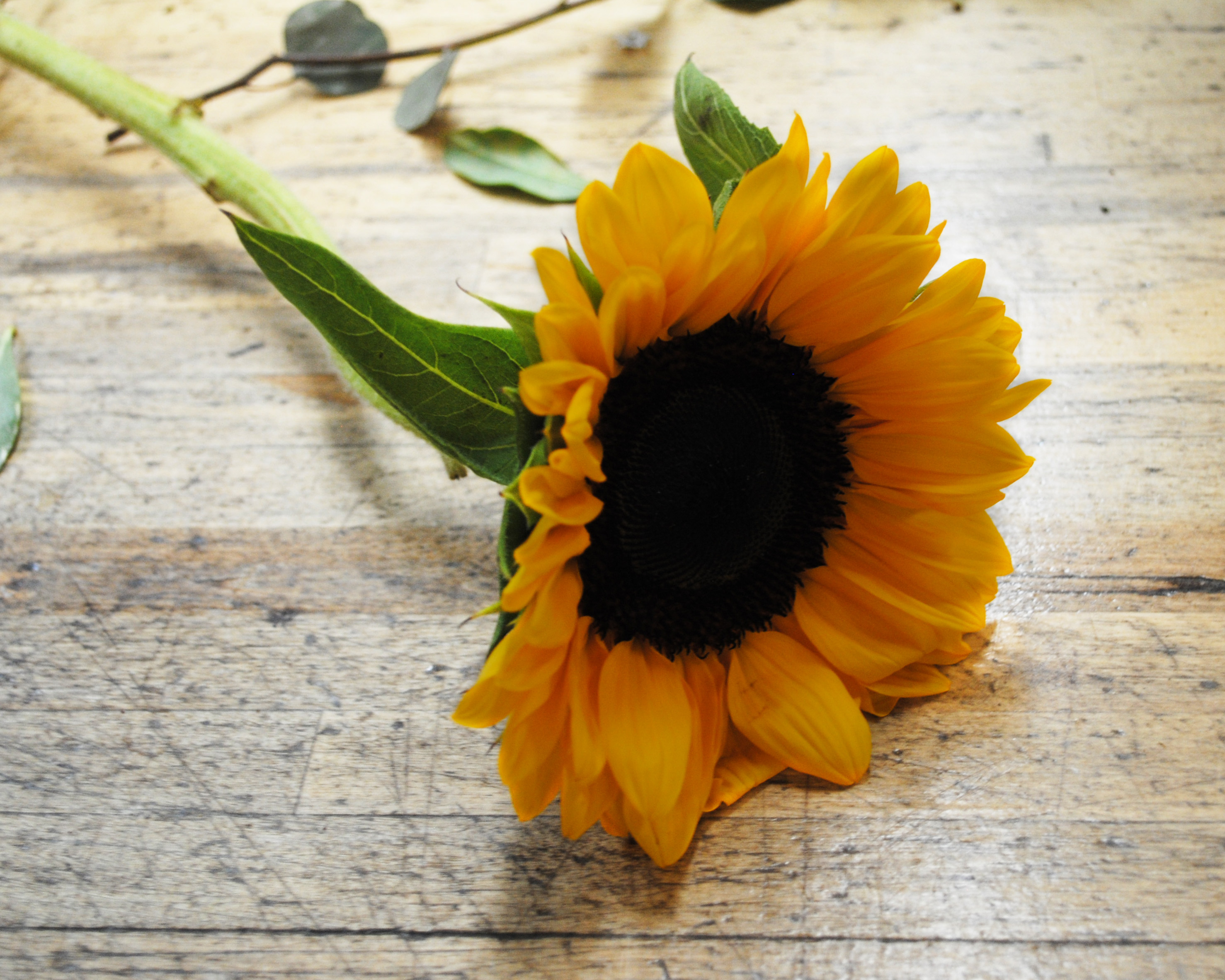
Native to the Americas, but grown in Europe from the 16th century in large numbers, sunflowers are cultivated and used around the world as cut flowers, a source of oil, and a source of food in the form of seeds. Because it was introduced during the Age of Discovery, the religions of Europe didn’t have any qualms with practicioners using sunflower oil to cook during Sabbath – it’s popularity was as much a result of it’s beauty as it was it’s usefulness. It’s thought that sunflowers point their blooms towards the sun throughout the day – while this behavior, known as heliotropism, is sometimes observed in young plants, typically flowers end up facing east (and staying that way!)
VISUAL NOTES /
Sunflowers come in a wide variety of yellow, red and golden hues. The “seeds” of the sunflower are actually little tiny flowers – on some varietals the seeds will actually open, while in plants with a dark center the seeds are closed. Sunflowers grow on hairy stems that are stiff enough to stand up eight to twelve feet straight.
– Sunflowers are a great gift for celebrations of life – they’re great in baby shower arrangements.
– Wild Sunflowers don’t look anything like their cultivated cousins. In the wild, sunflowers have many branches with small flower heads and small seeds.
– The sunflower is the state flower of the US state of Kansas, and one of the city flowers of Kitakyūshū, Japan, and the national flower of the Ukraine.
Looking for flowers in New York City? Visit our Event Gallery for inspiration. Or see our daily selection at Starbrightnyc.com.
Summer Flowers are on their way! It’s a bit early to see them in their full glory, but we’ll add them to the July Flowers on Starbrightnyc.com all month long.
Purple Rain
The elevator can’t bring you down when this fresh arrangement is around.
Sunny Delight
Bring the summer sun into air conditioned offices.
Dahlia Fusion
Dahlia’s make everything more fun
Take Me To The River
Disclaimer : this pond is not deep enough to dip toes in.
We’re excited to share more fresh summer floral arrangements
With a wide variety of styles and typically larger bud sizes, a protea bouquet is a dynamic choice for situations that want a bold floral statement.
According to the language of flowers, proteas symbolize diversity and courage.
VISUAL NOTES /
With over 1,400 cultivated varieties, there’s quite a bit of variance among members of the proteafamily. There are three dominant petal shapes – feathery spikes, leafy spades, and more stiff colored scallops. Buds come in a wide variety of colors, as well, with individual petals often showing color gradation. Overall, proteatends to be large enough to act as the focal point of an arrangement.
FLOWER HISTORY /
Named by the famed botanist Carl Linnaeus in 1735 for Proteus, a Greek water god who could change it’s form at will, to allude to the dizzying array of shapes the plant comes in. Native to southern and eastern Africa, protea are among the only flowers who’s nectar was used as a sweetener. The Boers of South Africa called sweeteners made from protea nectar bossiestroop, which was more-or-less rainwater and plant nectar drained from the flower into a bucket, cooked down into a syrup, and used to sweeten tea.
INSIDE INFO /
Pincushion protea are an especially interesting plant – the long spiky petals have enough structure that they are able to serve as creative placecard holders or picture frames.
At Starbright Floral Design, we’ve recently seen a huge increase in the popularity of succulent plants and gardens.
Succulent Garden from Starbright Floral Design
Succulents are notable for their appearance; their leaves or other parts tend to be broad and fleshy so that they can absorb and store water in dry environments. Some well-known succulents include cactus and aloe, but this unique type of plant goes well beyond those household names. From colorful echeveria to hardy sedum, there is a wide range of beautiful and versatile succulent plants that are getting lots of attention from gardeners, landscape architects, and wedding planners. As Pacific Horticulture states:
Succulents are hot! Landscape professionals and home gardeners…are expanding their plant palettes to include these uniquely functional plants. Over the last couple of years, landscape architects and designers have reported…that many clients are asking specifically for a custom-designed succulent garden. This is a big moment for succulents.
Of course, Starbright has some great options to get you started with your very own urban succulent garden. This Succulent Zen Garden comes in a handsome wooden container and would look absolutely wonderful on any mantle. Meanwhile, our Succulent Glass Menagerie would make the perfect centerpiece for a living room table. Whether you choose one of these or another beautiful succulent arrangements from our site, you’ll to know how to care for your new indoor garden. Here are some tips for keeping your succulents healthy and happy.
Succulent Garden from Starbright Floral Design
Tip #1: Water only when the soil has fully dried
Because succulents are made for retaining water, you can water them less than you would other indoor plants. Wait until the soil in which they’re planted is completely dry before you add any more water. In a humid climate like New York City’s in the summer, watering once every few days should suffice. Keep an eye out for overwatering by watching out for the stems constricting and turning black.
Tip #2: Give them light—but not direct midday sun
While it can be difficult in an indoor setting, it’s important to give your succulent garden natural light. But be careful: succulents prefer indirect light to direct, so a spot in a nice, bright room away from direct rays should be perfect. Tabletops and bookshelves can often be great spots for this. Some succulents will do well on brighter windowsills, but always be sure to check them for any signs of scorching.
Tip #3: Re-pot your succulents every year
Like many plants, succulents will do better if they are re-potted occasionally—once a year should be perfect. This allows them to continue growing without sacrificing the root structure. As for how to re-pot, Uncommon Goods has some advice:
Before introducing your plants to their new home give the bottom of the existing dirts/roots a bit of a scrunch. Flare the root structure out a bit. This will help it transition better into its new/bigger/better environment. This is something good to remember when planting anything anywhere. If you don’t break up the bundle they are used to having in their temporary store shells, they might be a little too shy to branch out (pun intended) into their new world.
Tip #4: Don’t worry too much about temperature!
Many people think that it’s important to keep succulents in constantly hot temperatures, but in fact, they can withstand cool temperatures above freezing. Since their native desert environments often grow cold at night, your indoor succulent garden should be more than able to survive both during hot summers and during the winter and at evening, when your indoor temperature may drop a bit.
Succulents are a great choice for adding a fresh look to your apartment, deck, or backyard. Nothing brightes up a space like a bit of living color. Over at Starbright Floral Design will be more than happy to work with you on creating a great succulent arrangement that you can care for easily.
Looking for flowers in New York City? Visit our Event Gallery for inspiration. Or see our daily selection at Starbrightnyc.com.
From Ephemeral NewYork blog post New York’s Gilded Age Flower Vendors
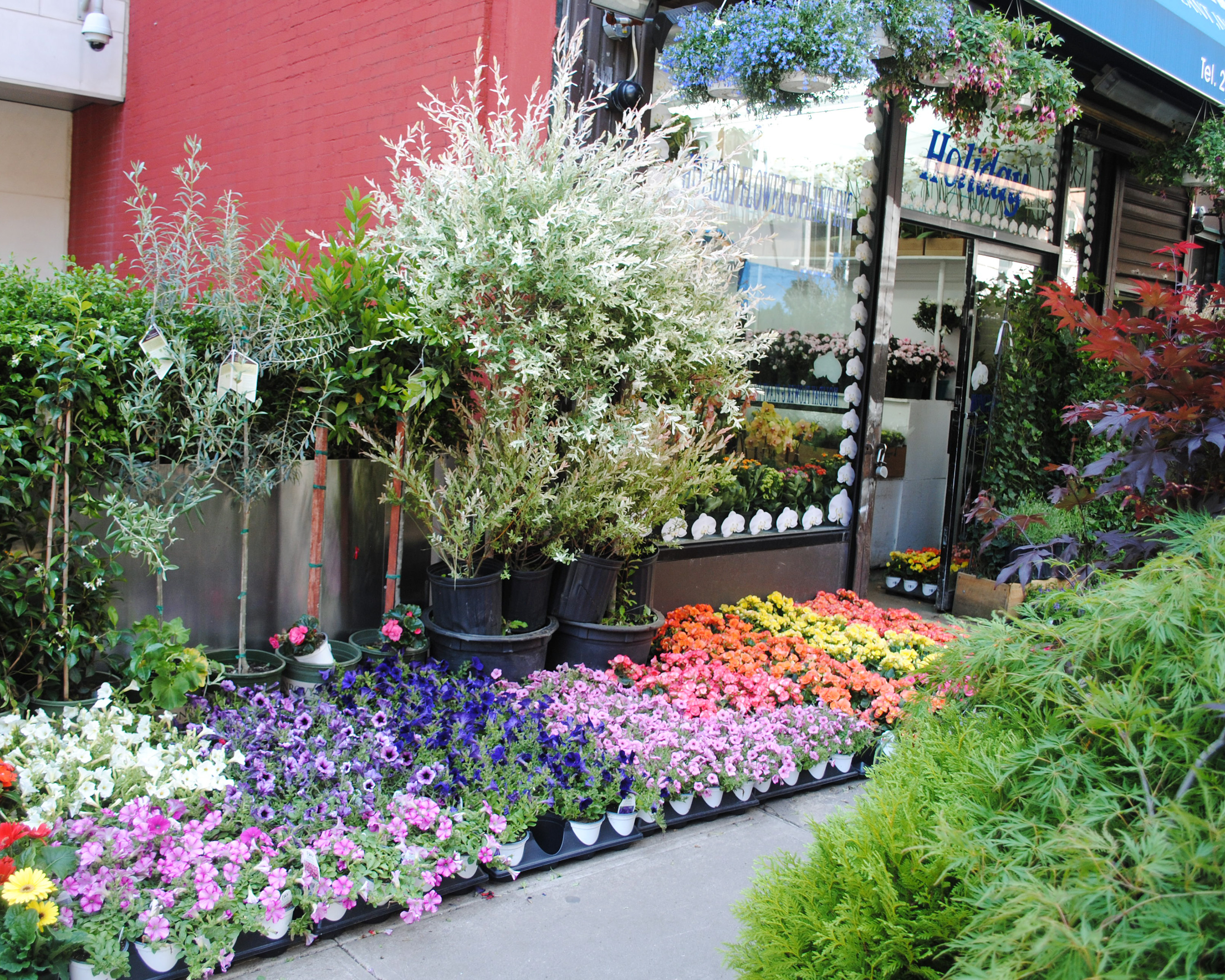
One of the things that makes Starbright Floral Design so special is our unique location in New York City’s historic Flower District. The Flower District is located on West 28th Street between 6th and 7th Avenues, in the heart of Chelsea, and it stands as one of the most striking blocks in all of Manhattan. A walk down the street gives the passerby an incredible array of sights and smells, with shops and wholesalers lining the sidewalks with an amazing display of plants of all kinds. For the flower shopper, there is no better place to go to find exactly what you’re looking for. As the great blog Scouting New York says:
When people talk about a greener New York, I always think of the lush sidewalks of West 28th Street. Few of Manhattan’s numbered streets have the ability to so transport a pedestrian to what feels like a different world, and it’s always a welcome detour in my scouting travels.
The District’s beginnings can be traced to the early 19th Century, when vendors began congregating on 34th Street, near the docks, to sell flowers that had come from Long Island. As is the case with so many of New York City’s great neighborhoods and industries, the Flower District was a melting pot of immigrants who worked hard to start businesses and lives in America. Many of these early inhabitants of the Flower District were newly arrived from places like Germany, Poland, Greece, and Ireland, and the businesses they started, in many cases, would stay within their families for generations to come.
By the 1890’s, the Flower District had moved away from the Hudson and over to Sixth Avenue. Setting up on the Avenue of Americas, from 26th Street to 29th Street, the sellers gained closer proximity not only to the elegant residences of Fifth Avenue, but to “Ladies’ Mile,” a swath of blocks that was home to many of the day’s most fashionable department stores, including Bergdorf Goodman, Lord and Taylor, B. Altman, and Arnold Constable.
Over the course of the century that followed, the Flower District would grow into one of the world’s premier locations for flower selling. From a 2004 New York Times article:
The flower district soon became entrenched and flourished there… In its heyday, it drew buyers from throughout the metropolitan region and even from Pennsylvania and Massachusetts. More tons of flowers changed hands in New York than anywhere in the world except Amsterdam, according to a 1977 newspaper article.
Although the District has shrunk geographically to its current home on West 28th Street, its bustling spirit is still very strong. If a visitor gets to the block at 8 am–after the licensed designers and wholesale merchants have come and gone–he or she will be treated to a shopping experience unlike any other. In fact, that’s one of the best things about New York’s Flower District; unlike Amsterdam’s Bloemenmarkt and the London Flower Borough Market, this Manhattan market is open to the public.
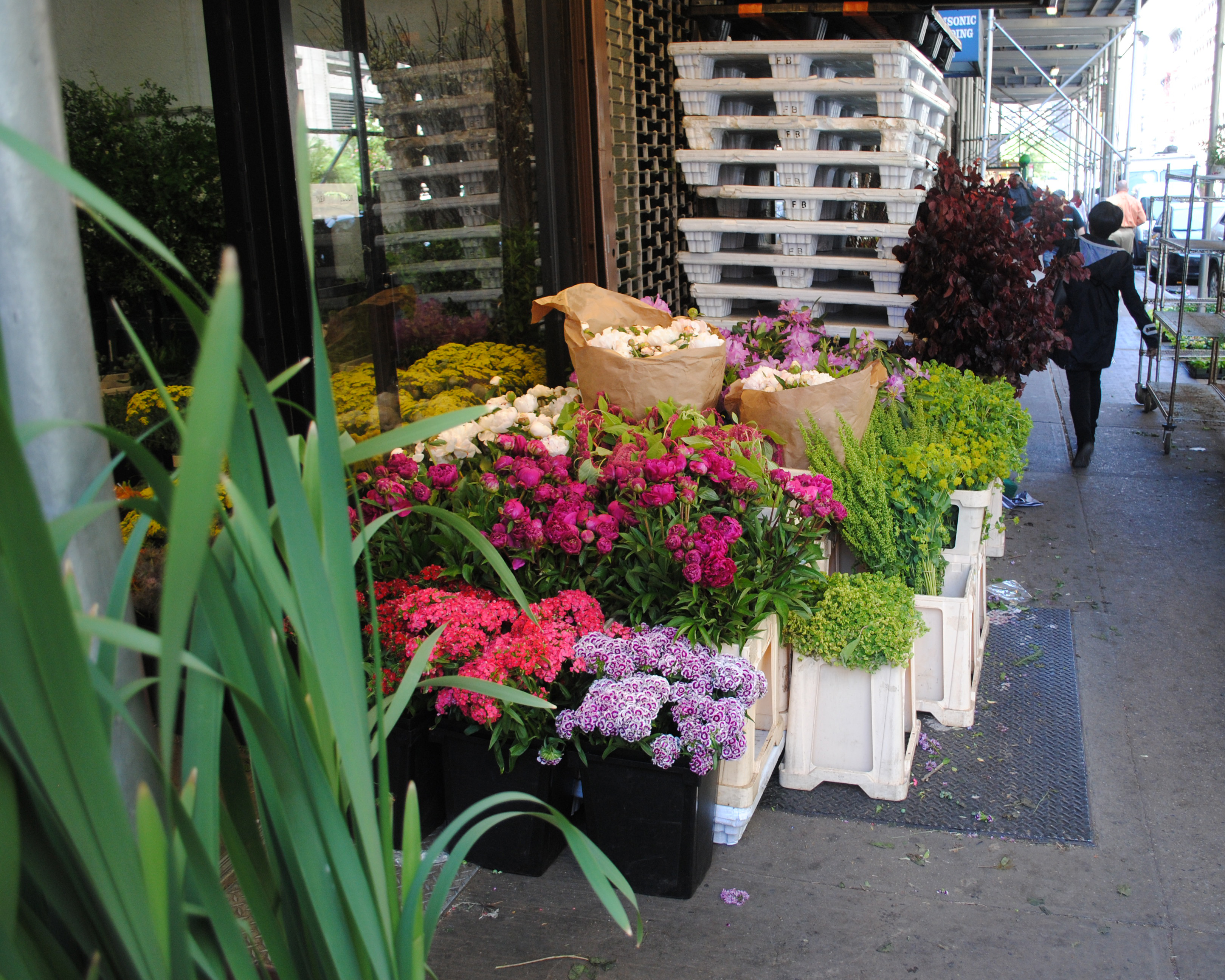
Outside Holiday Flower and Planting Inc in the New York Flower DistrictOutside of Dutch Flower Line in the New York Flower District
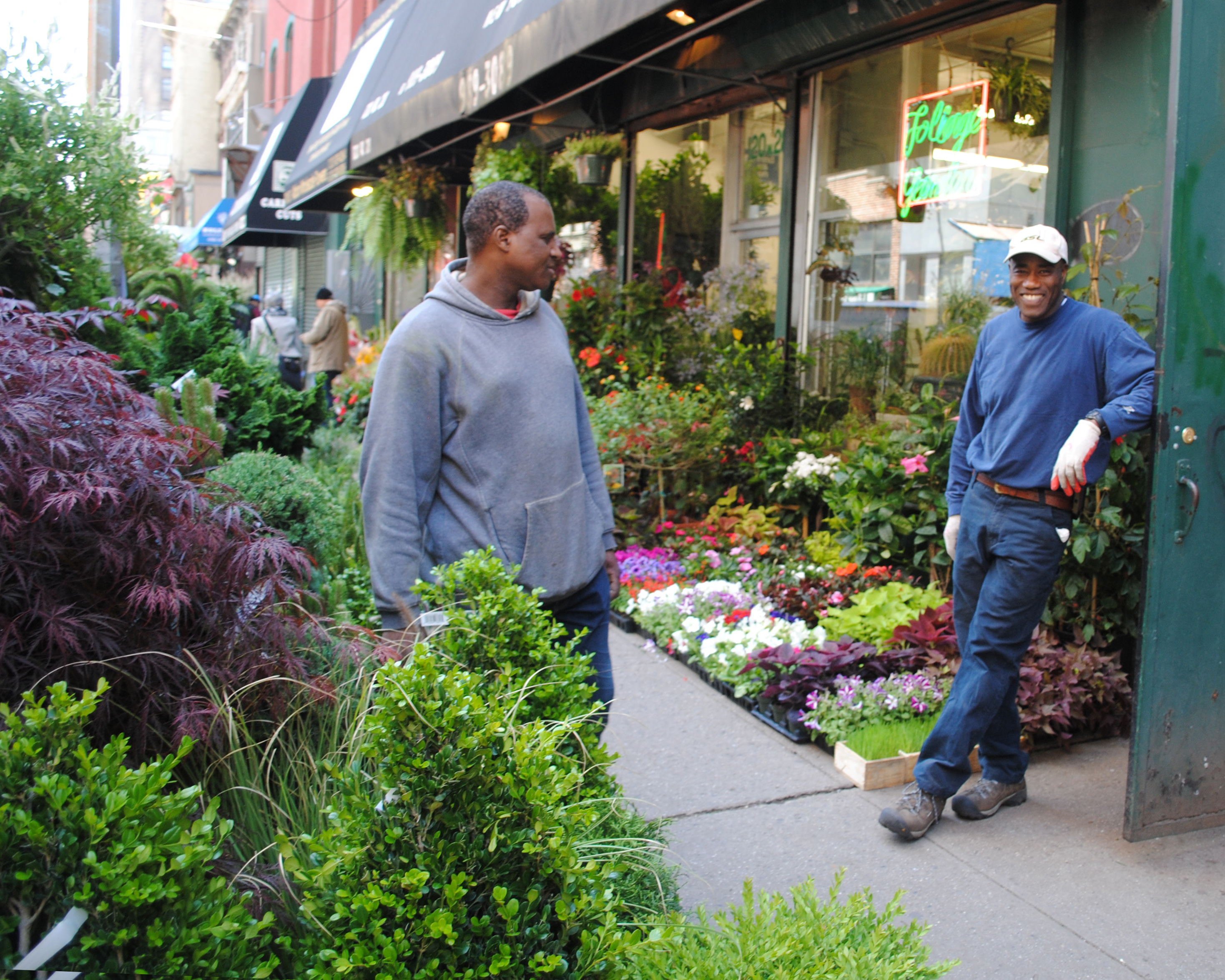
Curlon leaning on the door of Foliage Garden in the New York Flower DistrictAdam loading the Starbright Van!
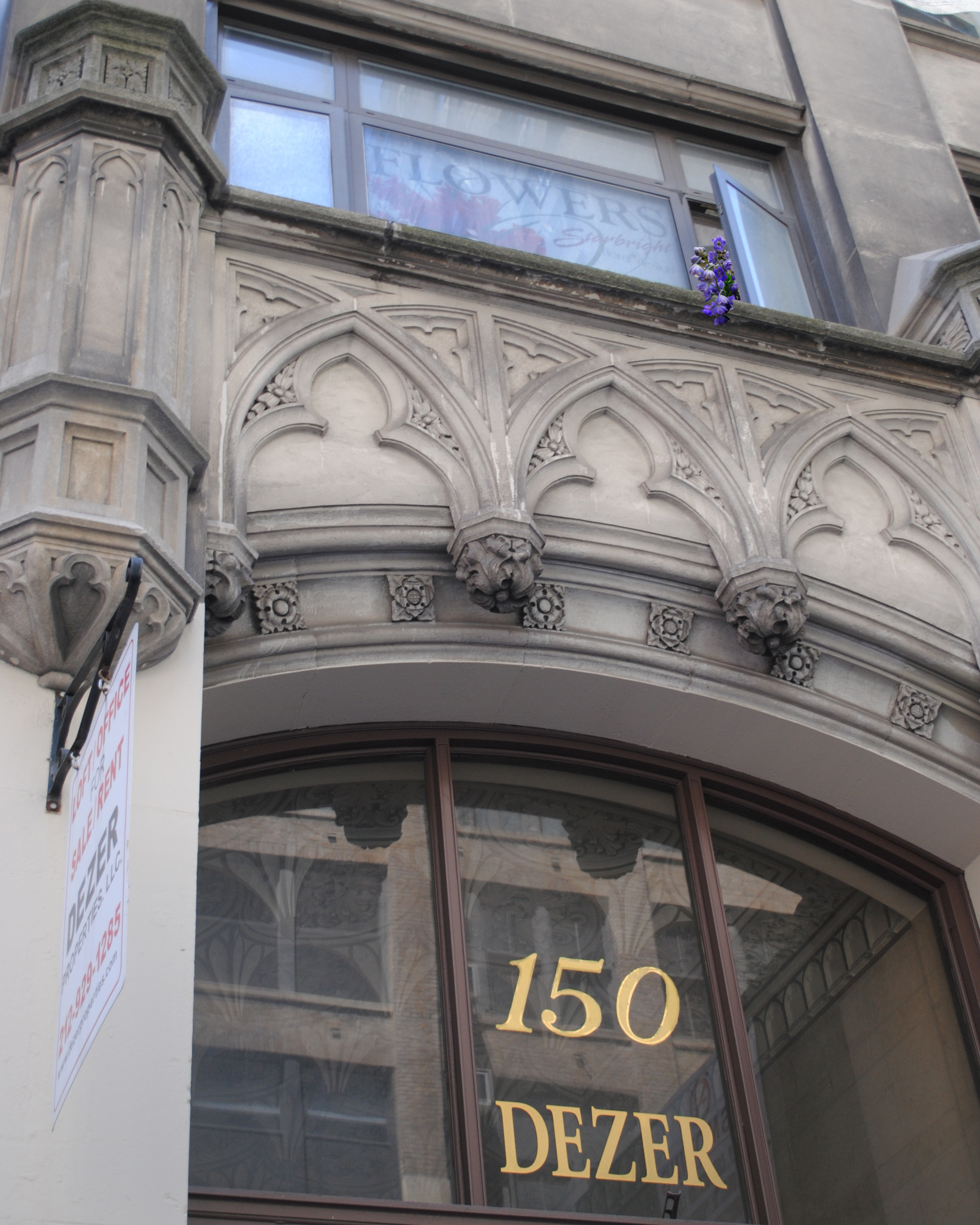
And while most of the sellers in the District are strictly wholesale, Starbright Floral Design provides a retail option for those looking to take home fresh, beautiful flowers at a reasonable price. Located on the second floor of 150 West 28th Street, above the delicious Korean HIT Deli, Starbright is an open design studio, meaning you can watch our professionals put together your lovely arrangement while you wait. In addition to custom arrangements, we also offer a wide selection of ready-made designs for your convenience. Some arrangements currently on offer that we highly recommend include the delightfully pink Full of Life, the subtle and elegant Peony Garden Fusion, and for you Beatles lovers, the gorgeous White Album, featuring white lilac, cream roses, white hyacinth, white amaryllis, white hydrangea, and white phaelonopsis bloom, accented with dusty miller and lily grass loops.
150 West 28th Street – see us up there on the 2nd floor?
Starbright is truly lucky to call the New York City Flower District our home. With such a deep history and with a community of sellers who are passionate about high-quality flowers, it is one of the most remarkable areas of the city. We invite you to come visit and see the magic of the District for yourself!
Looking for flowers in New York City? Visit our Event Gallery for inspiration. Or see our daily selection at Starbrightnyc.com.
It’s cold, it’s dark, and a single digit number glows back on the alarm as ear-piercing beeps cut the silence.
A full ten percent of the population actually enjoy this experience. For the other 90 percent, a mandatory 7:00am alarm is less than desirable.
Society, work, or familial pressures keep us bouncing – very few people have the luxury of subscribing to their preferred sleeping patterns. In fact, instead of maintaining a natural sleep schedule, many people stay awake later and wake up earlier than their body would like.
What do we get for pulling extra hours? In a study of young employees, lower amounts of sleep caused an increase in tension, nervousness, and irritability. These symptoms were especially present in the morning hours and tended to naturally wear off as the day progressed.
Good news for the habitually groggy!
“The morning blahs, it turns out, is a real phenomenon, with positive moods — happiness, friendliness, and warmth for example — manifesting much later in the day,” says lead researcher Nancy Etcoff, Ph.D. Doctor Etcoff is referring to her research that confirms
The study, done at Harvard University and Massachusetts General Hospital studied the effects of flowers on the emotions of participants. These participants noted that they generally felt least positive in the morning but reported being happier and more energetic after looking at flowers first thing in the morning.
Doctor Etcoff continues “By starting the day in a more positive mood, you are likely to transfer those happier feelings to others — it’s called a mood contagion.” We’re thinking of it as an emotional domino effect and it’s wild – check out more info on the Wikipedia page. http://en.wikipedia.org/wiki/Emotional_contagion
The best part? Flowers don’t discriminate – the positive effects work for women, men, and even children and adolescents.
Want to try it out? Our reading suggest that the effects are strongest when flowers are located in communal areas or in the immediate surroundings. Some ideas from starbrightnyc.com :
From Starbright’s table to yours
For the bedroom :
Try a posy of something sweet and aromatic. Lilies, lilacs, stock, sweet peas, and freesia are examples of scented flowers to look for.
For the kitchen :
Whether in a home or an office, families and friends tend to come together in kitchen spaces – try something bigger and brighter for this room. We also love simple and colorful. A bundle of tulips maybe?
For the desk :
Something elegant, contained, and unlikely to spill might be best. Check out these callas as an option or these orchids.
For the office :
When you’ve got a bit more space, a flowering orchid plant will help keep you company. While white orchids are always elegant, this purple Phaleonopsis orchid is a great way to include Pantone’s 2014 Color of the Year – Radiant Orchid in your space.
With Starbright’s subscription service, you can have seasonal flowers in your home or office fresh weekly. Give us a call to find out more.
Looking for flowers in New York City? Visit our Event Gallery for inspiration. Or see our daily selection at Starbrightnyc.com.
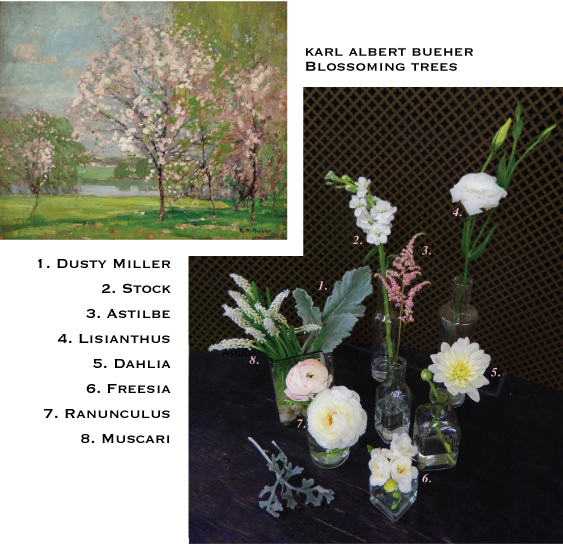
Karl Albert Beuher was one of the early Chicago painters to adopt Impressionism. He joined other American artists in Giverny, France, to paint en plein-airin the commune established by Claude Monet. These impressionists developed a style that required quickness in order to finish a piece before the sun moved and the light changed. They wanted to capture their subjects, which were generally natural scenes, as the eye might see them. Instead of hard lines and lots of detail, Bueher’s brush delivered bursts of color and light that seem to illustrate a fleeting moment in time. He wants us to see ripples in the leaves instead of the angles in the bark. He wants us to see a sea of long grasses and field flowers instead of individual blades of grass and carefully represented blooms.
The art of floral arrangement is as varied as any art form. Last week, we showed you our Georgia O’Keefe inspired arrangements and how color and line can be used to suggest energy and emotions. This week we’re looking at another bouquet – this one designed on the same principles as Bueher’s early works.
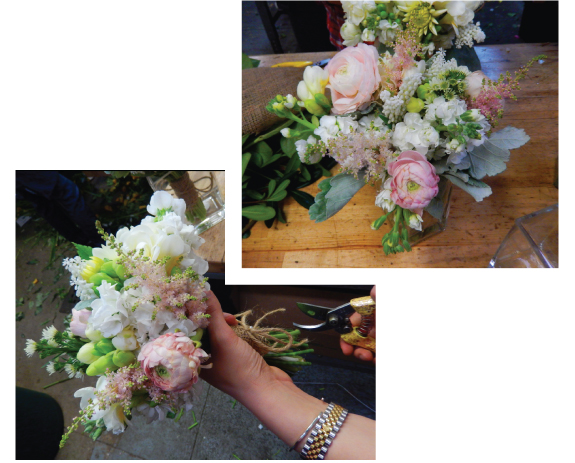
We’re focusing on the impression of these flowers as a whole, instead of on any one individual “wow” flower. There is a lightness represented in Beuher’s work that we wanted to capture. In regards to the design above, we wanted to create something genuine, unfettered, and at one with the scene. Something that would be memorable for the occasion, but serve to enhance the impression of the overall, rather than draw attention to itself.
Take a look at Beuher’s painting below and the flowers we selected to make up this arrangement. For our “plein-air” bouquet, we want to create a light and feathery texture similar to that of Beuher’s brush strokes. The vibrance of the colors in the artwork are also important. We love how shadows are created with vibrant shades of green and the pink – they create contrast we might describe as “lightness” instead of “brightness”.
Each flower was carefully selected for it’s size, color, and texture. Our wind-swept bouquet of wildflowers is purely fantastical – few of these flowers are native to any one common region. Luckily, here at Starbright, we had no problem getting the flowers we wanted. Our selection included :
1/ Dusty Miller – The quaint name isn’t the only thing we love about this hardy foliage. With it’s silver-white color and soft texture, this leaf adds a wistful element to any arrangement.
2/ Stock – Noted for it’s heady, clove-like scent. This example of the variety, with double flowers, adds texture to our arrangement. Stock also is a symbol of a happy life and a contented existence.
3/ Astilbe – These remind us of wildflowers. The feathery stalks seem to float in this arrangement.
4/ Lisianthus – Native to equatorial areas of the American continents. This delicate, long-lasting, prairie flower has ruffled petals. They represent warmth and geniality.
5/ Dahlia – Sometimes called the “Queen of the Autumn Garden”, the dahlia belongs to the Asteraceae family which is noted for their star-shaped blooms and includes flowers lie the daisy and sunflower. Traditionally these flowers symbolize hope for an everlasting union.
6/ Freesia – Sweetly, citrus-scented and long-lasting, these graceful flowers are perfect for a bouquet. Each wiry stem can have up to 10 flowers.
7/ Ranunculus – The fine layers of petals give this weighty flower a delicate appearance.
8/ Muscari – Small and fragrant, the shape of these flowers is reminiscent of little bells.
Looking for flowers in New York City? Visit our Event Gallery for inspiration. Or see our daily selection at Starbrightnyc.com.












 Blooming Thoughts