Flower Files: Holly

Holly
Variegated Holly
Quick Notes /

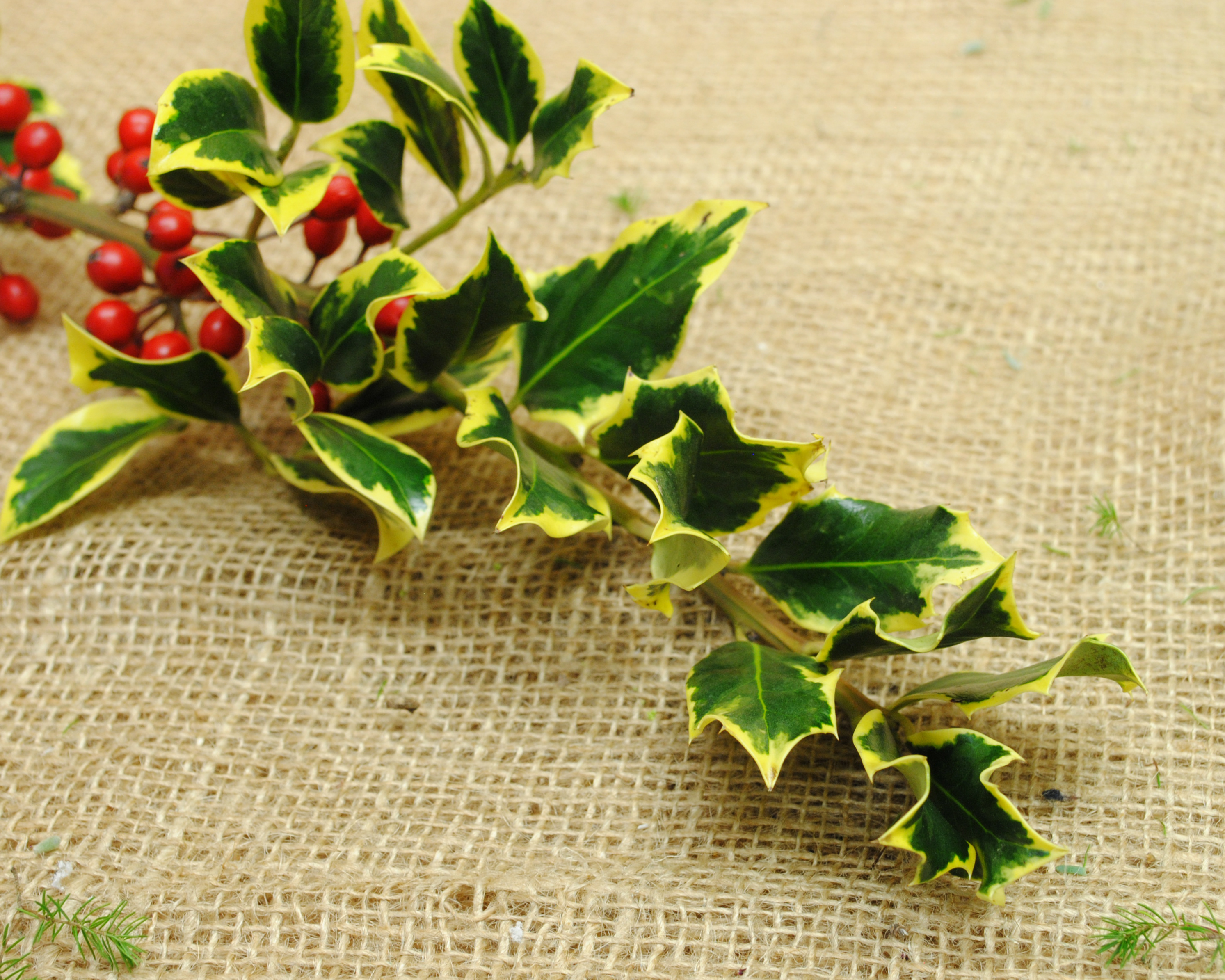
Whether you call it holly, winterberry, inkberry, or yaupon this colorful green is a favorite through the winter. Holly is the general name used for a large number of deciduous and evergreen shrubs and tress that belong to the Aquifoliaceae family and grow in the tropics as well as temperate zones worldwide. The evergreen varieties tend to be more hearty and have a longer vase life than their deciduous counterparts. Holly are notable for their thick, leather-like leaves as well as the bright berries produced by the female holly plant.

Holly History/

Holly have a long history! The variety we know and love, begins to appear about 50 million years ago, while some of the older varieties are now extinct. Holly emerged from the laurel forest, which once covered much of the worlds surface and was able to spread and adapt to all sorts of climates. It’s bright colors and hardy nature captured the interest of many of our ancestors. It was particularly popular in Europe and considered good luck by ancient Druids. Holly was also significant to the ancient Romans who used holly boughs to decorate for the feast of Saturnalia. The practice of using holly boughs as winter decorations continues today in many countries around the word.

Holly Fun Facts /
  • Both the female and male plants produce white flowers, but only the female plants produce berries.
  • A holly tree can live up to 300 years!
  • Have you ever tried Yerba Mate tea? This is a product of the South American holly Ilex paraguarensis


Starbright Logo

Looking for flowers in New York City? Visit our Event Gallery for inspiration. Or see our daily selection at Starbrightnyc.com.
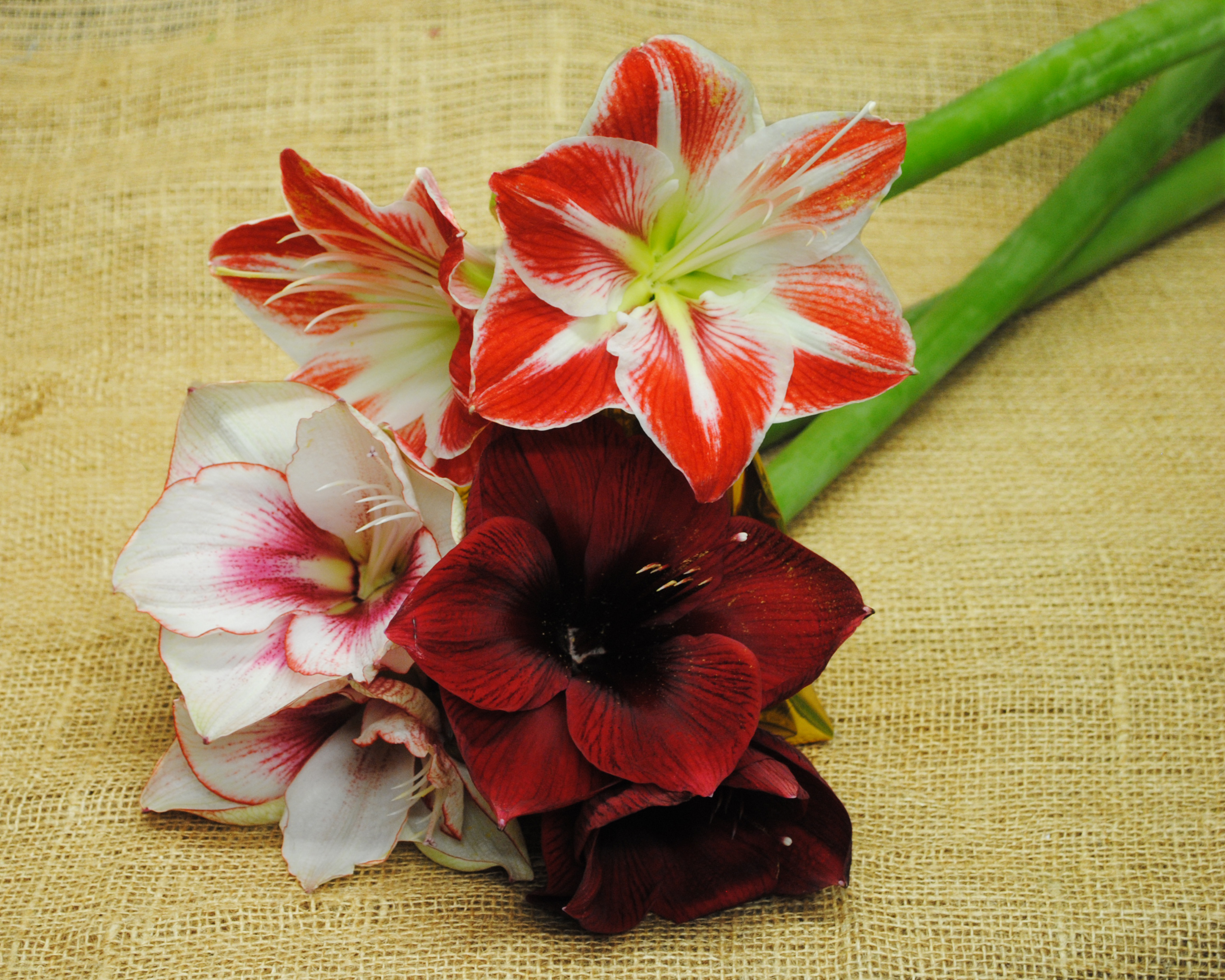
Starbright NYC Flower Files: Hippeastrum (aka Amaryllis)

Amaryllis
Hippeastrum (commonly called Amaryllis)

Hippeastrum aka Amaryllis


Quick Notes /

Surprise! This flower, commonly called Amaryllis, is actually a member of the Hippeastrum genus! For years, there was confusion among botanists as to the generic names Amaryllis and Hippeastrum. The debate, it seems began around 1738-1753 and was finally resolved by the 14th International Botanical Congress in 1987. The IBC decided that  the name Amaryllis would belong to the originally identified bloom regardless of common use. So what’s the difference? The Hippeastrum bloom is commonly preferred for it’s ability to bloom indoors during cold winter months in the northern hemisphere while it’s namesake bloom, the actual Amaryllis, grows natively outdoors South Africa and is more commonly referred to as a Lily (though Amaryllis and Lilium, “true lilies” are only very distantly related). This oddly twisted bit of floral folly took over two hundred years to come to terms with. So let’s all do ourselves a favor and just keep on calling this bloom (in all it’s varieties) by it’s common name.


Visual Notes /

These bold trumpet-shaped flowers grow from easy to plant bulbs. Their long hollow stems are accompanied by long flat, sword-shaped leaves. One stem can produce up to six blooms. The blooms range in color from deep bold red to the brightest white and include a number of interesting bi-colored varieties as well.

Flower History/

The name Amaryllis comes from the Idylls of Theocritus or the Eclogues of Virgil (click to read Theocritus’ Idylls). In this pastoral poem, Amaryllis is a sweetly-singing shepherdess who is in love with a cold-hearted man. Desperately, Amaryllis pierced her heart with a golden arrow then, inexplicably, trekked to his cottage day after day for an entire month, shedding drops of blood along the way. On the thirtieth day blood-red blooms blossomed from the drops, the man was enchanted by the flowers, Amaryllis’s heart was healed and they lived happily ever after.

Inside Info /
  • The US imports over 10 million Amaryllis bulbs a year.
  • The name Amaryllis comes from Greek “to sparkle”
  •  The name Hippeasrtum, also from Greek means “horseman’s star”.


Starbright Logo

Looking for flowers in New York City? Visit our Event Gallery for inspiration. Or see our daily selection at Starbrightnyc.com.

NYC Holiday Flower Files: Pointsettia

Poinsettia
Poinsettia

Poinsettia Facts

Poinsettia Quick Notes /

A popular floral symbol of the Christmas Season, Pointsettias are indigenous to Mexico and Central America. The poinsettia plant generally grows to be between two feet and thirteen feet tall. The common English name – poinsettia – comes from the last name of Joel Roberts Poinsett, the first United States Minister to Mexico. Mr. Poinsett introduced the plant to the US in 1825.

Poinsettia Visual Notes /

The large dark green dentate leaves grow lower on the stem than the colored bracts, which are often mistaken for petals. The colored bracts are available in white, cream, pale green, pink, orange, marbled, or the most popular – bright red. The color of the bracts is affected by photoperiodism. Photoperiodism is a physiological reaction caused by the length of daylight or night. Poinsettias are peculiar in that their bracts require at least twelve hours of darkness in order to change color, but also exposure to bright light to deepen the shade of the color. The flowers of the poinsettia are tiny and unassuming.  Their yellow structures cluster in the center of the leaves.

Poinsettia
Poinsettia


Poinsettia Flower History/

The poinsettia has been called many things over the years and around the globe. The original name for the poinsettia plant is Cuetlaxochitl, which is Nahuatl for “flower that grows in residues or soil”. The ancient Aztec used the Cuetlaxochitl bracts for their red dye and as a medicine. In Mexico, the poinsettia is called flor de noche buena or “Christmas Eve flower” while in some other Spanish speaking countries it is called flor de pascua or “Easter flower”.  In Egypt, the name Bent El Consul translates as “the consul’s daughter” – in honor of Mr. Poinsett.

In the US, the poinsettia was popularized by the Ecke family in California who first sold poinsettia plants at street stands during the Holiday Season. After three generations of cultivating the plants, Paul Ecke Jr. solidified the plants Holiday association by sending free poinsettia plants to television stations from Thanksgiving to Christmas to be displayed on the air.

Poinsettia Inside Info /

  • Keep your poinsettia healthy by following these pointers
    • Water the soil when it begins to dry (aim for moist, but not soggy).
    • Keep the plant away from hot or cold drafts (a general temperature of 60-70 degrees fahrenheit is best)
    • Expose the plant to natural light
  • Despite popular belief, the Poinsettia is not poisonous – it’s been cleared of all charges by the American Medical Association.
  • Poinsettia plants will change color year after year with a little bit of work. Beginning in October, stash your plants in total darkness from 5pm to 7am and then expose them to full sun. Repeat every day and in eight to ten weeks, your poinsettia bracts should be changing color.


Starbright Logo

Looking for flowers in New York City? Visit our Event Gallery for inspiration. Or see our daily selection at Starbrightnyc.com.

Flower Files: Rose Hips

Rose Hips
Rose Hips
Quick Notes /

Also called Rose Hep or Rose Haw, these are the pollinated fruit of a rose plant, which begins developing in Spring and look like large bright berries by Autumn. They are generally available in a reds and oranges, but some varieties of roses have darker almost purple or black rose hips. A few species of roses are grown for the aesthetic value of their hips instead of their blooms, including Rosa movesii, which has large, bright red fruits. The waxy skin of the rose hip is reflective and seems to glow among the greenery in an arrangement.


Flower History/

Rose hips have a long history. While the rose hips we use are only for looking at (we do not recommend picking any of these fruits out a floral arrangement) these fruits have been used in everything from herbal teas to the central ingredient in the national soft-drink of Slovenia. There is rose hip jam, itching powder, and even wine and bread. This versatile fruit has one of the highest levels of vitamin C available in a plant. The rose hip Wikipedia page offered this fun historical fact :

During World War II, the people of Britain were encouraged through letters to The Times newspaper, articles in theBritish Medical Journal, and pamphlets produced by Claire Loewenfeld, a dietitian working for Great Ormond Street Hospital for Sick Children, to gather wild-grown rose hips to make a vitamin C syrup for children.


Inside Info /
  • Most rose species require that the hip be chilled in order to germinate – some species only germinating after two winter chills have occurred.
  • The hairs inside the rose hip fruit are highly irritating.
  • The wild Dog Rose is most often cultivated for it’s hips.


Starbright Logo

Looking for flowers in New York City? Visit our Event Gallery for inspiration. Or see our daily selection at Starbrightnyc.com.

Flower Files: Brunia

Brunia
Brunia
Quick Notes /

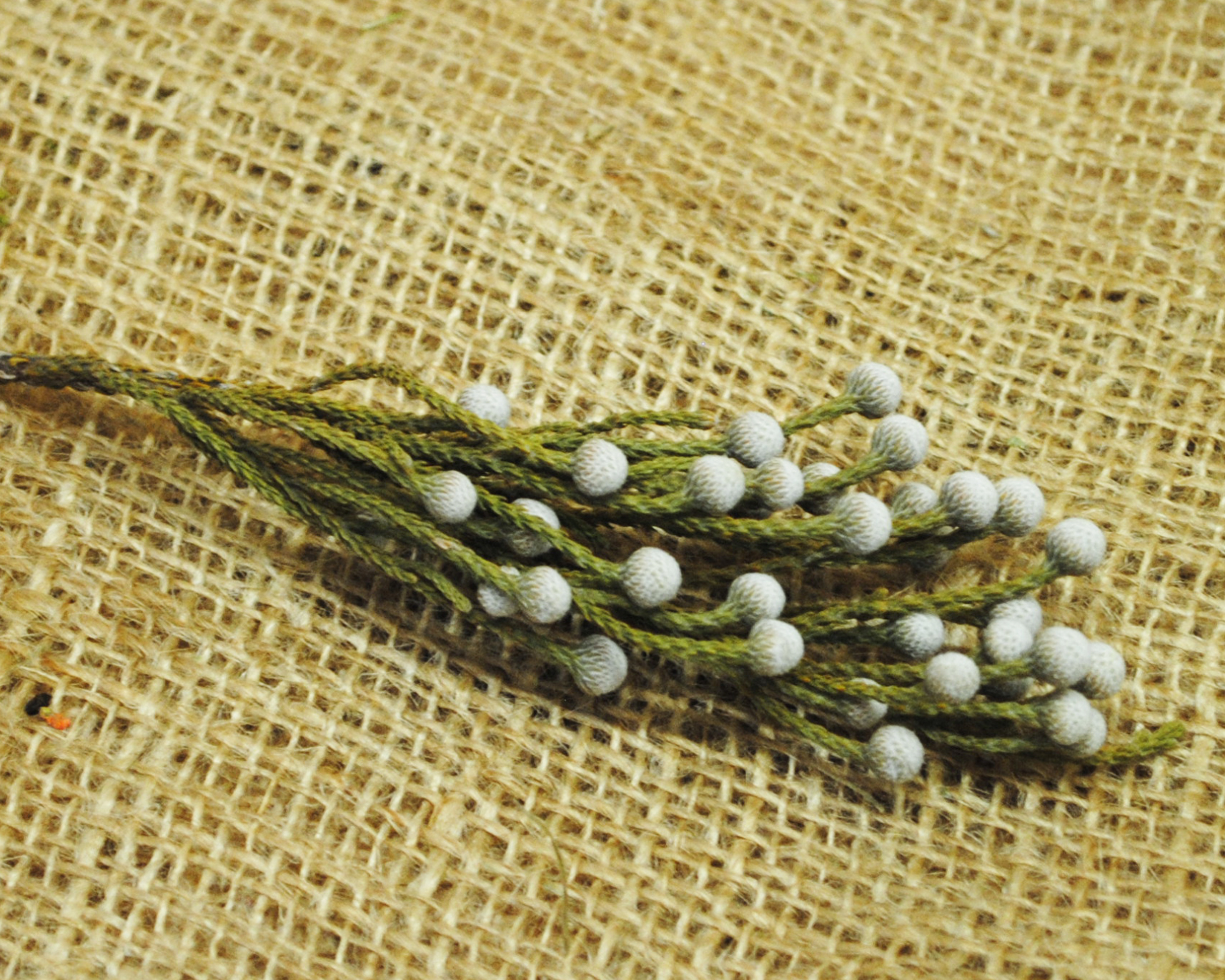
The Brunia flower is often overlooked in it’s natural habitat. The single-stemmed shrub it grows on vaguely resembles a pine tree, but is much softer, and grows between two and three meters tall. Brunia is characterized by small, spherical inflorescences that cluster at the end of a branch often disappear in the dark green foliage overhead.

As it is used in floral arranging, the petals of the Brunia flower have already fallen away to reveal a natural silvery cast that somehow seems both quirky and chic.


Flower History/

The Brunia albiflora is a tall shrub that is part of an ancient plant family. In northern Namaqualand, fossil pollen that matches modern Brunia pollen has been found in early Tertiary and late Cretaceous mineral deposits. If you’ve seen The Land Before Time…? This flower could’ve been Littlefoot’s lunch! But despite a very long history, this plant hasn’t spread very far, it’s native growth being isolated to southern tip of Africa.

“There is no indication where the ancestral stock originated, nor how it got to southern Africa. […] It could be that because this family is in a state of decline, its other relatives have already gone extinct and the southern African members are the only survivors.


But don’t worry that requesting this flower will contribute to it’s ultimate demise. Brunia flowers are commercially grown in Australia, California, or New Zealand.

As a decorative floral, Brunia is a fantastic filler! Because the flowers grow at the end of long branches, stem length is generally not a problem. These interesting florals last about a week, and will dry out nicely. Brunnia is most often available in silvery-white, but it also appears in yellow, green, and blush


Inside Info /
  • Brunia flowers are notoriously fickle about germinating. This is because the Brunia plant holds on to its dead flowerheads (which hold seeds) for up to 6 years! The seeds only drop and have the ability to sprout when a fire sweeps through and takes out the parent plant.
  • Sometimes used in the Language of Flowers for : Chivalry

Starbright Logo


Looking for flowers in New York City? Visit our Event Gallery for inspiration. Or see our daily selection at Starbrightnyc.com.
Brightening Up With The Chrysanthemum.

Chrysanthamum
Chrysanthemum

Well, that’s it, it’s over – those long days of summer are gone. Even though our days are getting shorter and it’s almost always dark by the time we get home, here at Starbright, we’re finding lots of ways to brighten things up. Autumn flowers are winding down, but some of our very favorite staple flowers are at their peak: alstroemeria, carnations, lilies, and roses and most importantly – the flower of the month – the chrysanthemum.


The name “chrysanthemum” is derived from the Greek words chrysos (gold) and anthemon (flower). Don’t let its name fool you into thinking these guys are only available in the beautiful yellow/orange combo that is so common at this time. There are about 40 different species of chrysanthemums and countless varieties and cultivars that are available in a wide variety of colors, shapes, and sizes. Because of this overwhelming diversity, chrysanthemum plants are further described as being either a “garden hardy” or an “exhibition” variety and the bloom types can be further described as belong to one of the thirteen bloom forms recognized by the US National Chrysanthemum Society, Inc., which follows the international classification system.


According to principles of Feng Shui, Chrysanthemums are the floral representation of the Fall season and are ideal for brightening up a space. According to this practice, the cheerful presence of these blooms excites happiness and laughter. During the Fall season, displaying chrysanthemums creates especially good luck.


Here are five Feng Shui ways to use chrysanthemums to brighten up our days as they keep getting shorter!
  1. The showy, yellow, round-headed chrysanthemums are perhaps the most sought after due to their symbolic association with a life of ease.
  2. White and Yellow chrysanthemums are great for energizing “metal” spaces of the home which are associated with children, creativity, and helpful people.
  3. Chrysanthemums encourage tranquility and help to alleviate of grief and anxiety.
  4. Wish someone a long life and much contentment with a bouquet of chrysanthemums.
  5. Living chrysanthemum plants acts as indoors air filter, are easy to care for, and last will bloom for much longer than cut flowers – while having all the same symbolic perks of the cut flowers. Ask about Starbright’s Plant Boutique!


To make sure you get the most from your purchase, check out How To Care for Cut Flowers!


Starbright Logo


Looking for flowers in New York City? Visit our Event Gallery for inspiration. Or see our daily selection at Starbrightnyc.com.

Flower Files: Cabbage

cabbages
cabbages
Quick Notes /

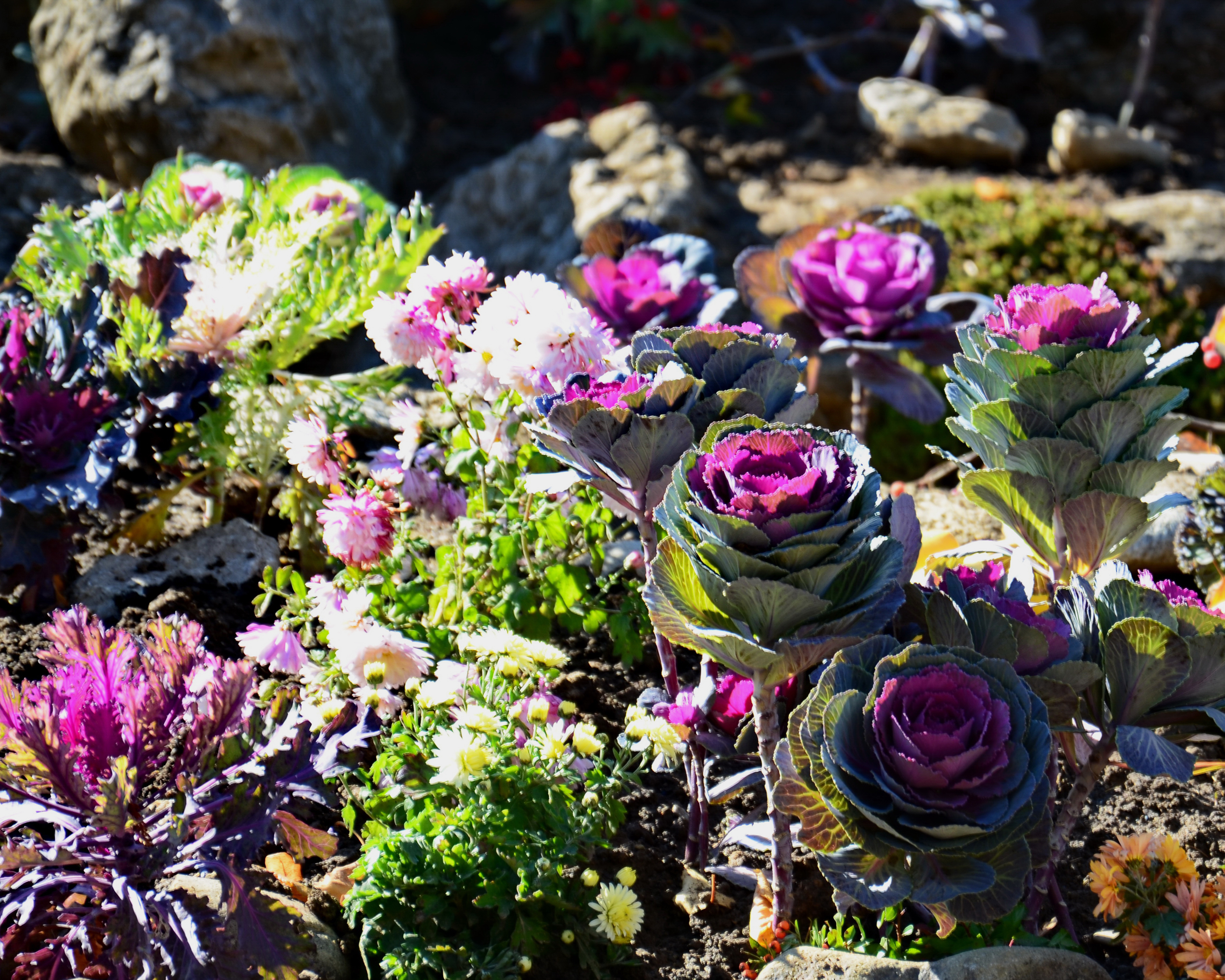
Cabbage, and yes, we’re talking about the vegetable here, is a great addition for an autumn arrangement. No, but seriously, despite their less than exotic origins, Cabbages have layers of leaves that overlap in a spiral pattern from the center of its head. The leaves can be either smooth or ruffled, open and large or tightly furled and resembling a rose. The alternating leaves can be lobed or wavy and even highly vained. There are varieties that feature a waxy coating on the leaves. And all of those great attributes come in a variety of colors. From the clean and classic white and green cabbage to the fancy purples and reds there’s a cabbage for all occasions. And while the cabbage plant grows really sweet, little yellow flowers, we don’t bother with them in arrangements. The big, bold, and hyper textural cabbage heads are far more our style.


Flower History/

Native to Britain and continental Europe, today’s cabbage were developed as a crop way back in before 1000 BC. As a food staple, cabbage made its way around the classical world and was greeted with either great devotion or great antipathy. Great people including Cato the Elder and Diogenes considered cabbage superior to all other vegetables. In Europe, cabbage found great popularity during the High Middle Ages, when other crops were in short supply. From Europe the crop spread to Mesopotamia to Egypt as a winter crop and from there it followed the trade routes  and continued to spread. There isn’t a lot of evidence that the colorful crop was used in a decorative manner, but here at Starbright, we can imagine that the purples and greens that last well after most flowers drop, have always been a sight for tired eyes. It isn’t a surprise that at some point, someone started cutting the smaller heads for filling vases.


Inside Info /
  • Babe Ruth used to place a cabbage leaf under his hat before each game.
  • The world’s largest cabbage was grown in 1865 in Durham, England by William Collingwood – it weighed in at a whooping 123 pounds!
  • At one time, Russian princes paid tribute not only with racing horses and jewels, but also with potted cabbage plants.

Flower File : Anthurium


Anthurium
Anthurium
Quick Notes /

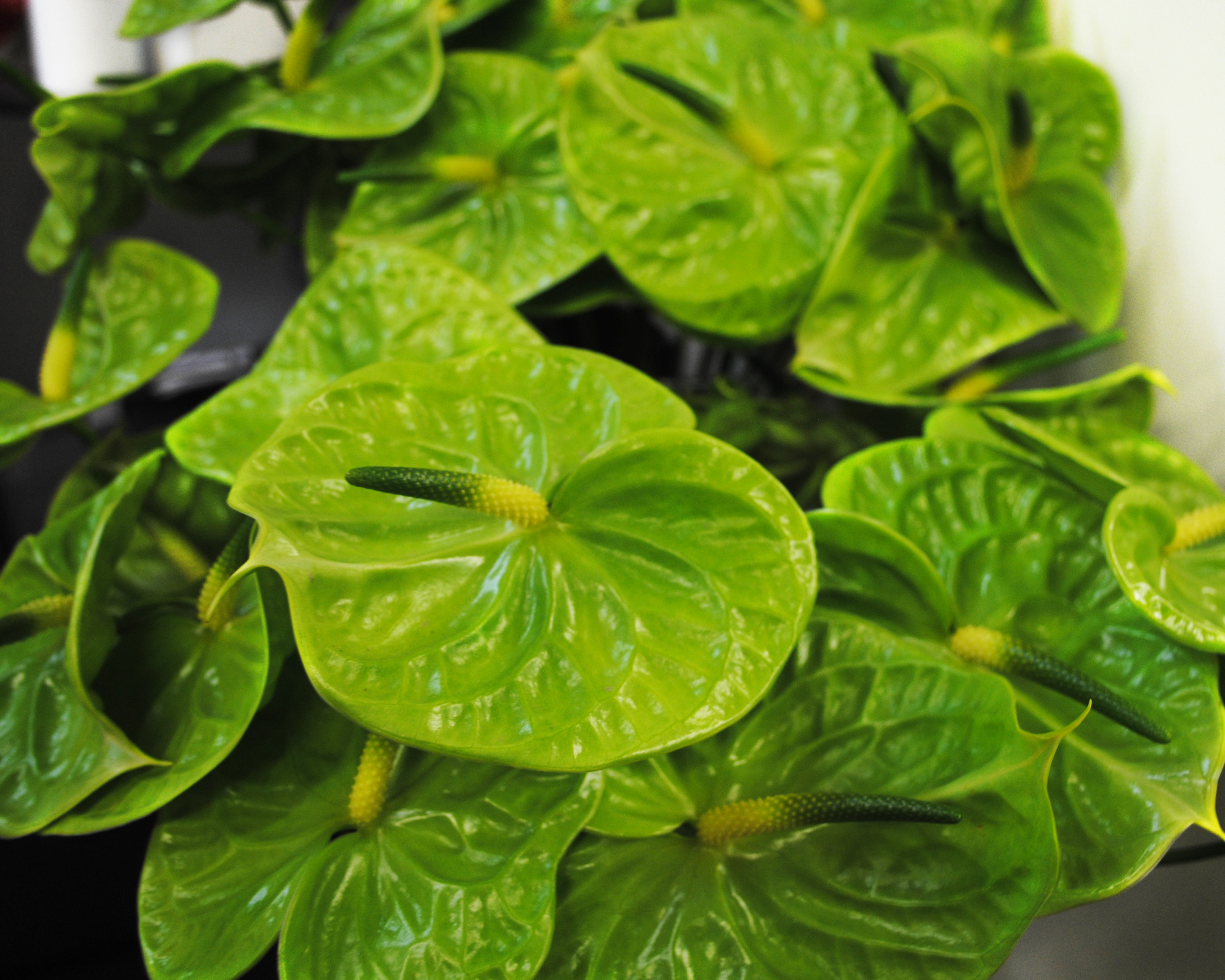
Technically an herb, Anthurium is found across Mexico, northern South America and the Caribbean. It features a tall, thin flower in the hip of a broad, flat leaf. Great for floral arrangements, anthurium will last a while.


Visual Notes /

Anthurium comes in a wide range of colors, across over 163 species. With anthurium, the sky’s the limit! Most typically, you’ll see the waxy leaves in green, white or red, with the flower usually being matching or yellow in color.


History /

In 1889, the first anthurium was brought to Hawaii from London. For over 120 years, the anthurium has been Hawaii’s most-exported decorative item – this includes beating sales of hula skirts, ukuleles and hula-ing bobble women.


Inside Info /

These are poisonous plants! Not a good call for environments with small children, pets or college kids experimenting with veganism.

Green Anthurium
Green Anthurium


Flower File Friday : Sunflower

Sunflower
Sunflower

QUICK NOTES /
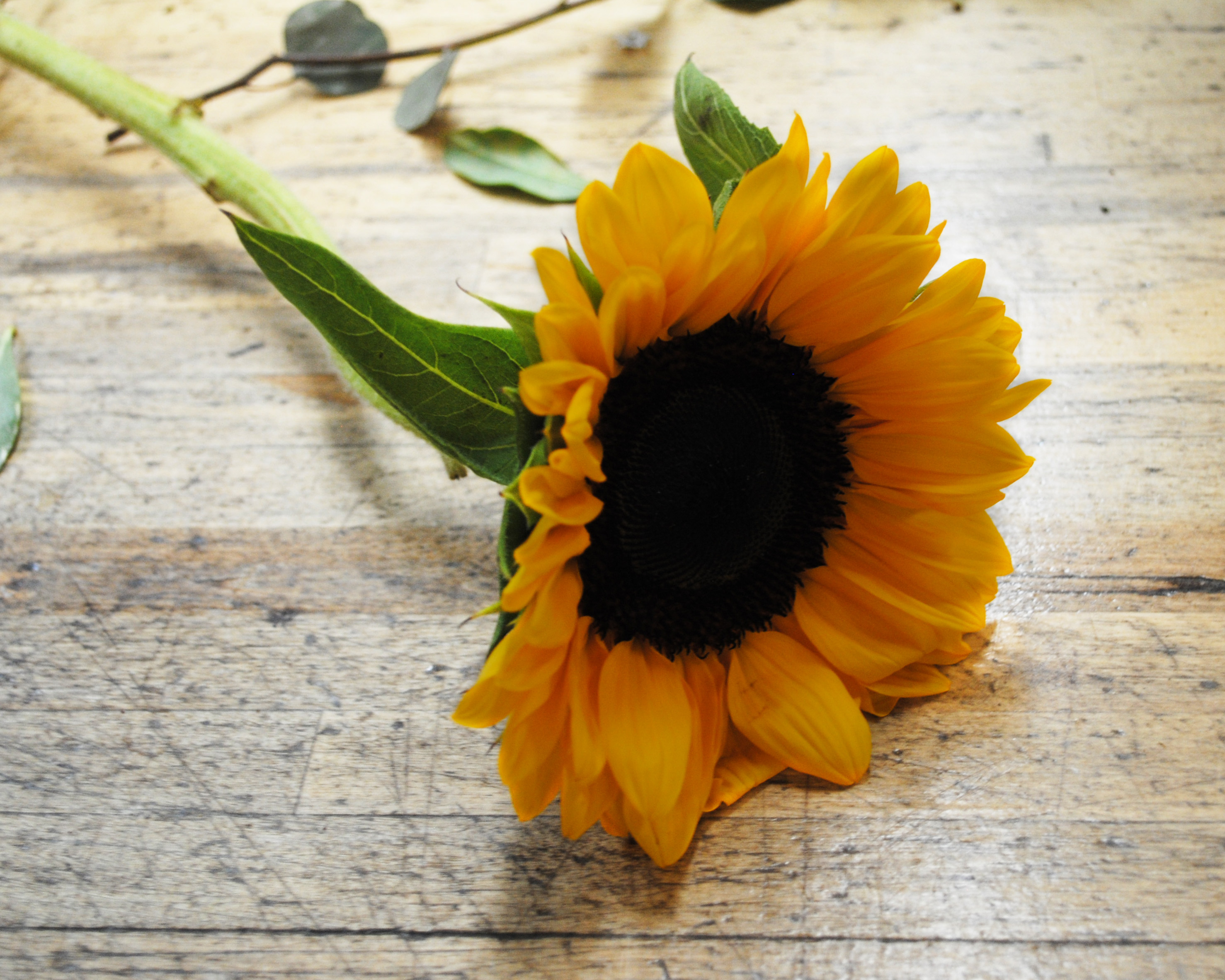
Native to the Americas, but grown in Europe from the 16th century in large numbers, sunflowers are cultivated and used around the world as cut flowers, a source of oil, and a source of food in the form of seeds. Because it was introduced during the Age of Discovery, the religions of Europe didn’t have any qualms with practicioners using sunflower oil to cook during Sabbath – it’s popularity was as much a result of it’s beauty as it was it’s usefulness. It’s thought that sunflowers point their blooms towards the sun throughout the day – while this behavior, known as heliotropism, is sometimes observed in young plants, typically flowers end up facing east (and staying that way!)
VISUAL NOTES /
Sunflowers come in a wide variety of yellow, red and golden hues. The “seeds” of the sunflower are actually little tiny flowers – on some varietals the seeds will actually open, while in plants with a dark center the seeds are closed. Sunflowers grow on hairy stems that are stiff enough to stand up eight to twelve feet straight.
FLOWER HISTORY /
Native to North America, the Sunflower was domesticated as early as 3000BCE. Much later, around 1500CE, Spanish explorers brought the bold headed flower back to Europe.  Though the flower was generally thought to be ornamental in Western Europe, by 1716 an English patent was granted for squeezing oil from sunflower seed and by 1830 Sunflower oil was manufactured on a commercial scale. In Russia, during the same time, farmers were growing over 2 million acres of the sunny flowers for foodstuffs. “By 1880, seed companies were advertising the ‘Mammoth Russian’ sunflower seed in catalogues. This particular seed name was still being offered in the US in 1970, nearly 100 years later. 
INSIDE INFO /
– Sunflowers are a great gift for celebrations of life – they’re great in baby shower arrangements.
– Wild Sunflowers don’t look anything like their cultivated cousins. In the wild, sunflowers have many branches with small flower heads and small seeds.
– The sunflower is the state flower of the US state of Kansas, and one of the city flowers of Kitakyūshū, Japan, and the national flower of the Ukraine.


Starbright Logo


Looking for flowers in New York City? Visit our Event Gallery for inspiration. Or see our daily selection at Starbrightnyc.com.