Lily of the Valley: The May birth flower and possibly Robert Plant’s inspiration to the 70’s song “Stairway to Heaven”.

The lily of the valley is a low-growing perennial plant that usually has two large oblong leaves and small fragrant nodding bell-shaped flowers that grow evenly up the stalk forming what appear to be steps.   Perhaps Mr. Plant, observed the Lily of the Valley’s configuration and penned the song “Stairway to Heaven” (probably not).  However, medieval monks having lots of time on their hands and keen observation skills, viewed the flowers configuration and labeled the flower the “ladder to heaven”.  The flower was considered a symbol for the steps to heaven.

The Victorian era, with its strict rules of etiquette regarding verbalizing feelings of affection, was the golden age of the language of flowers.  When the lily of the valley was given as a gift to a love interest its meaning was said to be “you made my life complete”.  Today its meaning is said to be happiness, humility, purity and sweetness.

Through the years the flower has gained popularity in wedding bouquets.  The reason for this is open to debate.  Some would say it’s the flower’s fragrance and beauty.  Opponents offer that many flowers equal its beauty and fragrance.  The marriage cynics amongst us, point to the flowers’ herbal use as a poison antidote as the reason for its wedding bouquet popularity.   Statisticians claim that polls of brides are flawed.  Many brides are embarrassed to admit fear of poisoning by their groom as the driving force behind the choice of the flower.  Perhaps we’ll never know.

Similarly the origins of Lily of the Valley is open to debate.  One Christian bible story has it that the flower first grew where Mary’s tears fell at the foot of the cross.   Another has the flower first sprouting from Eve’s tears after she was kicked out of the Garden of Eden.  Whatever its origins, the flower provides a beautiful fragrant and visual accent to any floral display.

This post is brought to you by Starbright Floral Design (www.starflor.com).  Sometimes we like to bring out “the fun side of flowers” by injecting some humor into our scribes.  We truly hope you enjoy our reads and get to see flowers from a little bit of a different perspective.  We sure do.

When you have some time, please visit our website and tell us what you think of the work that we do.  If you would like to order a gift for someone, you can visit our e-commerce portal we always recommend Designer’s Choice as a great option to take the guess work out of ordering flowers for a friend, a loved one or a parent. We deliver flowers on a same day basis (open seven days a week) in the United States.  Worldwide delivery is available  (except war zones, jungles, desserts and merchant marine vessels in the open sea) within 48 hours.

We would love to hear from you!  An alternative to our website is to call us (800.520.8999) or you may visit us at 150 West 28th Street (Second Floor).  We are in the heart of New York City’s Historic Flower District.  Pop on in! We would love to meet you!

Starbright Floral DesignThe Official Florist of the City that Never Sleeps.

“Flowers, Festivals & Celebrations… It is what we do!”

April Birth Flower: The Daisy-The most commonly picked flower by slaves?

Welcome to the fourth month in the calendar… Another birth flower has arrived.  With springtime everywhere, we are introducing the flower of the month of April (and for those of you who have been following us, this is no April Fool’s joke) – The flower of the month is the common daisy.  Read on!


The Everyday Daisy - April's Flower of the Month


Daisies belong to the Asteraceae plant family.   The Asteraceae family dates back fifty million years and includes over twenty thousand varieties. The family name derives from the Greek Aster, meaning a star shape.  The name daisy derives from the phrase Day’s Eye.  It’s a reference to the English daisies routine of closing their petals at night and opening again at daylight.  The Daisy’s meaning is said to be purity and innocence.  However, to Roman soldiers it often meant the difference between life and death.  The English daisy was widely used by the Romans for its astringent properties. Roman armies would have their slaves pick daisies incessantly in order to extract the juice.  Bandages were soaked in this juice and would help bind battle wounds.  Today the phrase just out picking daisies is not in reference to some forced labor but rather to depict a relaxing free time experience.  The term pushing daisies refers to the wild flowers that would sprout in the mound of dirt covering a fresh grave and signifies death.

English daisies have white, off-white, or sometimes slightly pink star-spread petals and a yellow center, with green stems and leaves.  Many varieties of daisies are clearly identifiable members of the daisy family with the typical English daisy appearance, such as the Shasta Daisy or Chrysanthemum.   Others like the popular Gerbera daisy (African daisy) have some of the identifiable traits such as central florets.  You can find its flowers in yellow, orange, pink, peach and red; they are prized for their large heads, long outer petals and intense colors. Dahlias, however, have the star-shaped petals without central florets.   Other varieties of daisies aren’t even flowers but edible plants such as artichokes.

Just a few thoughts  and  words about our sponsor… Blooming Thoughts is the blogging arm of Starbright Floral Design.  We are located in New York City in the heart of Manhattan in the heart of the Historic Flower District.  The wholesale florists on our block open at about 5am.  Give us a call and if you are up early, we will be happy  to give  you a walking tour of the flower district.  It is a great place to catch the scents and colors of the season.  I always tell people to walk our block at least four times a year so that they can enjoy and appreciate the seasons.

If you are not up that early, you can find us online at www.starflor.com or by stopping by and visiting us anytime before 8PM (seven days).  We are located at 150 West 28th Street in Studio 201.  Or you can give us a call at 800.520.8999.  We would love to hear from you!

The Official Florist

March Birth Flower: Oh That Daffodil Itch

Daffodil - Springtime is here!
The Daffodil Blooms as the First Flower of Spring

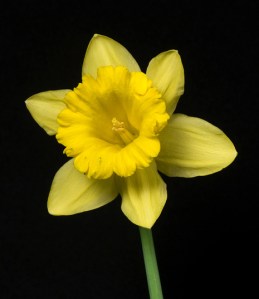
The Narcissus is synonymous to the Daffodil.  The Daffodil is simply the English name for the flower which derives its name from the Greek mythological figure called Narcissus.  Narcissus was a young man who was so obsessed with his own reflection in a pool of water that he fell into the water and drowned.  The Narcissus plant first sprang up at the location of his death and thus the birth of the Daffodil itch.  This Greek myth has led the Daffodil being a symbol of unrequited love.   China has a somewhat different view of the Daffodil.  It is revered and has become a symbol of Chinese New Year.  It is said if it blooms on Chinese New Years, you are in store for extra wealth and good fortune for the year.

In moderate climates Daffodils flower among the earliest blooms in spring. Daffodils often grow in large clusters and cover entire hillsides. Their rhythmic movements in the wind inspired the  famous poem Daffodils, by William Wordsworth.  “…And then my heart with pleasure fills, And dances with the daffodils.”  All  Daffodil species have a central trumpet surrounded by a ring of six floral leaves.  The traditional daffodil consisted of a yellow color all over.  Today both in the wild and due to breeding, blooms range in colors to include yellow, white, orange, pink, red and green.

The Daffodil itch is not a term of endearment referencing the excitement of spring’s approach.  Instead, it is a term used by florists describing the itchy skin condition caused by exposure to the sap of the Daffodil.  The Daffodil contains alkaloid chemicals throughout making it very bitter and toxic if ingested.  The toxicity is dangerous if confused for an onion and ingested.  However it makes the Daffodil the perfect plant for those of you whose property has been overrun by rodents.  Deer and all rodents will leave the Daffodil unmolested.

This scribe is brought to you by Starbright Floral Design, “The Official Florist of the City that Never Sleeps”.  Along the way we try to find and write about the fun side of flowers.  Starbright delivers flowers all over the world for the endless romantics everywhere.

Starbright Floral Design is the “Official Florist of Romance” and most of the time we deliver flowers, love, passion and hope everywhere in Manhattan and worldwide.  Sometimes we deliver yellow carnations.

Give us a call, visit our website or pop on in!  We would love to meet you….

Passionately yours,

The Official Florist

Starbright Floral Design

Located in the heart of New York City’s Historic Flower District

150 West 28th Street, Studio 201.

T. 800.520. 8999

Web: www. starflor.com

E-commerce portal: www.starbrightnyc.com

February Birth Flowers (Bush vs. Gore revisited)

Controversy surrounds the true birth flower for February.  There is no consensus and conspiracy theories are abound.  The battle is between the Iris and the Violet.  Both make good cases for being the birth flower.  The Ancient Greeks considered the Violet a symbol of fertility and love and used it in love potions. The Iris’s claim stems from it being named after the Greek Goddess “Iris”, the messenger of love linking heaven and earth via the rainbow.  February is the month containing Valentine’s Day whereupon millions of people send their messages of love.  The floral industry is an industry designed to bring smiles and the spread of love, not litigation.  Accordingly there is no high court to settle the dispute.  Both combatants have a claim to the throne and deserve their place as a representative flower of birth. One reason, perhaps a biased reason, to choose the Violet over the Iris, is that the Iris is one missed key stroke away from being a symbol of fear and detestation (IRS).  Nevertheless, we will treat them equally with love and respect.

Iris by Starbright Floral Design
Iris is a sure favorite for February

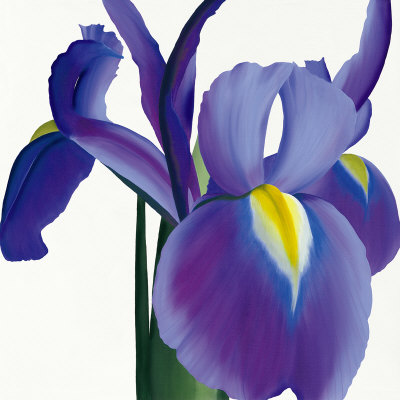
Iris

Iris meanings include faith, hope, wisdom, courage, and admiration.  There are many species of Iris widely grown and distributed throughout world.  From their earliest years, irises were used to make perfume and as a medicinal remedy. Today, they are primarily seen in gardens, in bouquets, and in the wild all over the world. The Iris family includes over 200 varieties in a wide spectrum of colors. Irises are one of the easiest perennials to grow.

While garden irises can come in any of these varieties, the flowers’ commercially cut versions include the most popular blue variety, white, and yellow.

The Fleur-de-lis is the national symbol of France.  The Iris is the state flower of Tennessee, and the Fleur-de-lis is the emblem for the city of New Orleans.

The Violet is February too!
Know someone born in February? Violets are a sure fave...

Violet

The Violet’s story stems from Greek mythology. Zeus was in love with a nymph named Lo.  Zeus’s wife was suspicious and jealous of Lo. Zeus being fearful of what his wife might due to Lo, turned Lo into a cow.  As a cow Lo had no choice but to eat the plain dry boring grasses bringing Lo to tears. Zeus, distraught by the tears of his love, he decided to turn her tears into edible flowers. Thus the Violet was created.

The Violet is mainly found in the Northern Hemisphere. They grow best in moist shaded areas but are tolerable of diverse conditions. The flowers are formed from five petals; four are upswept or fan-shaped petals with two per side, and there is one broad, lobed lower petal pointing downward.  With over 400 different variations of the Violet there are a multitude of colors to choose from.  Including blue, purple, white, cream yellow and combinations thereof. The purple Violet, hooded blue Violet and butterfly Violet, is very popular in the eastern United States and is the Wisconsin State Flower.

So what to do for a February birthday?  How do you choose between the Violet or the Iris.

The personality traits of people who have this birth flower are said to be calm, friendly, faithful, hopeful, and enlightened.  Perhaps a person like that will be thrilled with the thought of the gift and not be troubled that you chose one flower over the other.  Perhaps to be safe a bouquet of both the Violet and the Iris is best.

Starbright Floral Design is the “Official Florist of Romance” and most of the time we deliver flowers, love, passion and hope everywhere in Manhattan and worldwide.  Sometimes we deliver yellow carnations.

Give us a call, visit our website or pop on in!  We would love to meet you….

Passionately yours,

The Official Florist

Starbright Floral Design

Located in the heart of New York City’s Historic Flower District

150 West 28th Street, Studio 201.

T. 800.520. 8999

Web: www. starflor.com

E-commerce portal: www.starbrightnyc.com

Carnations – The Comeback Flower of January

Birth Flower of January
The flower of choice for January Babies!

Welcome to our new feature that will appear once every month… We will introduce you to the Birth-Flower-Of-The-Month.  Much like there is a Birthstone for every month, there is a Birth-Flower too!  January is the month of the Carnation.  Over the years this is a flower that has truly taken a bad rap.  “Too FTD”, “Too common”, “Grandma’s flower”, “No carnations please!”.  As florists we hear this all the time…  BUT with new breeds of carnations coming out, new hot colors (purple, green, fuscia, and more) and with the evolution of design styles, carnations have made a big comeback, not to mention that they are the “Official Flower of January Babies”!

We did a little research on the history of the carnation, its origins and how to care for them… Read on!  We hope you like the thoughts we have to share.

The birth flower for the month of January is the Carnation. Its scientific name, Dianthus Caryophyllus, is derived from the Greek-“dios” and “anthos”.  The literal translation being “The Flowers of God”.  Carnations have been around for about two thousand years longer than the person receiving them.  Carnations are known for their sweet clove like fragrance, their ruffled appearance, hardiness and wide array of colors.

Carnations will grow up to 3 feet high with green-gray foliage.  They bloom mainly during the cool times of year, particularly early winter.  The cut flowers have been known to last up to a month with proper care.

Carnations are utilized for festive occasions as well as somber ones.  You’ll find them at birthday parties, weddings, parades, festivals and funerals.   Accordingly, carnations are the top producing crop in the floriculture worldwide.

Thinking about sending someone carnations?  Don’t forget the significance of the color beyond its aesthetic value.  Carnations take on many meanings depending upon their color.  Pink Carnations signify a mother’s love.   Deep red carnations indicates love.  A white carnation indicates friendship.  However, be careful of the yellow carnation.  It signifies disappointment or disdain.

Six easy steps to keep your carnations looking fresh and bright:

1)  Clean out a vase with soap and water. Bacteria left in the vase from a previous floral arrangement may cause the carnation to wilt prematurely.

2) Pour 1/2 cap of bleach into the vase. This should kill any bacteria missed while cleaning.

3) Pour 1/2 can of lemon-lime soda into the vase. Fill the empty can with warm water and pour the water into the vase and soda. The combination of lemon-lime soda, bleach and water will act as a preservative.

4) Remove any leaves from the stem of the carnation that are below the water in the vase. Cut the leaves with scissors or pull them off.  Hold the stem of the carnation under the water in the vase. Cut 1 inch off the bottom of the stem with the scissors. If the vase is too narrow to cut the stem in, use a separate bowl of warm water to cut the stem.

5) Place the carnations in the prepared vase. Set the vase in a cool room away from bright sunlight for 24 hours. This encourages the carnations to take in as much water and preservative as possible, which helps the blooms last longer.

6) Replace the water and preservative every three to four days or if it becomes cloudy or dirty. Remove any dead leaves that fall into the water and remove and dispose of any flowers that begin to wilt.

Hey you receivers of yellow carnations just jump on Facebook and let us in on the reasons you generated such passion in a negative way.

Starbright Floral Design is the “Official Florist of Romance” and most of the time we deliver flowers, love, passion and hope everywhere in Manhattan and worldwide.  Sometimes we deliver yellow carnations.

Give us a call, visit our website or pop on in!  We would love to meet you….

Passionately yours,

The Official Florist

Starbright Floral Design

Located in the heart of New York City’s Historic Flower District

150 West 28th Street, Studio 201.

T. 800.520. 8999

Web: www. starflor.com

E-commerce portal: www.starbrightnyc.com