Also called Rose Hep or Rose Haw, these are the pollinated fruit of a rose plant, which begins developing in Spring and look like large bright berries by Autumn. They are generally available in a reds and oranges, but some varieties of roses have darker almost purple or black rose hips. A few species of roses are grown for the aesthetic value of their hips instead of their blooms, including Rosa movesii, which has large, bright red fruits. The waxy skin of the rose hip is reflective and seems to glow among the greenery in an arrangement.
Flower History/
Rose hips have a long history. While the rose hips we use are only for looking at (we do not recommend picking any of these fruits out a floral arrangement) these fruits have been used in everything from herbal teas to the central ingredient in the national soft-drink of Slovenia. There is rose hip jam, itching powder, and even wine and bread. This versatile fruit has one of the highest levels of vitamin C available in a plant. The rose hip Wikipedia page offered this fun historical fact :
During World War II, the people of Britain were encouraged through letters to The Times newspaper, articles in theBritish Medical Journal, and pamphlets produced by Claire Loewenfeld, a dietitian working for Great Ormond Street Hospital for Sick Children, to gather wild-grown rose hips to make a vitamin C syrup for children.
Inside Info /
Most rose species require that the hip be chilled in order to germinate – some species only germinating after two winter chills have occurred.
The hairs inside the rose hip fruit are highly irritating.
The wild Dog Rose is most often cultivated for it’s hips.
Looking for flowers in New York City? Visit our Event Gallery for inspiration. Or see our daily selection at Starbrightnyc.com.
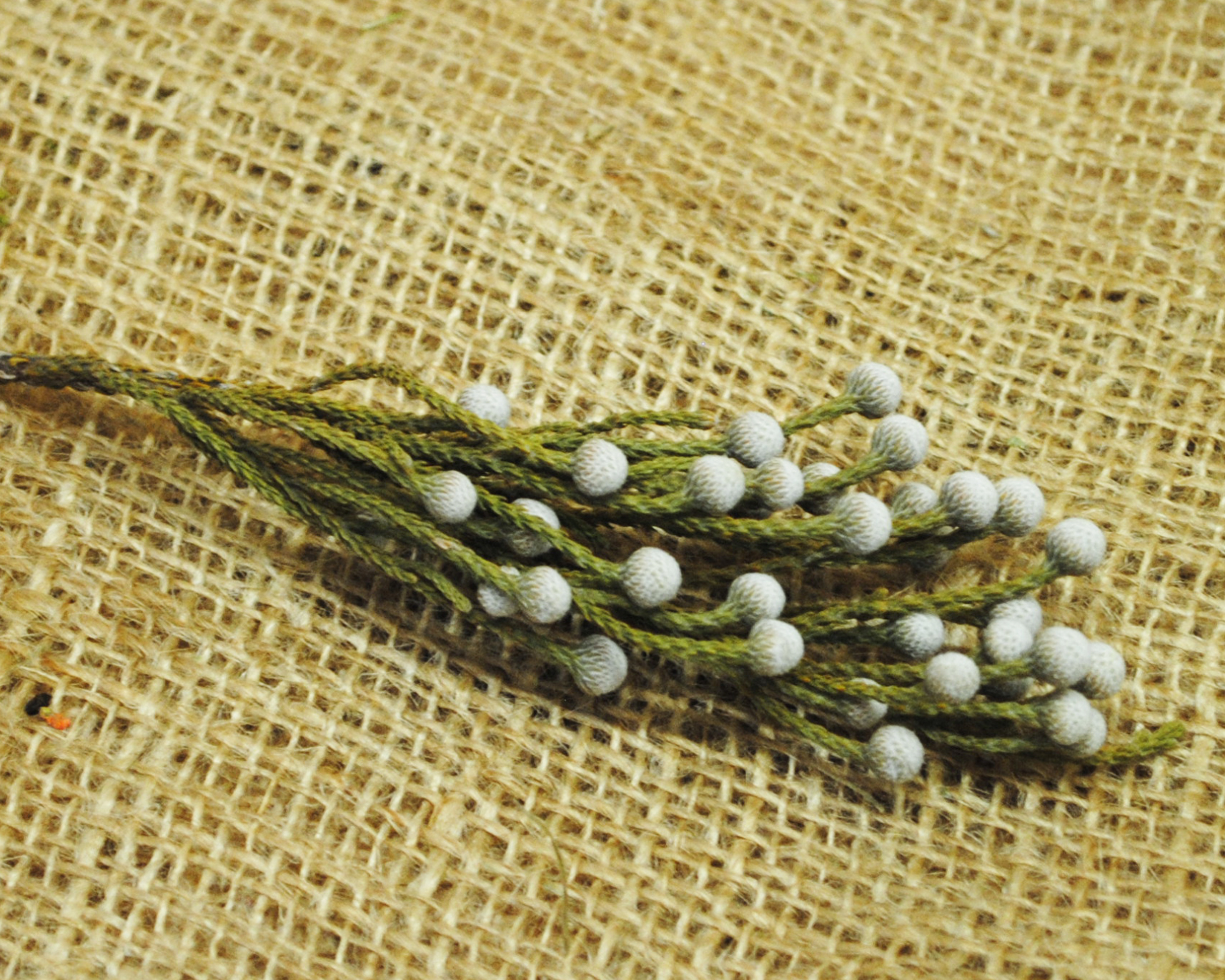
The Brunia flower is often overlooked in it’s natural habitat. The single-stemmed shrub it grows on vaguely resembles a pine tree, but is much softer, and grows between two and three meters tall. Brunia is characterized by small, spherical inflorescences that cluster at the end of a branch often disappear in the dark green foliage overhead.
As it is used in floral arranging, the petals of the Brunia flower have already fallen away to reveal a natural silvery cast that somehow seems both quirky and chic.
Flower History/
The Brunia albiflora is a tall shrub that is part of an ancient plant family. In northern Namaqualand, fossil pollen that matches modern Brunia pollen has been found in early Tertiary and late Cretaceous mineral deposits. If you’ve seen The Land Before Time…? This flower could’ve been Littlefoot’s lunch! But despite a very long history, this plant hasn’t spread very far, it’s native growth being isolated to southern tip of Africa.
“There is no indication where the ancestral stock originated, nor how it got to southern Africa. […] It could be that because this family is in a state of decline, its other relatives have already gone extinct and the southern African members are the only survivors.
But don’t worry that requesting this flower will contribute to it’s ultimate demise. Brunia flowers are commercially grown in Australia, California, or New Zealand.
As a decorative floral, Brunia is a fantastic filler! Because the flowers grow at the end of long branches, stem length is generally not a problem. These interesting florals last about a week, and will dry out nicely. Brunnia is most often available in silvery-white, but it also appears in yellow, green, and blush
Inside Info /
Brunia flowers are notoriously fickle about germinating. This is because the Brunia plant holds on to its dead flowerheads (which hold seeds) for up to 6 years! The seeds only drop and have the ability to sprout when a fire sweeps through and takes out the parent plant.
Sometimes used in the Language of Flowers for : Chivalry
Looking for flowers in New York City? Visit our Event Gallery for inspiration. Or see our daily selection at Starbrightnyc.com.
“Visits always give pleasure–if not the arrival, the departure.”
― Portuguese Proverb
There’s lots of guides out there for our Holiday hosts and hostesses. We’ve been doing our research – there is a blog for everything. From cooking to cleaning, seating arrangements to after dinner activities for the kids…these guys have their work cut out for them.
To show our appreciation for all that hard work, and food, Starbright Floral decided to put some brain time into how to best show our appreciation with flowers.
Contained arrangements are great host/hostess gifts, they allow for a quick pass-off and beauty…even days after you’ve gone!
Saying Thanks with Flowers
The Problem : A bouquet looks best when unwrapped and ready to be admired. There’s nothing better than surprising a friend with flowers, seeing their face light up. But during the holiday’s, handing your host/hostess a handful of flowers, though sure to be appreciated, may cause inconvenience.
The Solution : During the Holidays, it’s important to consider the timing and the recipient of your show of gratitude. Starbright Floral recommends these three alternatives that will surely go over with even the most harried host.
Option 1 – Consider calling your host/hostess in advance of the party and voicing your interest in arranging flowers to show your gratitude. It is polite to inquire about preferred colors and a convenient time for delivery on the day of the party.
Option 2 – Arrive with an arrangement, unwrapped and in a vase. This is a great way to keep fuss time minimal for the recipient.
Option 3 – Sometimes the very best way to show your thanks is after the fact. Sending flowers the day after an event is perhaps the best way to treat the host/hostess.
Tips and Tricks to getting it right.
1. Know your colors
Be aware of your host or hostess’s cultural traditions. Red and green arrangements are lovely, but they may get a funny look at a Chanukah party.
2. Keep it odd
No, not the arrangement itself – the number of flowers. In the US, a dozen flowers, especially roses, will receive a warm welcome. But if your host/hostess is from elsewhere, an even number of flowers may be considered bad luck. For this reason, an odd number of flowers is generally considered best. Just avoid a bouquet of 13 flowers…many people all over the world consider 13 an unlucky number.
3. Be An Equal Opportunity Giver
Men and women alike appreciate flowers! No matter who is receiving the flowers, the trick to getting it right is to consider their personal tastes. If you’re giving flowers in advance of an occasion, consider their home and occasion theme. If you are sending flowers after the occasion, think about colors you’ve seen that person use. Is there phone case blue? Do they carry an orange wallet? These helpful details are useful guides for color selection.
Are you hosting Thanksgiving Dinner? Check out last weeks post for some ideas to Dress Up Your Table.
Looking for flowers in New York City? Visit our Event Gallery for inspiration. Or see our daily selection at Starbrightnyc.com.
Thanksgiving is just around the corner! How are you dressing up your table?
What’s on your table?
Whether your’e planning the traditional turkey or untraditional take-out, why not get the party started with a festive atmosphere? While the family, the friends, the food, and the football may be Thanksgivings main attractions, it’s amazing what a few additional decorations can do to put people into the holiday mood. Here at Starbright Floral Design we’ve had over twenty years of experience helping hosts and hostesses in New York City find just the right floral spin for their parties. Here are some of our favorites :
1. The Centerpiece
There’s no doubt that the main attraction on any Thanksgiving table is the food. All manner of dishes – roasted, baked, broiled and steamed – somehow need to squeeze onto a table between the place settings. While all the delicious food is a sight for hungry eyes, a floral element will keep the mood going even after the food is all gone. In past posts, Getting Back to Happiness and Scent and Memory – Starbright explored studies that tested the effects flowers have on mood and memory. The findings were pretty conclusive and crucial for any host or hostess to keep in mind. Not only do flowers make people smile more often, they also tend to make experiences more memorable (especially for your elderly guests).
When you’re planning florals for the table, begin with how much room there will be, what the color theme is, and what kind of style is preferred.
Some ideas to consider :
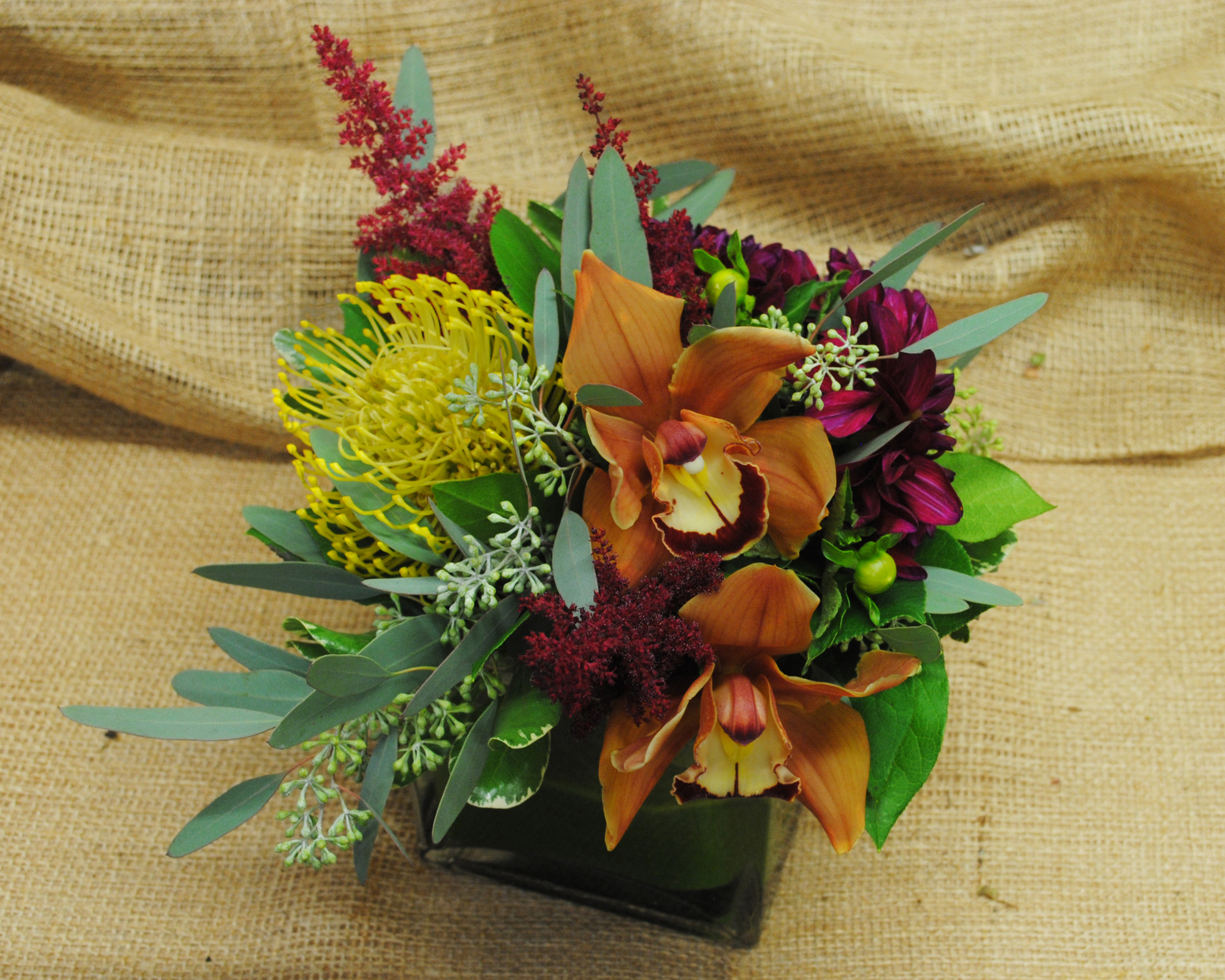
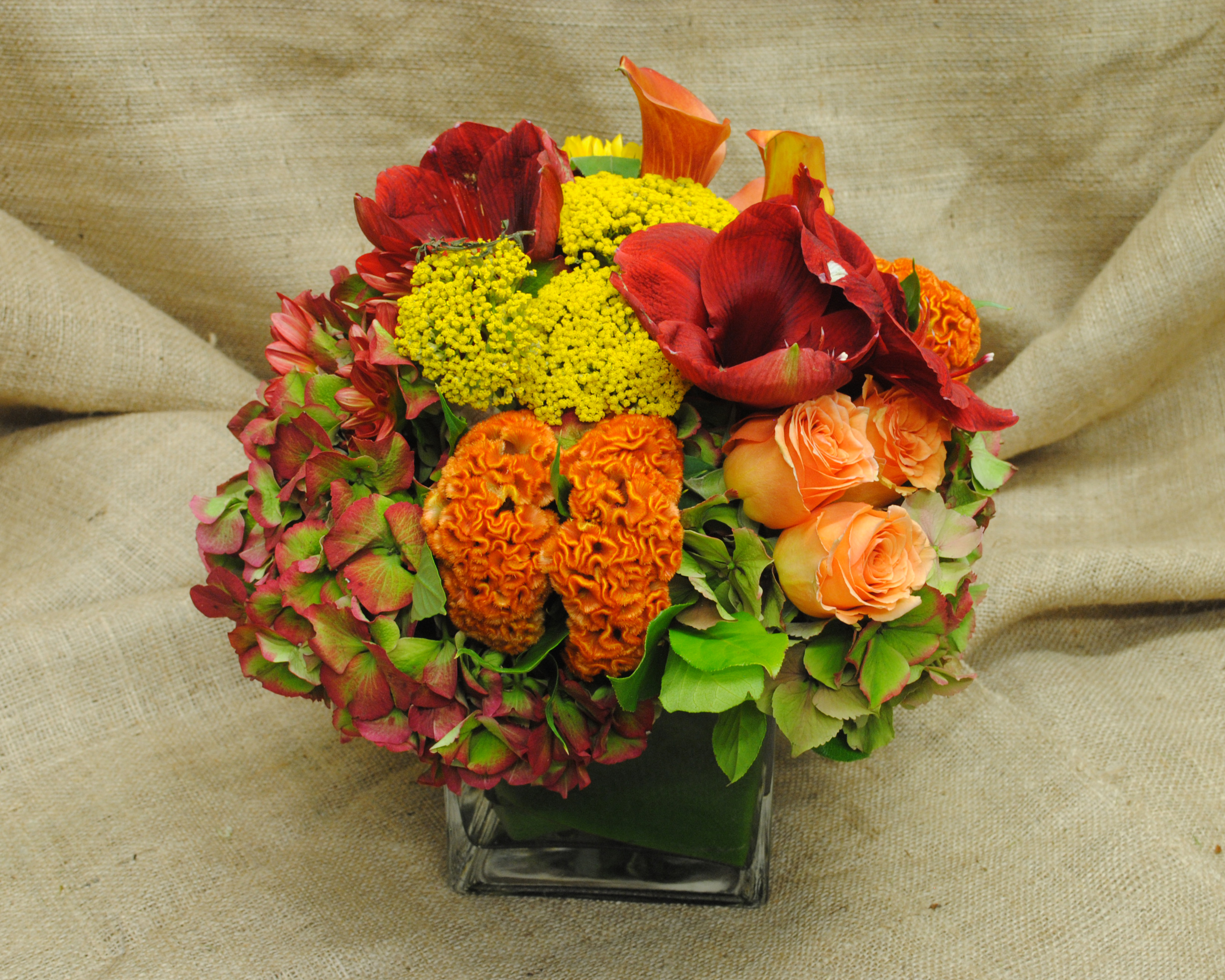
Roses, dahlia, hydrangea and calla lilies
Long and low arrangements are fantastic for a rectangular table. These arrangements look great when they’re filled with lush, colored flowers with a lot of texture.
If you have a more intimate evening planned, an arrangement in a square vase, like the one above, can pack the same amount of presence as it’s long and low cousin. The best part, these centerpieces are still low enough that they won’t get in the way of conversation.
Hosting a party can seem intimidating. One of the tips we often share with nervous dinner party planners is the power of a name card. A hostess or host’s duty is primarily to make their guests feel welcome – their ultimate tool for accomplishing this? A little place card that helps guests identify their “space” for the evening. Whether the seats are assigned or open to whoever lands there first, guests will appreciate the chance to mark their spot for the evening.
In the twenty plus years that Starbright has been working in the floral industry, we’ve seen all manner of fun place card holders. Some of our favorite techniques have involved holding the cards up in the quills of a pincushion protea, between the lobes of a living succulent, or cleverly attached to apples or mini pumpkins.
Matching the cardholders to the centerpiece will keep things looking consistent.
3. Around the House
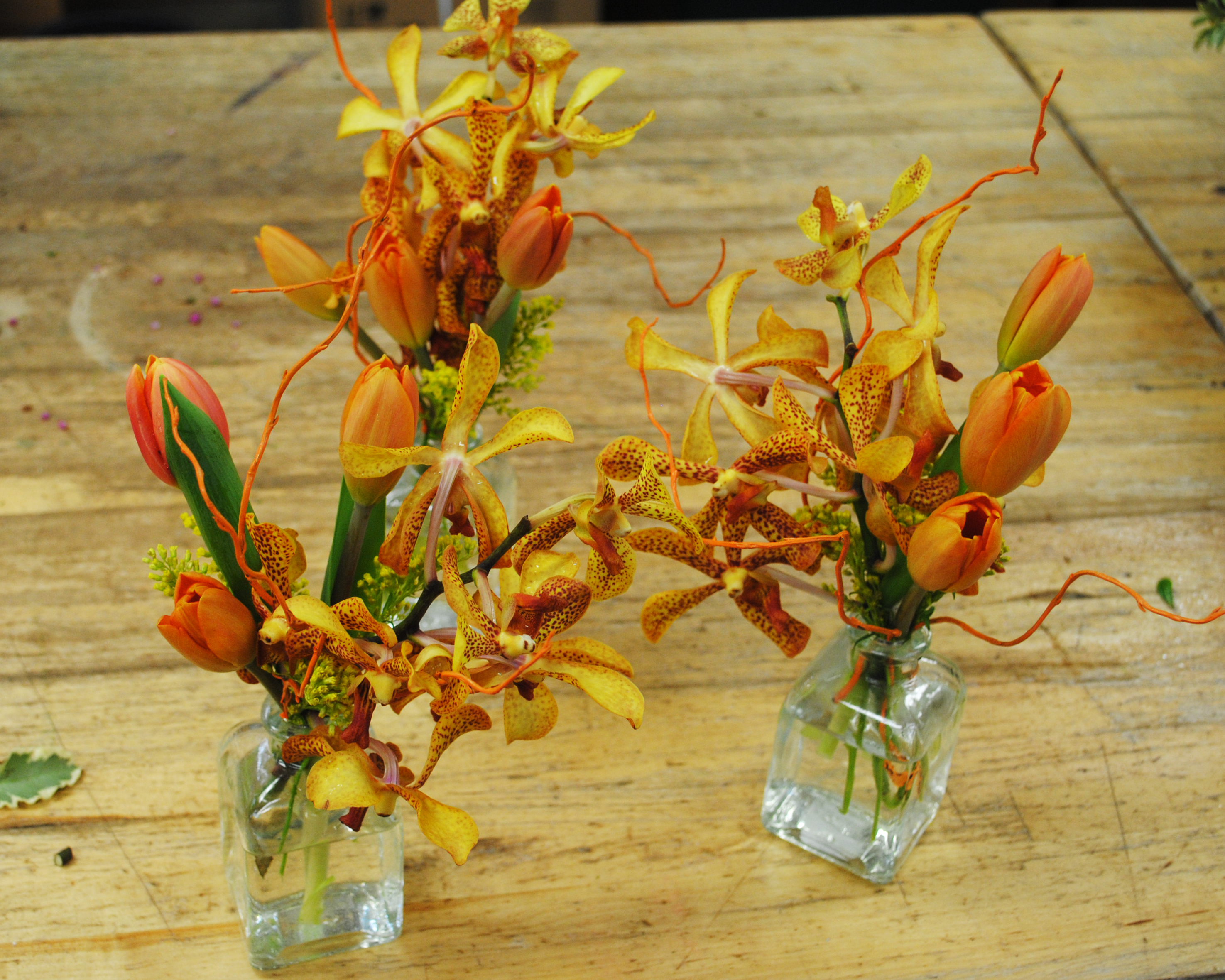
It can also be fun to play with placing other floral elements around the house. Bud Vases like the below, can be filled with flowers that match you centerpieces and set around the home.
Bud Vases are a great way to subtly stretch your floral theme beyond the dining room.
Or for the traditionalists – the true symbol of the season, a cornucopia, is a great way to dress up a coffee table of sideboard.
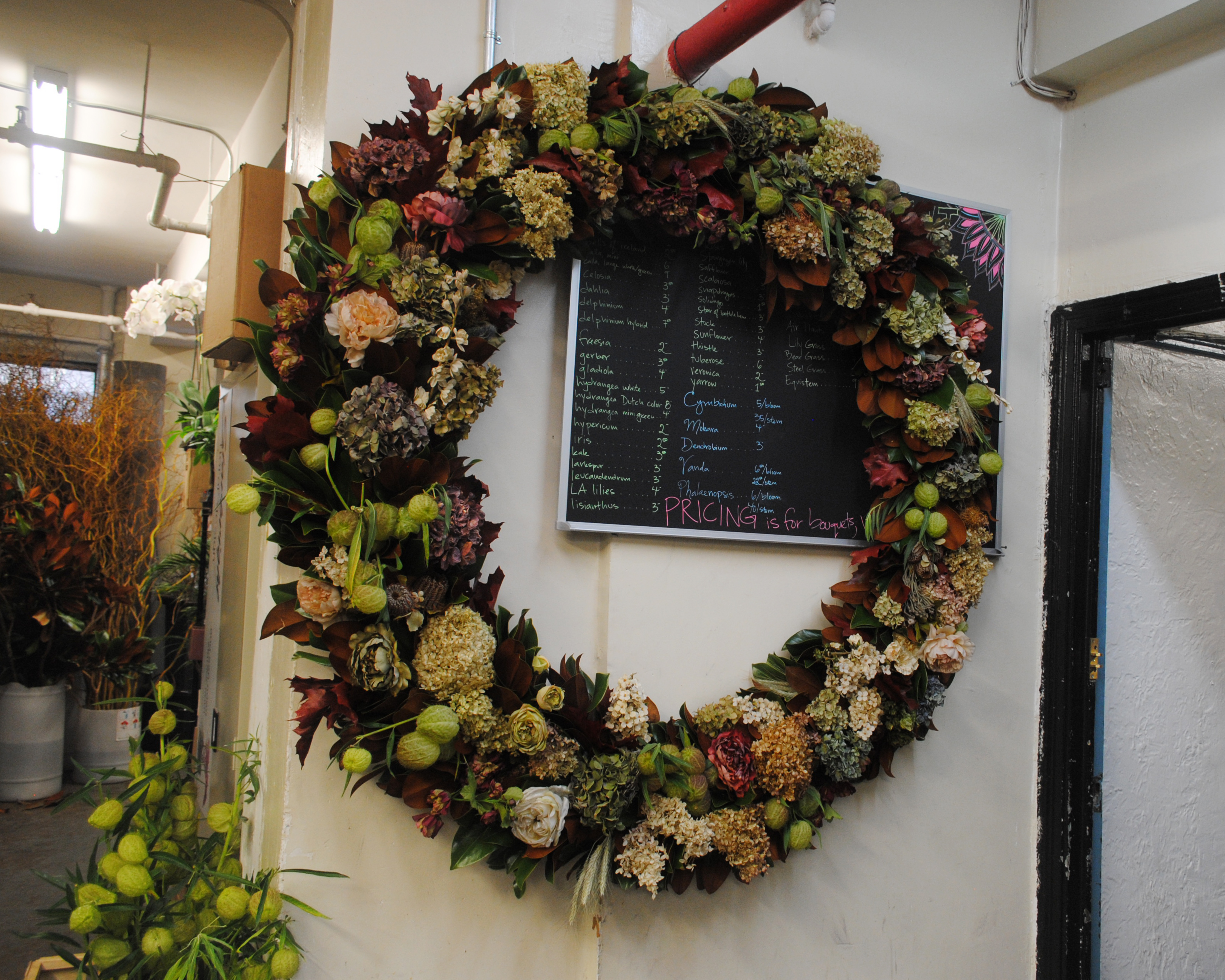
Here in New York City, it’s easy to forget about the fields that have been harvested, the geese migrating south for the winter, or the smell of leaves. One of the best ways to remind people of the season is with a fall wreath to greet guests at the door. We like to welcome our seasonal visitors in a BIG way!
Starbright Floral Design’s BIG seasonal welcome wreath
Whatever your theme or floral strategy – Starbright Floral Design is looking forward to helping you dress up your dinner!
Looking for flowers in New York City? Visit our Event Gallery for inspiration. Or see our daily selection at Starbrightnyc.com.
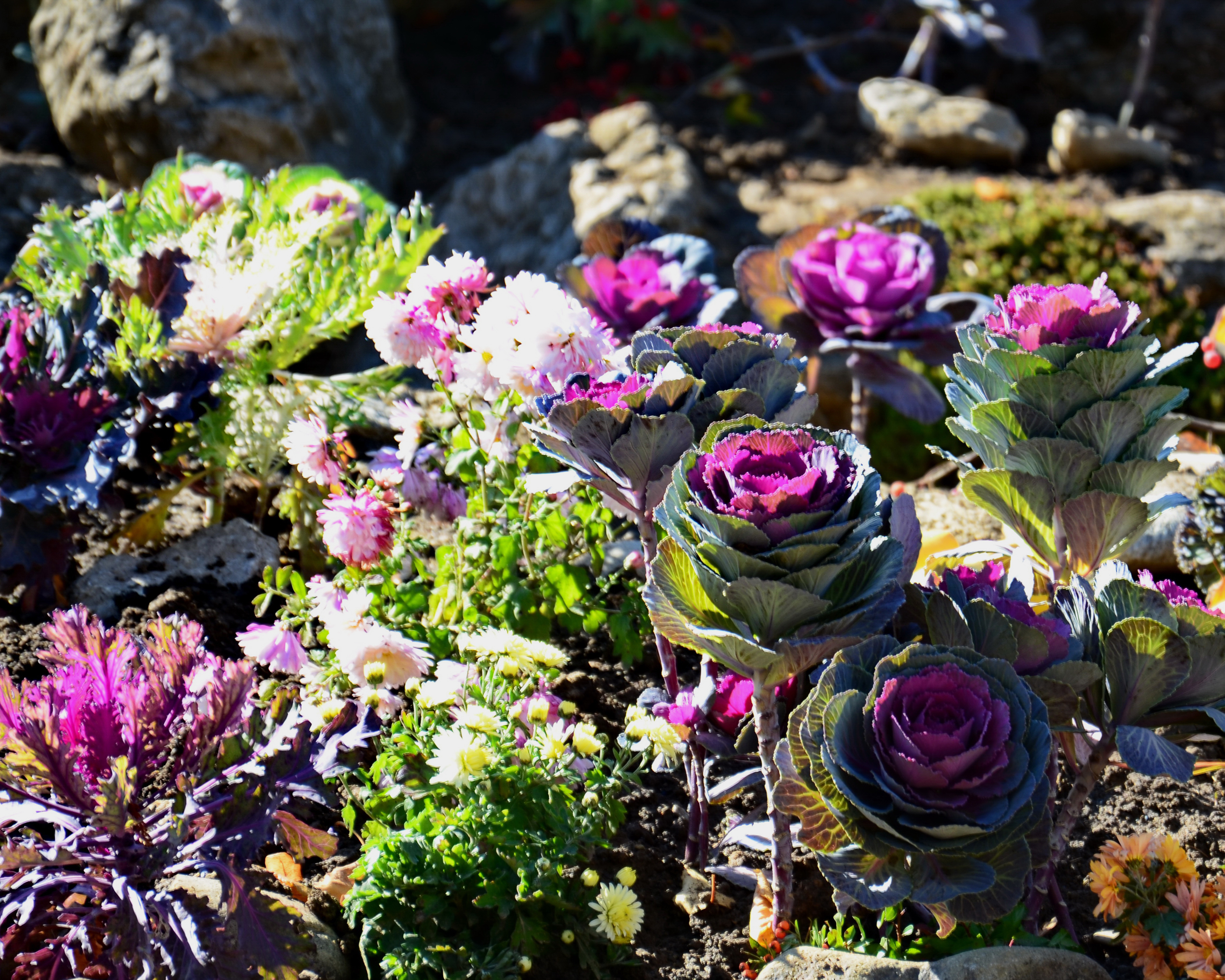
Cabbage, and yes, we’re talking about the vegetable here, is a great addition for an autumn arrangement. No, but seriously, despite their less than exotic origins, Cabbages have layers of leaves that overlap in a spiral pattern from the center of its head. The leaves can be either smooth or ruffled, open and large or tightly furled and resembling a rose. The alternating leaves can be lobed or wavy and even highly vained. There are varieties that feature a waxy coating on the leaves. And all of those great attributes come in a variety of colors. From the clean and classic white and green cabbage to the fancy purples and reds there’s a cabbage for all occasions. And while the cabbage plant grows really sweet, little yellow flowers, we don’t bother with them in arrangements. The big, bold, and hyper textural cabbage heads are far more our style.
Flower History/
Native to Britain and continental Europe, today’s cabbage were developed as a crop way back in before 1000 BC. As a food staple, cabbage made its way around the classical world and was greeted with either great devotion or great antipathy. Great people including Cato the Elder and Diogenes considered cabbage superior to all other vegetables. In Europe, cabbage found great popularity during the High Middle Ages, when other crops were in short supply. From Europe the crop spread to Mesopotamia to Egypt as a winter crop and from there it followed the trade routes and continued to spread. There isn’t a lot of evidence that the colorful crop was used in a decorative manner, but here at Starbright, we can imagine that the purples and greens that last well after most flowers drop, have always been a sight for tired eyes. It isn’t a surprise that at some point, someone started cutting the smaller heads for filling vases.
Inside Info /
Babe Ruth used to place a cabbage leaf under his hat before each game.
The world’s largest cabbage was grown in 1865 in Durham, England by William Collingwood – it weighed in at a whooping 123 pounds!
At one time, Russian princes paid tribute not only with racing horses and jewels, but also with potted cabbage plants.







 Blooming Thoughts