

A fresh bouquet by Barbara


Gentiana is a genus of flowering plants with about 400 species! That’s a large species group! These blooms are most notable for the trumpet like shape and vivid coloring. While they are often brilliant blue in coloring, they can also be white, yellow, red. The main blooming season is Spring, but these flowers can rebloom throughout late Summer.
Gentiana are most at home in alpine environments. These delicate flowers can be shy about blooming outside of their natural habitat. The stiff stems have oppositely arranged leaves, sometimes is a basal rosette. The flowers grow in groups, spaced along the stems. Gentiana is polymorphic and can bear blooms of multiple colors.
The name, Gentiana, is attributed to the Gentius, an Illyrian king who is attributed with having discovered the medicinal uses of the plant back around 500-1000AD. The plant’s medicinal uses vary from treatments for upset stomachs to easing depression – but don’t forget – the Gentiana in you floral arrangements are not for making teas, poultices, or any other edible concoction!

Looking for flowers in New York City? Visit our Event Gallery for inspiration. Or see our daily selection at Starbrightnyc.com.

A favorite flower in August, crocosmia is a common flower in the grasslands of southern and eastern Africa. In the United Staes, these lovely blooms are often referred to as Coppertips or Falling Stars. They grow as evergreens or as deciduous perennials and come back year after year to please the senses with their trumpet-like shapes and bright colors.
Crocosmia is distinctive for its colorful inflorescence in shocking orange and reds. The stems branch out and display a number of blooms along one side of each stem near the end and nod and sway gracefully above your flower beds or your late summer arrangements. The Crocosmia leaves are long, pointy and have parallel veins along their length. They grow in clumps in bloom in a spectacular
Crocosmia are great for attracting hummingbirds to your garden.
Looking for flowers in New York City? Visit our Event Gallery for inspiration. Or see our daily selection at Starbrightnyc.com.
Color psychologist don’t. And they have loads of studies backing up their theories. The general model of color psychology relies on six basic principles:
Over at Starbright Floral Design, we get to work with lots of colors everyday and all of us have our favorites. But why are they our favorites and what does that say? Up this week :

Purple is the color of harmony. It combines the spiritual aspect of blue with the powerful energy of red. This union of introspection and action makes purple flowers unique. They expand your imagination while simultaneously grounding you in reality. Purple flowers will connect you to your deepest thoughts, while quelling any anxiety that may arise alongside them.

Purple flowers are perfect for artists because they stimulate the imagination. Musicians, painters, designers, and all other creative types have a lot to gain from keeping a vase of purple flowers in their studios. Purple is the color of creativity. It encourages free and independent thought, thinking outside the box, and going against the grain. Purple flowers will bring a sense of the magical and mysterious into your studio. If you’re suffering from writer’s block, stop by and pick up a bouquet of purple flowers, and watch your imagination bloom.
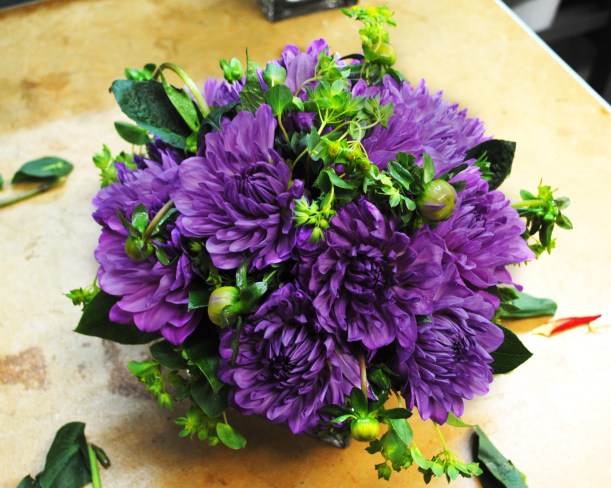
Purple flowers are a great choice for decorating a baby’s room. The color purple evokes unconditional love and selflessness. It also encourages sensitivity. Purple flowers in a nursery will help cultivate compassion in your relationships with others, especially your children, or other people who depend on you. Do you find it difficult to be giving in stressful situations? Keeping purple flowers nearby will enhance your sensitivity to the needs and emotions of the people around you. At the same time, purple is the color of power. Purple flowers in your child’s room will give you the wisdom you need to maintain help the elusive balance between flexibility and control.

Life is a constant struggle between highs and lows, the good and the bad, sickness and health, ups and downs. Purple flowers can help you find the middle road. They harmonize the body, mind, and soul. Purple flowers in your home or at work will help you feel grounded even in the craziest situations. They make the perfect centerpiece for your yoga studio or meditation space. Purple evokes the future while also grounding us in the present moment. Purple flowers will encourage you to chase your dreams instead of worrying about what could go wrong.
Looking for flowers in New York City? Visit our Event Gallery for inspiration. Or see our daily selection at Starbrightnyc.com.

Echinacea is part of the daisy family. This flower is unique to the areas of eastern and central North America, where you can find it growing in large numbers in open wooded areas and prairies.
Echinacea comes from the Greek word “echino,” meaning sea urchin, and the flower is certainly reminiscent of this spiny creature. The center of the flower is a spiky, cone-shaped disk, which leads its other nickname: the coneflower. The purple petals that surround the spiky center are removed before the flower is sold, because the petals are very delicate and bruise easily. Their absence makes the sea urchin-like center of this flower all the more striking.
Echinacea has been used in folk medicine for centuries. Native Americans originally observed this flower being eaten by elks that were sick or wounded. They adopted the flower for their own use in medicinal practices, and called it elk root. It was used to treat a variety of ailments, including sore throats, headaches, and the common cold. Native Americans passed on their knowledge of echinacea to Europeans, and the plant became popular in European medicine in the 1930’s. Feeling under the weather? Echinacea is still used today to boost the immune system. It’s great as a tea, but don’t try to boil anything from an arrangement – these guys have been drinking flower food which makes them unsafe as human food.
Echinacea is a great choice if you’re looking for an ornamental or decorative flowers, thanks to its unique appearance. You can find it in bloom from early to late summer. The cone will dry exactly as it looks and is great for decorating.
Looking for flowers in New York City? Visit our Event Gallery for inspiration. Or see our daily selection at Starbrightnyc.com.
There are many style of arranging flowers, but at Starbright Floral Design Ikebana is one of our favorites. Recognized for it’s emphasis on line, form, and shape, Ikebana arrangements often focus on stems, leaves, and twigs as often as flowers. Minimalist in nature, Ikebana arrangements are based on a scalene triangle, with three prominent points, generally two of which are twigs. Within these parameters, a world of creative expressions are possible.

First practiced among Japanese Buddhist monks, and appreciated only by the imperial family and their retainers, Ikebana reached the people by the late 15th century. In the early stages, Ikebana was very simple, featuring a small number of flowers and evergreen branches. Books were written about the style and it was commonly featured in traditionally festivals and exhibitions.

In the 20th century, the three main schools of Ikebana, Rikka, Nageire, and Seika evolved into what is commonly known in Japan as Free Style. Other schools rose as well. Ikebana International shares,
“Koshu Tsujii, a follower of the new moribana, was invited to re-establish a flower school in the Daikakuji Temple in Saga, which still today operates his school as the Saga School. Besides ikebana, the Saga School teaches other Japanese arts such as calligraphy. Choka Adachi initiated an “Adachi Style”, using the moribana form “to arrange flowers like flowers.
At about the same time, another style which translates as the “literati style” began to attract interest because of its free and colorful approach. Originated by Issotei Nishikawa, it led the way to free creative arrangements.
The chief exponent of this free style was Sofu Teshigahara, who founded the Sogetsu School in 1926. Others in this modern movement — which resulted in ikebana being placed elsewhere than only in the tokonoma — included the founder of the Ichiyo School.
The three schools that predominate at the present time are Ikenobo, Ohara, and Sogetsu, but more than two thousand different schools of ikebana are registered with the Japanese Ministry of Education.
“

When you receive an Ikebana arrangement, take a moment to pause and contemplate the beauty of nature. These arrangements are meant to remind us that there is wonder in the world around us.
Check out some of our selection at StarbrightNYC.
Looking for flowers in New York City? Visit our Event Gallery for inspiration. Or see our daily selection at Starbrightnyc.com.

There are several types of celosia flowers, but this article will focus on the spicata variety. Celosias are resilient and will stay fresh for a long time after they are cut. They also make beautiful dried flowers, and are a popular choice for potpourri.
Celosia blooms in vibrant, citrus colors like pink, magenta, and violet. The flower grows in an elongated cone shape, similar to a wheat head, which is where it gets one of its several nicknames: the wheatstraw. It’s also commonly referred to as the paintbrush variety of celosia because of its shape. Its vibrant pink color has earned it yet another name: flamingo feather.
As celosias grow, their flowers bloom upwards and get taller. The petals near the top of the flower have bloomed most recently, while the petals near the bottom of the flower were the first to bloom. As the flowers grow larger, the vibrant pink color spreads upwards. The brightest colored petals can be found at the top of the flower, while the petals near the stem may lose their citrus shades and take on instead a silvery sheen.
The name also comes from the Greek word “kelos,” which means burning, and describes the flame-like colors of the flowers. Silvery celosia takes color very well, and can be dyed a wide range of hues. Their strong stems make them especially resilient.
Looking for flowers in New York City? Visit our Event Gallery for inspiration. Or see our daily selection at Starbrightnyc.com.
We love June here at Starbright Floral Design – not because of the weather changing (though that’s nice) and not because school’s out. We love June because we get to celebrate one of New York’s favorite flowers – the Rose! June is National Rose Month and the rose is the state flower of New York – which makes it doubly important in our books. For the next few weeks we’re going to be shining a light on that thorniest of buds.
Roses are found all around the world – there are over 100 different species. The first rose gardens were cultivated in China over 5,000 years ago. Ancient Rome used rose petals as confetti, and rose hips were among the first perfume ingredients.
In 17th century Europe, roses were in such high demand that both the shrub and rosewater extract were commonly used as legal tender. In fact, many of the heritage rose gardens across Europe and on the island of Britain were founded as banks of a sort, a soil-based savings account.
You probably can’t use any of our NEW! June Arrangements to buy groceries, but they’re sure to be fantastic addition to your home, office, kitchen or bedroom! Don’t forget to save your petals for a luxurious confetti at your next event or special night “in.”
Check out some of the arrangements the shop put together to celebrate roses for this month.

Thornless lavender roses say “I loved you at first sight”.
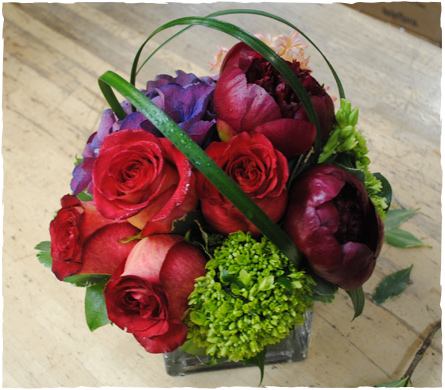
These red and orange tinted flowers express warm admiration, interest, and excitement.
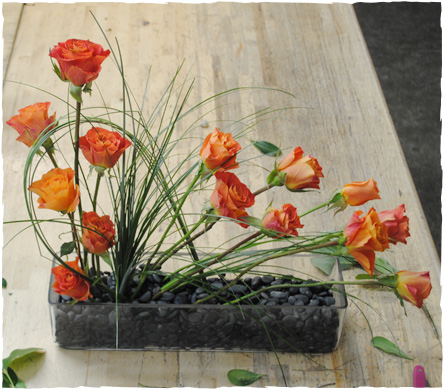
Orange roses express excitement and overwhelming emotions.

The traditional color of friendship, these roses were designed to communicate a message of support.

One of the things that makes Starbright Floral Design so special is our unique location in New York City’s historic Flower District. The Flower District is located on West 28th Street between 6th and 7th Avenues, in the heart of Chelsea, and it stands as one of the most striking blocks in all of Manhattan. A walk down the street gives the passerby an incredible array of sights and smells, with shops and wholesalers lining the sidewalks with an amazing display of plants of all kinds. For the flower shopper, there is no better place to go to find exactly what you’re looking for. As the great blog Scouting New York says:
When people talk about a greener New York, I always think of the lush sidewalks of West 28th Street. Few of Manhattan’s numbered streets have the ability to so transport a pedestrian to what feels like a different world, and it’s always a welcome detour in my scouting travels.
The District’s beginnings can be traced to the early 19th Century, when vendors began congregating on 34th Street, near the docks, to sell flowers that had come from Long Island. As is the case with so many of New York City’s great neighborhoods and industries, the Flower District was a melting pot of immigrants who worked hard to start businesses and lives in America. Many of these early inhabitants of the Flower District were newly arrived from places like Germany, Poland, Greece, and Ireland, and the businesses they started, in many cases, would stay within their families for generations to come.
By the 1890’s, the Flower District had moved away from the Hudson and over to Sixth Avenue. Setting up on the Avenue of Americas, from 26th Street to 29th Street, the sellers gained closer proximity not only to the elegant residences of Fifth Avenue, but to “Ladies’ Mile,” a swath of blocks that was home to many of the day’s most fashionable department stores, including Bergdorf Goodman, Lord and Taylor, B. Altman, and Arnold Constable.
Over the course of the century that followed, the Flower District would grow into one of the world’s premier locations for flower selling. From a 2004 New York Times article:
The flower district soon became entrenched and flourished there… In its heyday, it drew buyers from throughout the metropolitan region and even from Pennsylvania and Massachusetts. More tons of flowers changed hands in New York than anywhere in the world except Amsterdam, according to a 1977 newspaper article.
Although the District has shrunk geographically to its current home on West 28th Street, its bustling spirit is still very strong. If a visitor gets to the block at 8 am–after the licensed designers and wholesale merchants have come and gone–he or she will be treated to a shopping experience unlike any other. In fact, that’s one of the best things about New York’s Flower District; unlike Amsterdam’s Bloemenmarkt and the London Flower Borough Market, this Manhattan market is open to the public.
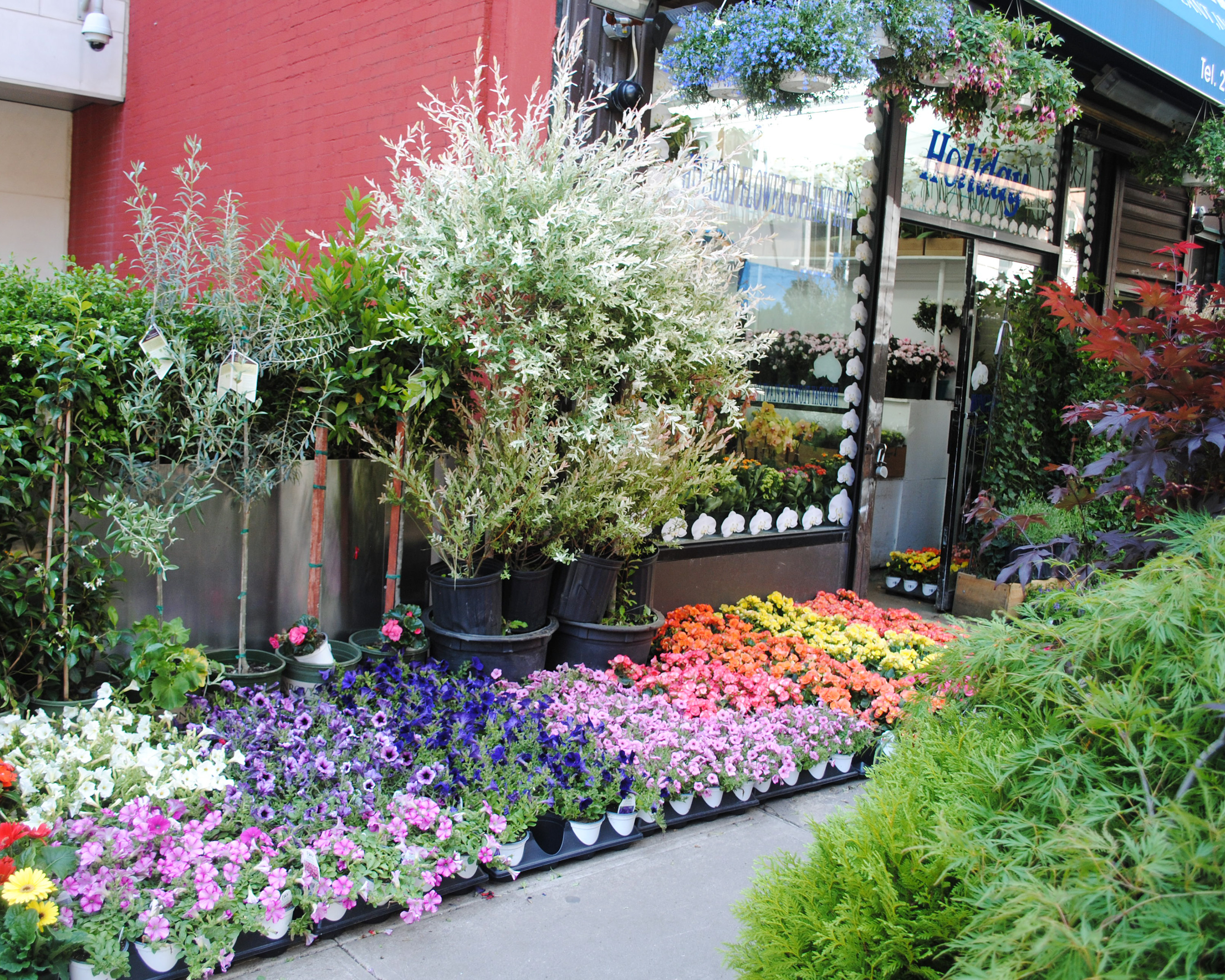
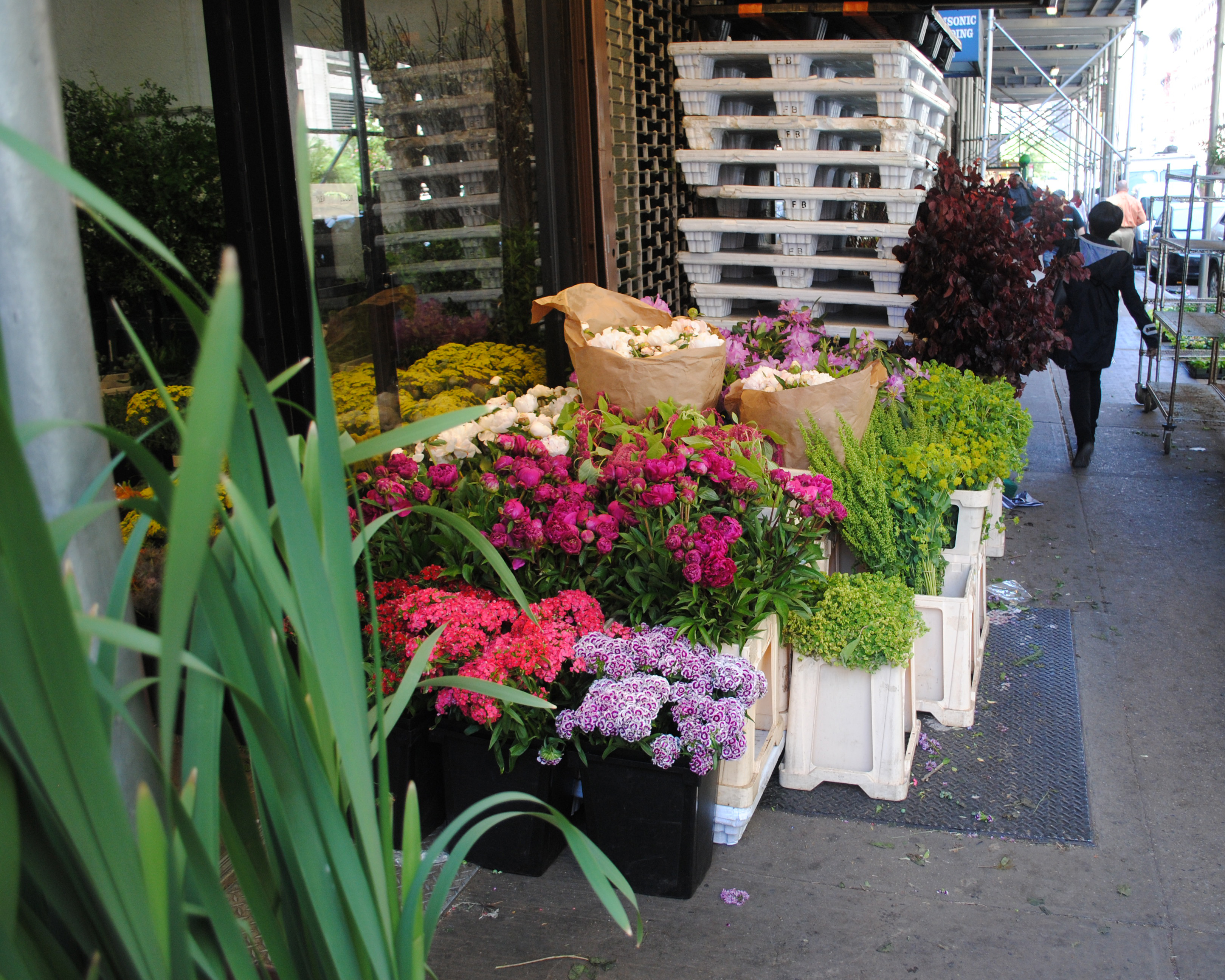
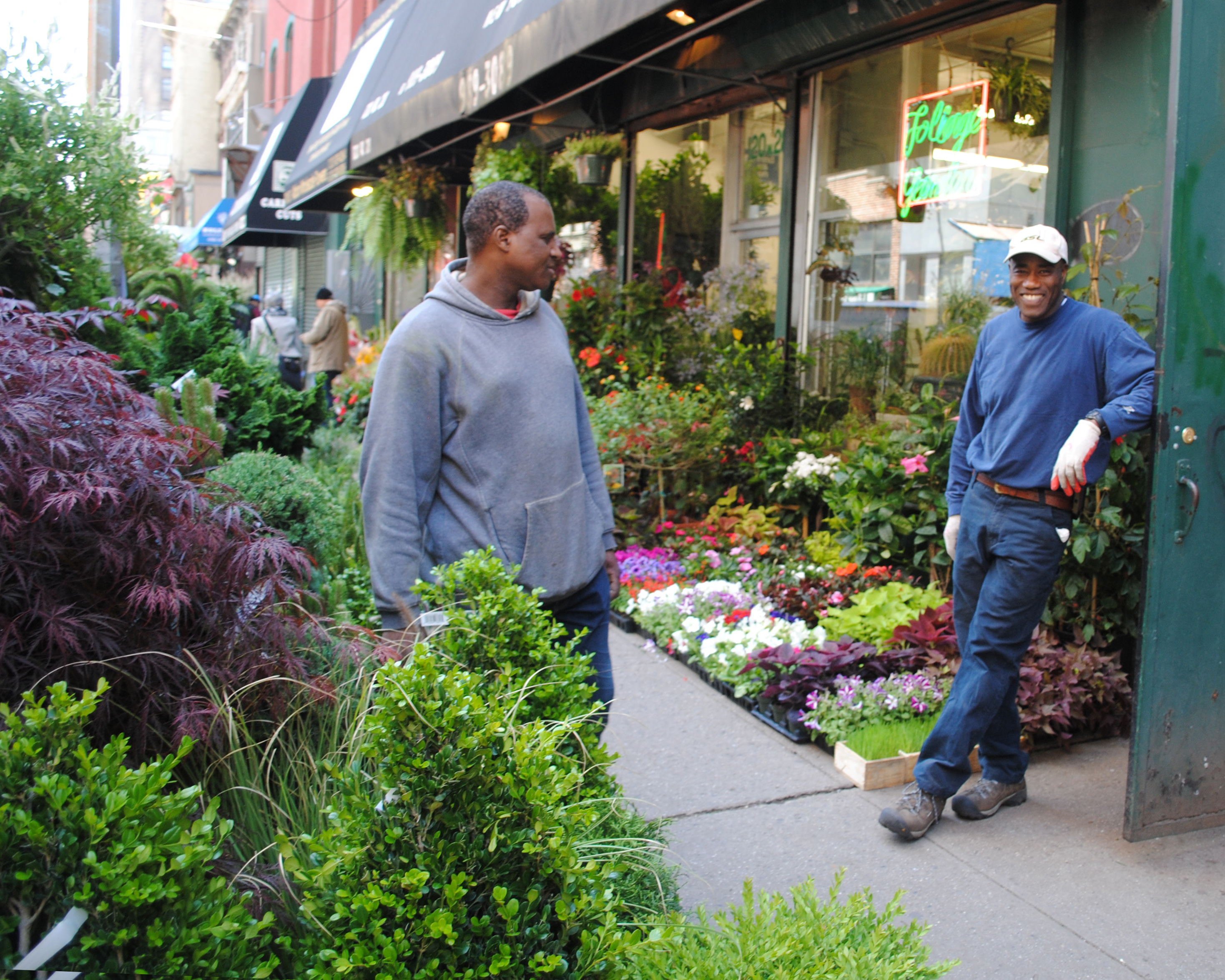

And while most of the sellers in the District are strictly wholesale, Starbright Floral Design provides a retail option for those looking to take home fresh, beautiful flowers at a reasonable price. Located on the second floor of 150 West 28th Street, above the delicious Korean HIT Deli, Starbright is an open design studio, meaning you can watch our professionals put together your lovely arrangement while you wait. In addition to custom arrangements, we also offer a wide selection of ready-made designs for your convenience. Some arrangements currently on offer that we highly recommend include the delightfully pink Full of Life, the subtle and elegant Peony Garden Fusion, and for you Beatles lovers, the gorgeous White Album, featuring white lilac, cream roses, white hyacinth, white amaryllis, white hydrangea, and white phaelonopsis bloom, accented with dusty miller and lily grass loops.
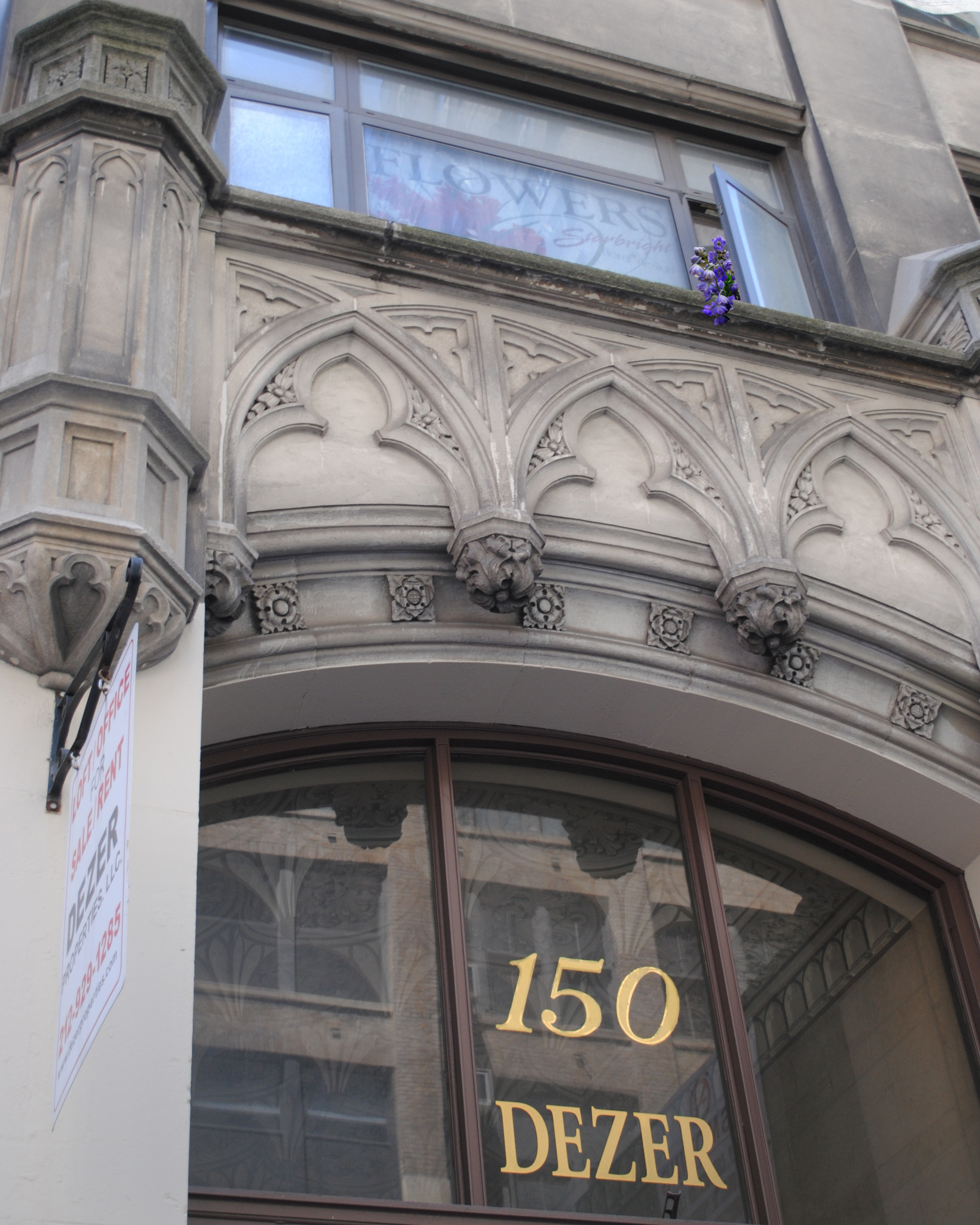
Starbright is truly lucky to call the New York City Flower District our home. With such a deep history and with a community of sellers who are passionate about high-quality flowers, it is one of the most remarkable areas of the city. We invite you to come visit and see the magic of the District for yourself!
Looking for flowers in New York City? Visit our Event Gallery for inspiration. Or see our daily selection at Starbrightnyc.com.
It’s cold, it’s dark, and a single digit number glows back on the alarm as ear-piercing beeps cut the silence.
A full ten percent of the population actually enjoy this experience. For the other 90 percent, a mandatory 7:00am alarm is less than desirable.
Society, work, or familial pressures keep us bouncing – very few people have the luxury of subscribing to their preferred sleeping patterns. In fact, instead of maintaining a natural sleep schedule, many people stay awake later and wake up earlier than their body would like.
What do we get for pulling extra hours? In a study of young employees, lower amounts of sleep caused an increase in tension, nervousness, and irritability. These symptoms were especially present in the morning hours and tended to naturally wear off as the day progressed.
“The morning blahs, it turns out, is a real phenomenon, with positive moods — happiness, friendliness, and warmth for example — manifesting much later in the day,” says lead researcher Nancy Etcoff, Ph.D. Doctor Etcoff is referring to her research that confirms
“flowers might be the perfect pick-me-up for millions of Americans who do not consider themselves “morning people.”
-Nancy Etcoff, PH.D.
The study, done at Harvard University and Massachusetts General Hospital studied the effects of flowers on the emotions of participants. These participants noted that they generally felt least positive in the morning but reported being happier and more energetic after looking at flowers first thing in the morning.
Doctor Etcoff continues “By starting the day in a more positive mood, you are likely to transfer those happier feelings to others — it’s called a mood contagion.” We’re thinking of it as an emotional domino effect and it’s wild – check out more info on the Wikipedia page. http://en.wikipedia.org/wiki/Emotional_contagion
The best part? Flowers don’t discriminate – the positive effects work for women, men, and even children and adolescents.

Try a posy of something sweet and aromatic. Lilies, lilacs, stock, sweet peas, and freesia are examples of scented flowers to look for.
Whether in a home or an office, families and friends tend to come together in kitchen spaces – try something bigger and brighter for this room. We also love simple and colorful. A bundle of tulips maybe?
Something elegant, contained, and unlikely to spill might be best. Check out these callas as an option or these orchids.
When you’ve got a bit more space, a flowering orchid plant will help keep you company. While white orchids are always elegant, this purple Phaleonopsis orchid is a great way to include Pantone’s 2014 Color of the Year – Radiant Orchid in your space.
With Starbright’s subscription service, you can have seasonal flowers in your home or office fresh weekly. Give us a call to find out more.
Looking for flowers in New York City? Visit our Event Gallery for inspiration. Or see our daily selection at Starbrightnyc.com.
 Blooming Thoughts