By Starbright Floral Design – The Official Florist of the City that Never Sleeps
Author: Starbright Floral Design of NYC
We are a team of dedicated professionals all entering as one. Starbright Floral Design is the company we are all a part of. The Official Florist sometimes is a designer, or a flower buyer, a partner, the marketing department or sometimes the guy who delivered your flowers! We invite you to visit our website and stay in touch... www.starbrightnyc.com.
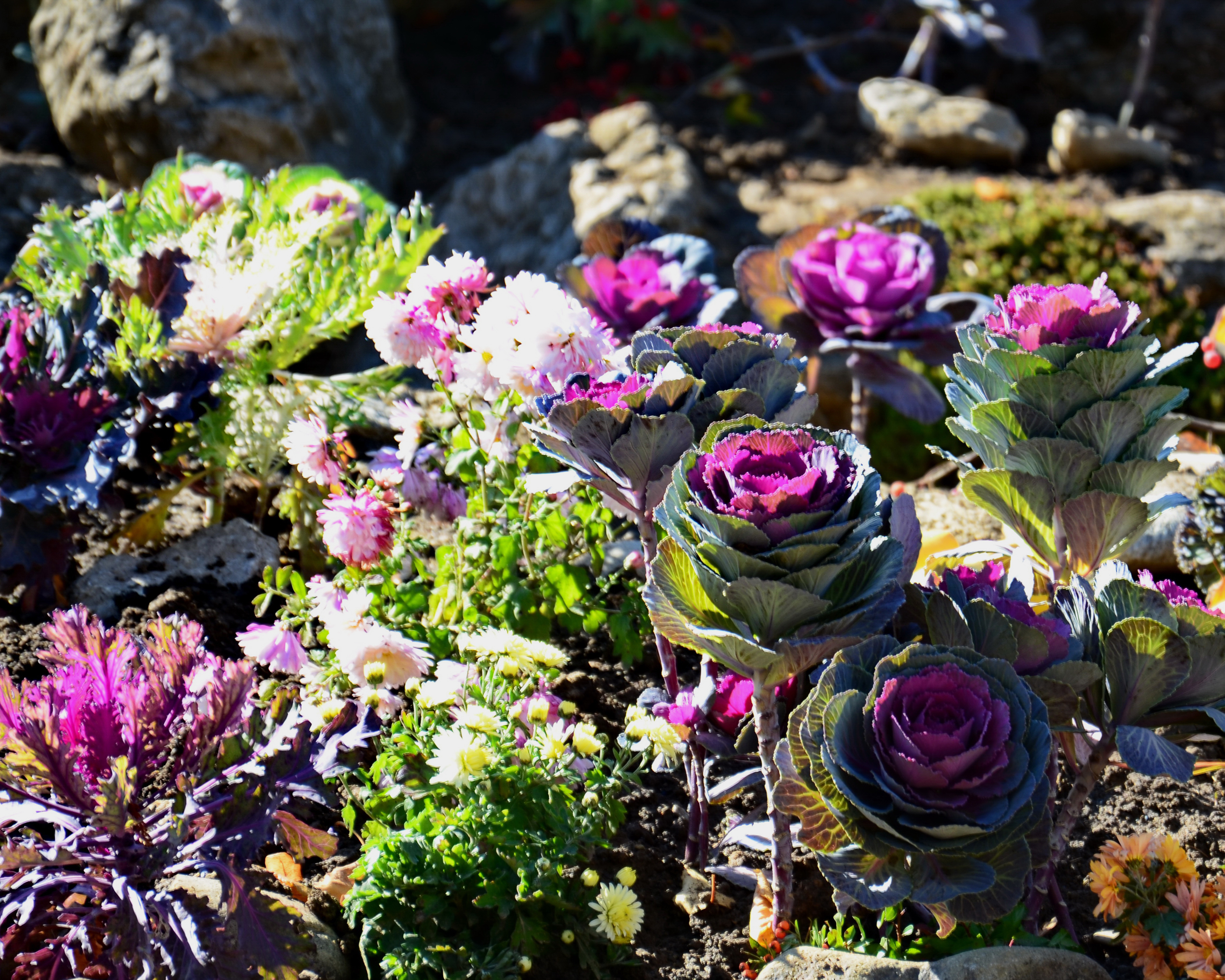
Cabbage, and yes, we’re talking about the vegetable here, is a great addition for an autumn arrangement. No, but seriously, despite their less than exotic origins, Cabbages have layers of leaves that overlap in a spiral pattern from the center of its head. The leaves can be either smooth or ruffled, open and large or tightly furled and resembling a rose. The alternating leaves can be lobed or wavy and even highly vained. There are varieties that feature a waxy coating on the leaves. And all of those great attributes come in a variety of colors. From the clean and classic white and green cabbage to the fancy purples and reds there’s a cabbage for all occasions. And while the cabbage plant grows really sweet, little yellow flowers, we don’t bother with them in arrangements. The big, bold, and hyper textural cabbage heads are far more our style.
Flower History/
Native to Britain and continental Europe, today’s cabbage were developed as a crop way back in before 1000 BC. As a food staple, cabbage made its way around the classical world and was greeted with either great devotion or great antipathy. Great people including Cato the Elder and Diogenes considered cabbage superior to all other vegetables. In Europe, cabbage found great popularity during the High Middle Ages, when other crops were in short supply. From Europe the crop spread to Mesopotamia to Egypt as a winter crop and from there it followed the trade routes and continued to spread. There isn’t a lot of evidence that the colorful crop was used in a decorative manner, but here at Starbright, we can imagine that the purples and greens that last well after most flowers drop, have always been a sight for tired eyes. It isn’t a surprise that at some point, someone started cutting the smaller heads for filling vases.
Inside Info /
Babe Ruth used to place a cabbage leaf under his hat before each game.
The world’s largest cabbage was grown in 1865 in Durham, England by William Collingwood – it weighed in at a whooping 123 pounds!
At one time, Russian princes paid tribute not only with racing horses and jewels, but also with potted cabbage plants.
Over at Starbright Floral Design, we get to work with lots of colors everyday and all of us have our favorites. But why are they our favorites and what does that say? Up this week :
Red
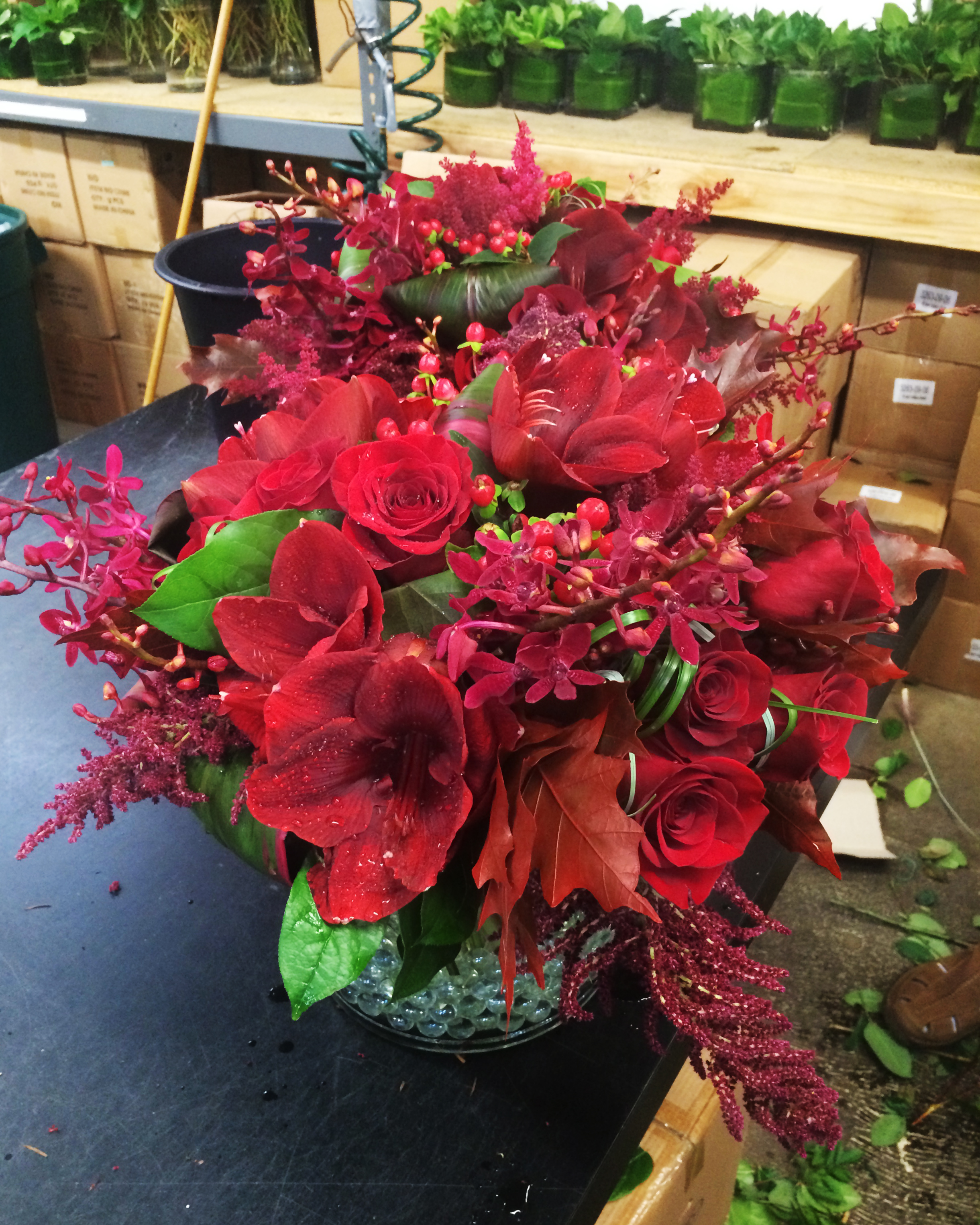
Roses, amaryllis, orchids, hypericomb berries and autumn leaves
Did you know that red is the most common color used on national flags? Or that red is generally considered to be a good luck color in Asia? Or that red is the traditional color for 40th anniversaries?
What makes red so special?
Red is the color of extremes. It is a warm color with a lot of energy. It is the second most visible color to the eye, though about 8% of the male population cannot see it. Many people think of red as the color of action. To the ancient Greeks, red was the color of super-human heroism. And while we’re certainly not going to knock that association, it’s also worth mentioning the color’s current day connection – romance.
For Someone Special
Roses are red
“As it happens, red is an exquisite ambassador for love, and in more ways than people may realize. Not only is red the color of the blood that flushes the face and swells the pelvis and that one swears one would spill to save the beloved’s prized hide. It is also a fine metaphoric mate for the complexity and contrariness of love. In red we see shades of life, death, fury, shame, courage, anguish, pride and the occasional overuse of exfoliants designed to combat signs of aging. Red is bright and bold and has a big lipsticked mouth, through which it happily speaks out of all sides at once. Yoo-hoo! yodels red, come close, have a look. Stop right there, red amends, one false move and you’re dead.”
Decorating a home means balancing style and utility, favorite colors and what’s available, space and lack of space. Red is one of the top two most popular colors, but many people stay far away from it when picking their color schemes. Contrary to popular belief, red is a great color to bring into your space. Whether your looking to add feelings of warmth and comfort or richness and luxury, red is a favorite of feng shui experts and interior designers alike. Known for increasing appetites, red details are especially great for the kitchen and dinning areas as well as the bedroom. But be careful to use reds in moderation – too much red can be over stimulating and cause restlessness.
For Body, Mind, and Soul
Inspire Me
Dealing with life can require an extra kick sometimes. If you’re not a big coffee drinker, consider adding a bit of red to the area. Physically, red can cause a bump to your blood pressure, speed up your heart rate, and motivate you to action. Red flowers can also increase the sensitivity of your senses and lend feelings of boldness, courage and action.
If red is your favorite color, you might be a strong person who craves independence. And if you have a particular aversion to the color red, it could mean you tend to be impulsive and could use some calming influences. Mixing reds with teals, blues, and greens (as in the arrangement above from StarbrightNYC) can balance strong red shades enough for even the strongest red-dissenter.
Looking for flowers in New York City? Visit our Event Gallery for inspiration. Or see our daily selection at Starbrightnyc.com.
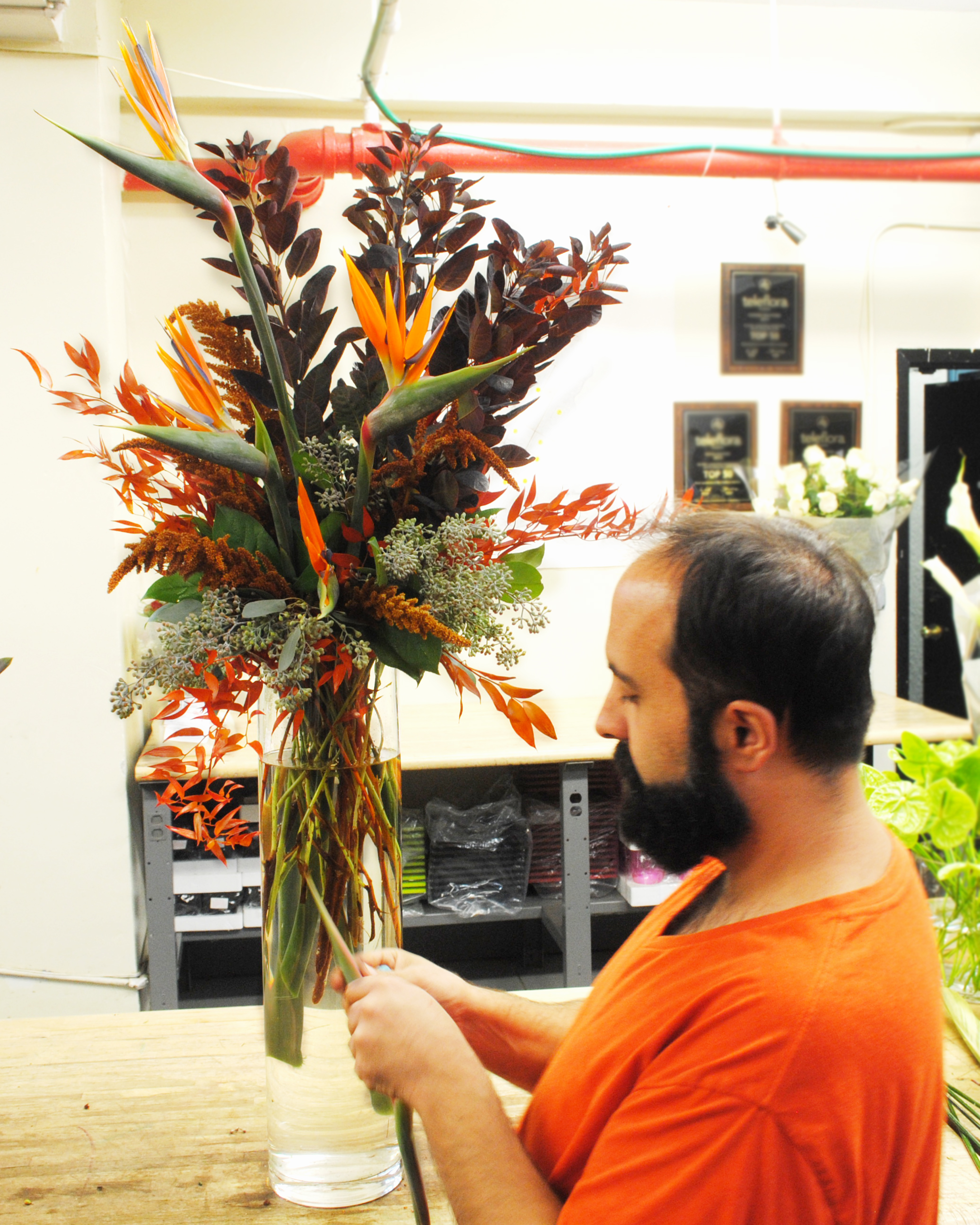
Tom puts together an arrangement using fall foliage and birds of paradise
We’re just about through the second week of fall. The kids are well-and-truly back to school, Jewish High Holy Days are pretty much wrapped up for the year, and we can see the winter holiday season at the end of the tunnel. Before we get there, though, it’s time for football games, seasonal beers with “harvest” in their name, and changing leaves. We’ll leave you to find your games, and we’re not going to tell you what beer to drink (we’ll leave the know-it-all vibe to Brooklyn) – instead, we’re getting together a list of places you can go check out some great fall foliage without leaving New York City limits. Next week we’ll be running a list of places you and the fam can go Wild Out on some nature.
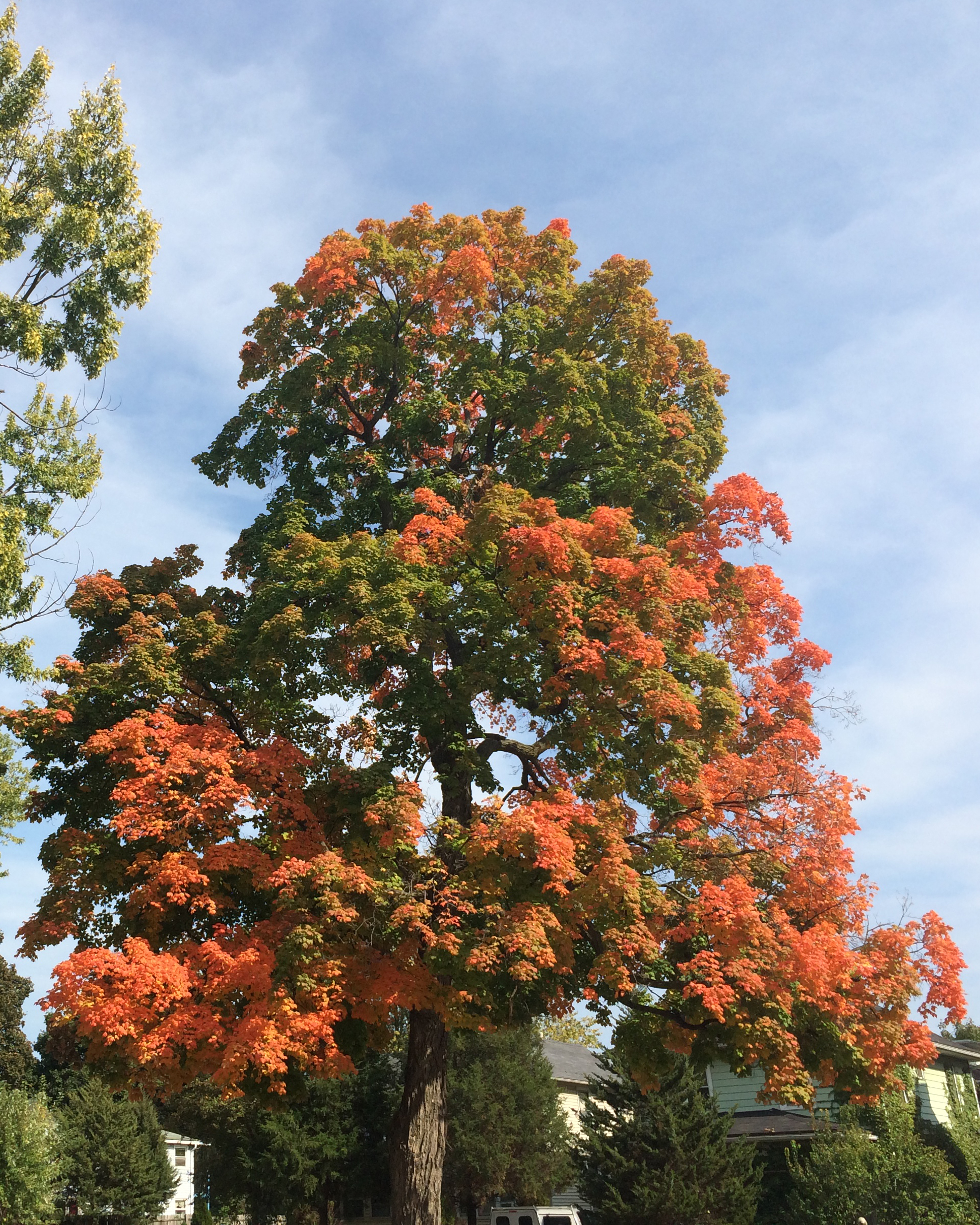
Behold, an NYC oak gets gussied-up for fall
Before we get there, though, let’s look into why all these trees change color in the first place. Think back to highschool life science classes – you learned about how plants maintain homeostasis (the correct balance of chemicals, temperature, and moisture for sustaining life) by converting energy from sunlight into the ability to process nutrients. The sunlight gets converted by a cellular organism (the “cells that make up a cell,” as it were) called chlorophyll, which resembles a little green pill floating around in the cells that make up leaves. It’s important to remember that leaves, like most living things, are translucent. When the light of the sun shines through a leaf, it has to pass through so much chlorophyll that it makes the leaf look green along the way. In reality, though, that leaf has a color, and it’s probably not green – by the time autumn rolls around, all of the chlorophyll has decayed and is no longer it’s bright emerald green. Now, when the sunlight shines through the leaf, we get to see the plant’s original color. In general, most of the colors are warm – lots of golds, reds, maroons, oranges and browns. As the season wears on, these pigments will start to decay as well – that’s why we see the tones on the trees get more and more “earthy” as we get closer to winter.
Next Tuesday we’ll be running a list of great spots to check out, and later this fall we’ll be sharing some of our shop’s favorite harvest recipes! #allaboutfall
Looking for flowers in New York City? Visit our Event Gallery for inspiration. Or see our daily selection at Starbrightnyc.com.
Gentiana is a genus of flowering plants with about 400 species! That’s a large species group! These blooms are most notable for the trumpet like shape and vivid coloring. While they are often brilliant blue in coloring, they can also be white, yellow, red. The main blooming season is Spring, but these flowers can rebloom throughout late Summer.
General Notes /
Gentiana are most at home in alpine environments. These delicate flowers can be shy about blooming outside of their natural habitat. The stiff stems have oppositely arranged leaves, sometimes is a basal rosette. The flowers grow in groups, spaced along the stems. Gentiana is polymorphic and can bear blooms of multiple colors.
Flower History /
The name, Gentiana, is attributed to the Gentius, an Illyrian king who is attributed with having discovered the medicinal uses of the plant back around 500-1000AD. The plant’s medicinal uses vary from treatments for upset stomachs to easing depression – but don’t forget – the Gentiana in you floral arrangements are not for making teas, poultices, or any other edible concoction!
Insider Information /
Gentiana yields the most bitter chemical substance on Earth.
In Southeast Asia, there is a variety of gentiana that can grow up to 100 feet tall!
Looking for flowers in New York City? Visit our Event Gallery for inspiration. Or see our daily selection at Starbrightnyc.com.
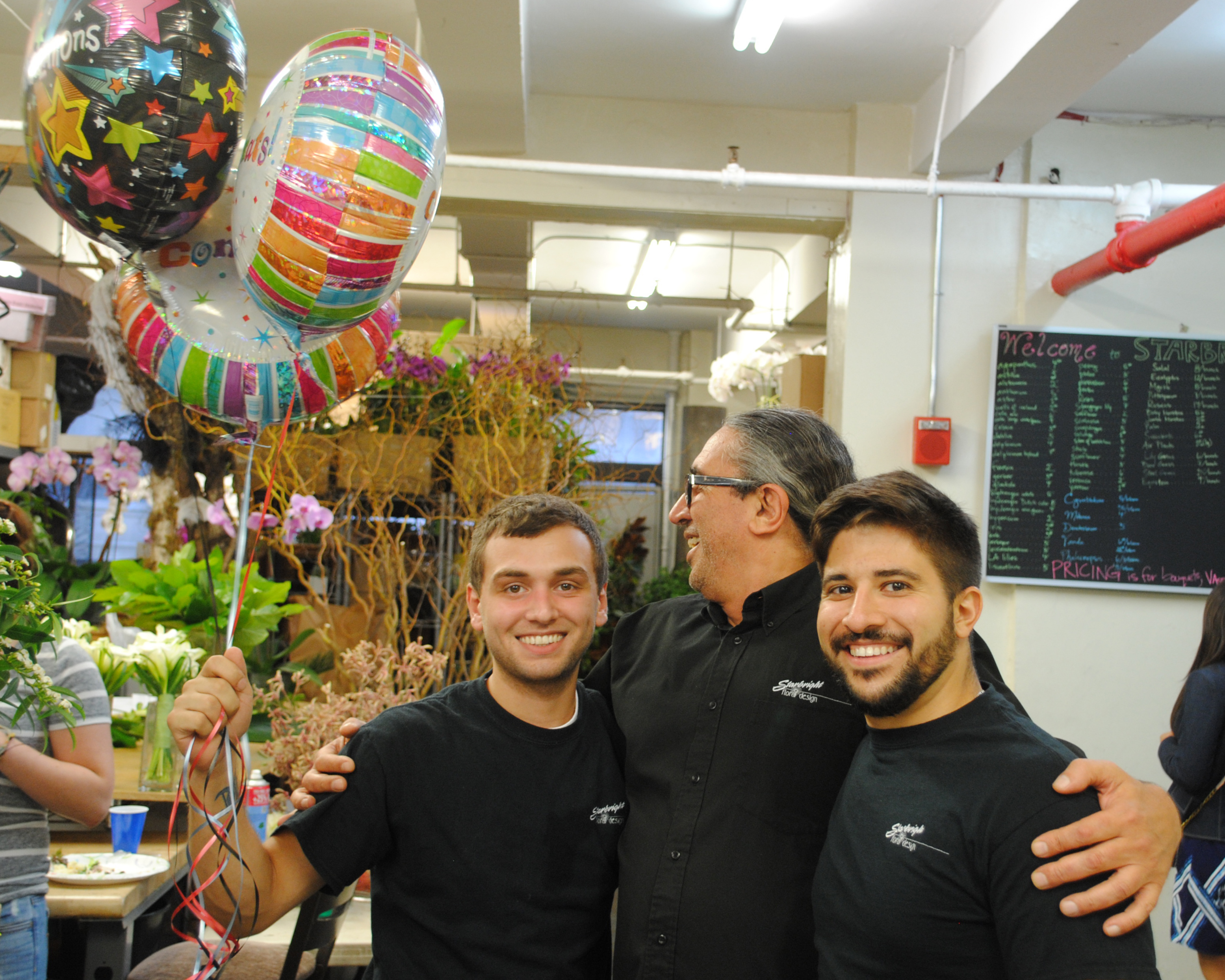
Nestled in the heart of New York’s historic flower district, Starbright Floral Design has been delivering arrangements of the highest quality for over twenty years. We celebrated our anniversary last week in the shop with lots of arrangements, delicious food from Niles NYC, and birthday cakes for the shop and for “the man that makes it happen”, Costas!
Celebrating with food and flowers at Starbright Floral Design – Thanks Niles NYC! It was delicious!Nic and Julia set out birthday cakes for the celebration!
Team Starbright blowing out the birthday candles!Faitos Family
And while the team took a break to chow down on some delicious treats and talked shop. Starbright has a unique studio layout – over 75% of the floor space in the suite is devoted to designing and producing floral arrangements. If you enter the shop and look to the left, all the way down in the back of the shop you’ll see a row of desks – this is where the office staff work, manning the phones. One of the first things you’ll notice is that there isn’t a wall or door or glass window or blind or anything between these two sides of the business. The design and shop staff and the business operations personnel share one space, and one mission – that makes it real easy to come together and let loose, like a big family.
Starbright is known for the flowers, but if you ask anyone who works here what makes the joint special they’ll tell you “it’s the people!” We’re going to break the fourth wall here – we’ve worked with a long list of multi-national businesses and local standouts. Starbright Floral Design is unique on that list because of the incredibly diverse range of experiences, backgrounds and motivations that come together to compose the team. Design isn’t just about making something look nice, or just about pleasing a client on-time and on-budget – design is what happens when someone considers their life story, and funnels those experiences into your life story. Below is a gallery of some of the faces you’ll see when you visit our 28th St location:
“Starbright is the perfect Manhattan florist because, like the city itself, its staff is made up of all kinds. Everyone here works hard, likes to laugh, and brings their own area of expertise to the table. We can learn from each other as well as challenge each other, and altogether have staff hail from all five boroughs, as well as boasting international members. There is no other florist more cosmopolitan than Starbright, and hence none better to service and represent the great city of New York!”
– Barbara
Eddie can’t help but make it beautiful
Wondering who’s been at the Starbright Floral Design table longest? Eddie has been with Starbright for well over a decade! With a quick wit and a ready laugh, Eddy brings life to arrangements through color and texture. It’s been a pretty awesome year here for Eddie – the Society of American Florists featured Starbright Floral Design and published a photo of this guy on the cover!
Ana – Queen of the roses!Byron PETAL BOMBs Ana
Ana has also been with Starbright for over a decade! And even though her favorite flower is the anthurium and tropical arrangements are her jam, Ana is also our “queen of roses”. Whether it’s one dozen or three, she knows exactly what to do with those long stems.
Happy 20 anniversary Nic and Family!
I thank God for letting me know you guys for so many years and giving me this opportunity to be part of your team – which is like a family. After many years in the flower business, I am still learning new things day after day. From the bottom of my heart, I wish Starbright many more years to continue growing. Long live Starbright.
With love” –
Ana
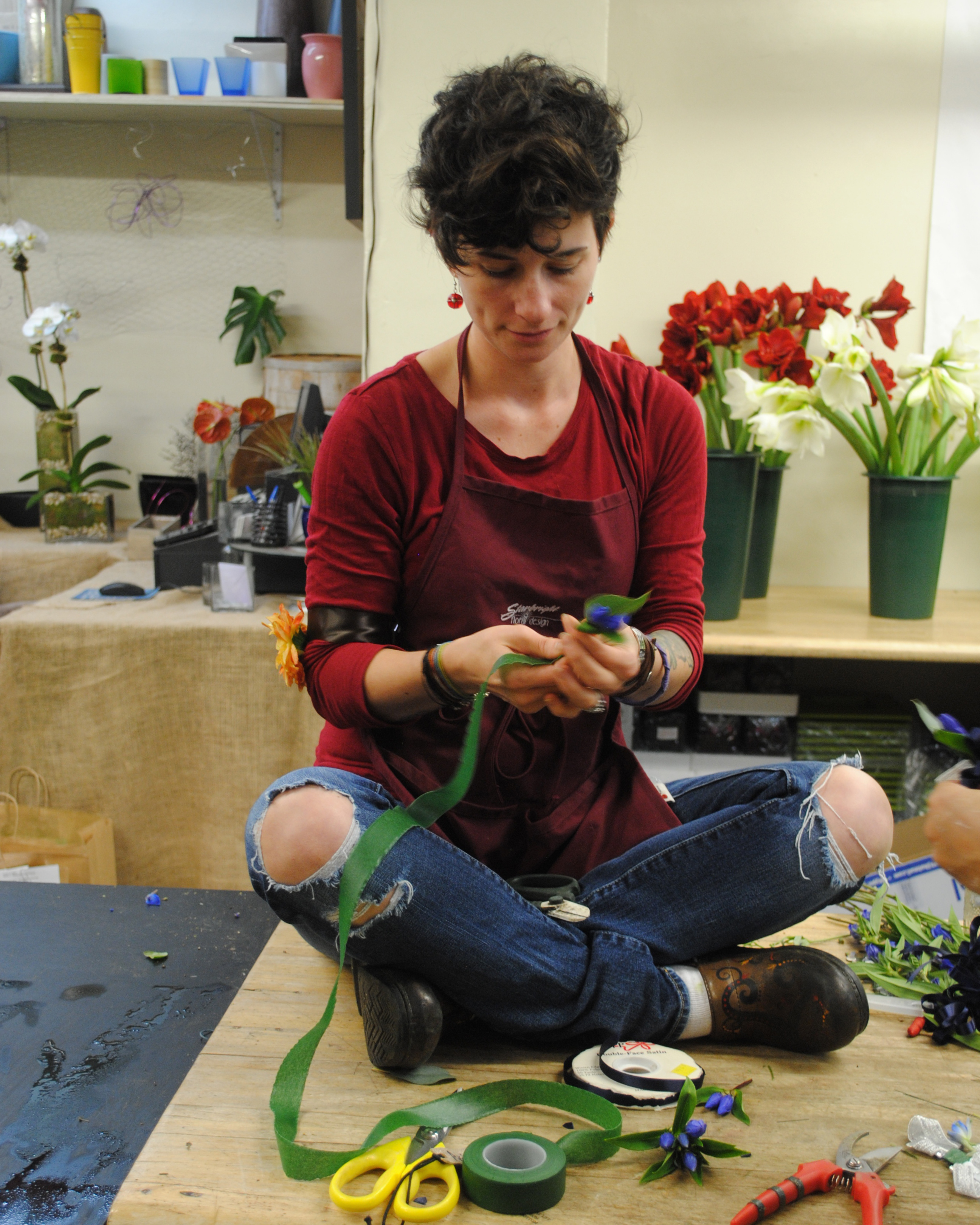
Barbara whipping up some boutonniere
And this is Barbara! With over a decade of floral design experience and about six years in this shop, Barbara is another Starbright veteran and a huge part of the team.
Have you attended a party with Starbright flowers recently? Or a wedding? If you have, there’s a big chance Barbara is responsible for the pieces. Barbara’s style can be described as lush – whether it’s modern or traditional, somehow Barbara’s pieces seem richer than the budget would lead you to expect.
But don’t be fooled. This girl’s got edge – check out her great tattoo – but also a huge heart. As a mother of three, Barbara is an expert listener. I don’t know how she does it, but somehow, Barbara always knows just what people are hoping for.
Sokratis recently joined us from Greece, where he and his wife both worked as floral designers. Creating natural looking forms from flowers – Sokratis brings a technique and style all his own. He is known around the shop for his daring composition, utilizing flora in atypical fashions to achieve top flight results.
Viktor? Where’d you go?
Viktor? Where’d you go? Just kidding. Viktor is a little camera shy himself, but that’s not at all the case for the arrangements that he makes! I snapped a shot of the design table where the elusive Viktor can sometimes be seen. Stop in the shop someday and wave to the left-most design table. Hi, Viktor!
Take Me To The River
Byron is one of the most recent designers on the table. His pieces tend to have a touch of modernity, simplicity and elegance
“Working for a flower company like Starbright is amazing. It has been a great opportunity to grow as a floral designer and to learn from the best coworkers ever. Working as team, we’re making the Star brighter than ever!
I design floral arrangements with a passion for our client’s satisfaction. It is a pleasure to know that my work might cheer up a person’s day or bring a smile to their face. I am very grateful to have such an opportunity. Today I would like to congratulate the man who came up with the idea to start this company, twenty year ago a Star came over New York City to make it Bright.
After allthese years Starbright is still shining, thanks to the man, friend, coworker and owner who never sleeps Nic Faitos.
God Bless this company because we are Starbright Floral Design. Cheers!!!!”
-Byron
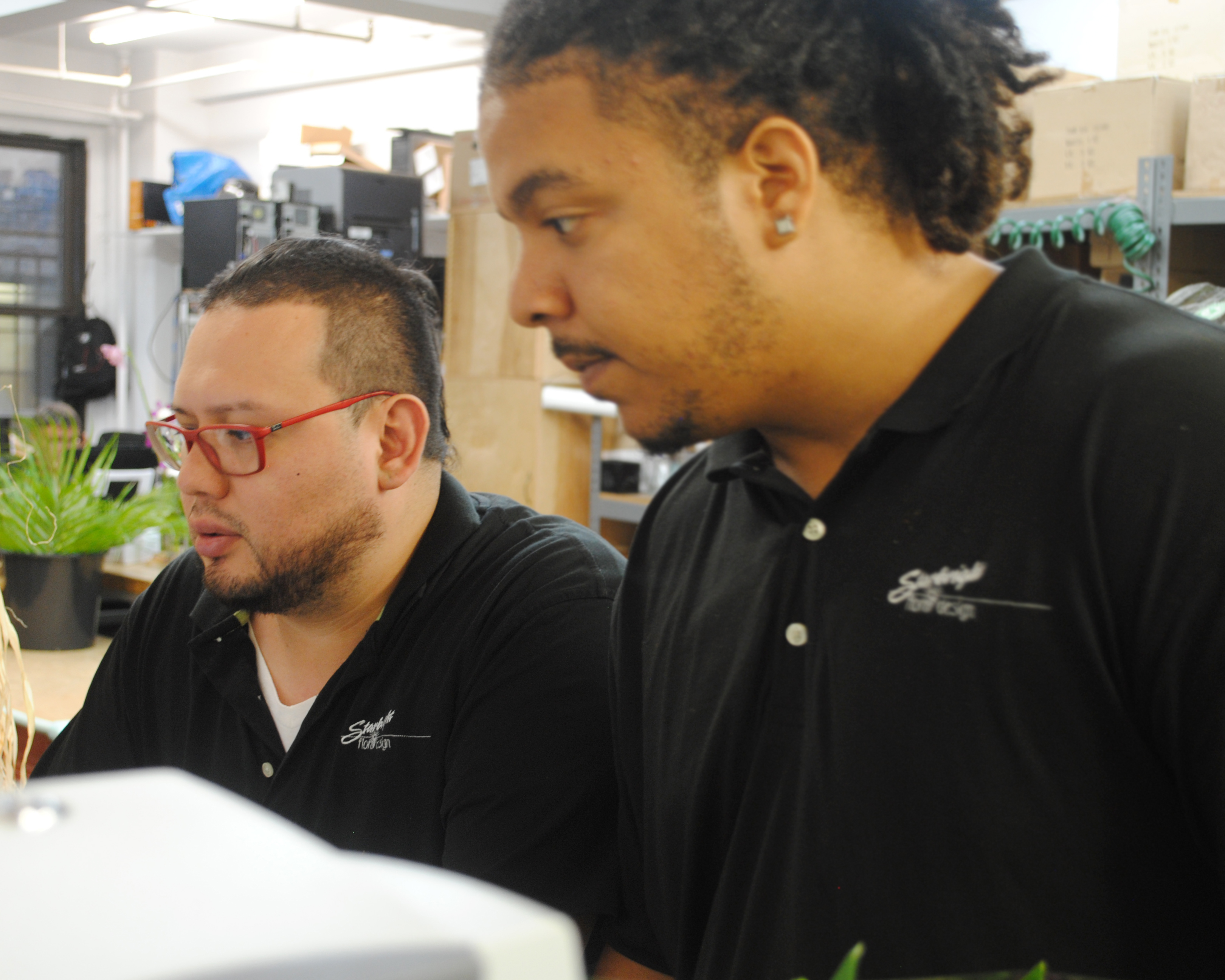
So designers design the arrangements and build them out, and office personnel handle orders and paperwork. Doing everything else – literally – falls on the broad shoulders of the Starbright Shop Team. These cats are among the most level-headed in the office – they have to be, since they’re the glue that binds the place!
Happy delivery!Jesus and Anson at the delivery stationCarlos on flower prepJoe, on the left, hangs out with Nic and StephenTony grabbing a snackPrepping flowers at the tablAntonio on the orchid table.Stephen and Spiros in the office
And from the office! These ladies and gentlemen are on the phones 12 hours a day, 7 days a week. One Account Manager told me that the Starbright “management shows a strong dedication to a friendly, pleasant environment with an almost family interaction with the staff. When you have a smile on your face and happy to be at work, customer service is simple.”
Starbright Office
Still with us? Great! Way down here, tucked away at the bottom of the blog post, we’ve put a special gift for our supporters – Nic got together with our camera team last week to talk to us about where Starbright came from, and how it got to where it is today.
Looking for flowers in New York City? Visit our Event Gallery for inspiration. Or see our daily selection at Starbrightnyc.com.
Looking for a new floral friend? It might be time to reconsider an orchid. Trust us – they’re lower maintenance than you might have heard. Beginning table top gardeners should consider beginning with a Phalaenopsis Orchid – pronounced fayl-eh-NOP-sis. Phals are among the easiest to care for and will reward your attentions with several months of blooms.
6 Things to Know About Caring for Your Phalaenopsis Orchid
Where to place it…
Phalaenopsis Orchids originated in the jungles of South, Southeast, and East Asia. They naturally thrive in hot climates, but under a canopy of leafy shade.
1. Phals need light, but don’t like direct sunlight.
In order to keep your Phal comfy, keep it out of direct sunlight, but near a bright window. Why? Direct sunlight is like the kiss-of-death for these delicate jungle plants. When exposed to high levels of light, the succulent like leaves can burn, or even scorch. Damage to the leaves will inhibit healthy growth by messing with how the plant takes in it’s nutrients.
2. Phals like to stay warm.
Phals can live in temperatures from roughly 59-86 degrees Fahrenheit. The plant generally puts out a new bloom spike in autumn and flowers through winter. If the temperature is irregular and fluctuates often (drafty windows, maybe) the plant may suffer bud drop – new blooms that fall off before opening.
What to give it…
3. Phals need water…sometimes
Phals are not very thirsty and enjoy humidity more than lots of water. A good rule of thumb is to only water your orchid when it’s potting mixture feels almost dry. Be very careful to avoid overwatering your plants as this can cause the roots to rot. The frequency of your Phal’s water needs will depend on the planting medium, the amount of light it gets and the temperature it is in. A couple things that will help you determine this :
– A bark potting material retains less water than a moss mixture.
– Heat will dry out your Phal faster than cooler temperatures.
– The more light your Phal gets, the more quickly it will dry out.
It is also good to remember :
– Hold the fancy waters – Phals want to drink tepid tap water.
– Water your orchids in the morning.
– Remove any excess water that remains on the leaves or crown (where the leaves met the stem) gently with cotton balls or a tissue – pat them dry gently to avoid rot which could kill your Phal.
– Drainage is really important to your orchid’s health. Standing water at the base of the plant has downright dastardly effects. Starbright Floral Design does our best to help you out by incorporating a drainage layer of river rocks into the bottom of our glass planters.
It will take a minute to perfect this. In the meantime, orchids generally need to be watered about once a week in the temperate months – more if it’s hot, less if it’s cold. After a couple waterings you should have the feel of when and how much your plant needs. And the very best rule of thumb – if you aren’t sure if it’s time to water, wait a day.
4. Phals like food…sometimes
Orchids aren’t big eaters either. When selecting a fertilizer, go for a balanced orchid mix. Then, when feeding your orchid, dilute the recommended amount by half. Phals don’t want or need a full dose of the mix and excess fertilizer can build up as solid salts in the potting mix. Feeding your orchid a diluted solution once a week or every two weeks is ok year-round. But make sure to water your plant with clean tap water at least once a month to help break up any buildup that has been left behind. It is also ok to use a bloom booster in autumn to encourage flower growth.
What happens next…
5. Phals get sick too
If you begin to see streaks of white in the fleshy leaves of your Phal, that means your floral friend is stressed out – yeah, they get stressed too. These white streaks often indicate issues with watering or light. Black blisters are a little more ominous – if you see these, reduce watering to dry the plant and isolate the affected orchid to avoid spreading the pests to any other nearby orchids. Black honey mold can also build up on the leaves. This mold is dull, black and mossy. It can be wiped off with water and a small amount of mild detergent and won’t leave lasting damage.
6. Phals need to be trimmed
After your Phalaenopsis has bloomed, if the leaves are strong and healthy – you can cut the stem above bottom two nodes. Nodes are the little brown lines on the stem below the bloom spike where the flowers are. This, coupled with cooler temperatures at night, will initiate and generally produce another bloom spike with flowers within eight to twelve weeks. If the leaves are not healthy, the stem down to the level of the leaves and the plant will bloom with larger flowers and a strong stem within a year.
And that’s it! That’s all you need to maintain a healthy orchid plant.
Don’t worry, if this sounds like a lot of work, Starbright Floral Design offers a special orchid service to help you have a healthy plant year-round.
Looking for flowers in New York City? Visit our Event Gallery for inspiration. Or see our daily selection at Starbrightnyc.com.
A favorite flower in August, crocosmia is a common flower in the grasslands of southern and eastern Africa. In the United Staes, these lovely blooms are often referred to as Coppertips or Falling Stars. They grow as evergreens or as deciduous perennials and come back year after year to please the senses with their trumpet-like shapes and bright colors.
Crocosmia is distinctive for its colorful inflorescence in shocking orange and reds. The stems branch out and display a number of blooms along one side of each stem near the end and nod and sway gracefully above your flower beds or your late summer arrangements. The Crocosmia leaves are long, pointy and have parallel veins along their length. They grow in clumps in bloom in a spectacular
Insider Information /
Crocosmia are great for attracting hummingbirds to your garden.
Looking for flowers in New York City? Visit our Event Gallery for inspiration. Or see our daily selection at Starbrightnyc.com.
Starbright Floral Design is excited to share a post from our friends over at Project by Project.
16th Annual Tasting Benefit presented by Project by Project
Plate by Plate 2014
The ultimate foodie event of the month is here!
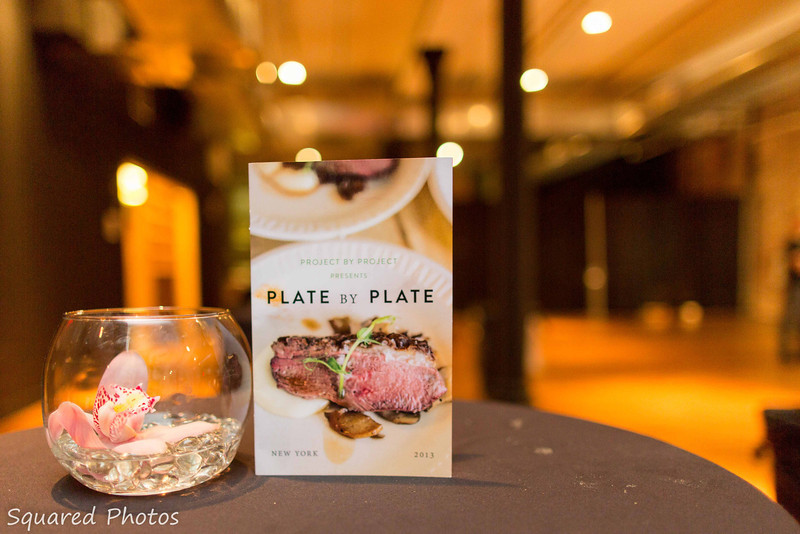
On the evening of Friday, September 26th, not-for-profit organization Project by Project will be hosting it’s 16th annual tasting benefit – Plate by Plate – at the Metropolitan Pavilion! With the generosity of Starbright Floral Design, a returning donor and supporter, the South Pavilion will be decorated with amazing florals to set the mood for this decadent tasting event. Plate by Plate showcases the city’s premiere restaurants in which you’d be getting the chance to mingle with top chefs while tasting some of their finest dishes. Participating restaurants at Plate by Plate includes Thalassa Restaurant, The Sea Grill, Fung Tu, and Yerba Buena Perry–just to name a few. What’s more, aside from satisfying your watering taste buds, net ticket proceeds will be going to one of our nation’s most historical landmarks – Henry Street Settlement.
Founded in 1893 by Progressive reformer and nurse Lillian Wald, the Henry Street Settlement has been a focal point of continuing social services and health care services provided to New Yorkers of all ages. More recently, the Henry Street Settlement has been supporting mental health needs of those facing mental illness, related stigmata, and those that are too culturally and linguistically challenged to address those needs on their own in our diverse community.
So come one, come all and sample some fine cuisine while benefiting such a worthwhile cause that hits the heart of home. Click here for your tickets!:http://platebyplateny2014.eventbrite.com/
Special Discount Code for you: starbright2014
A bonus – guests can take home a wonderful Starbright Floral Design piece after the event!
Over at Starbright Floral Design, we get to work with lots of colors everyday and all of us have our favorites. But why are they our favorites and what does that say? Up this week :
Purple
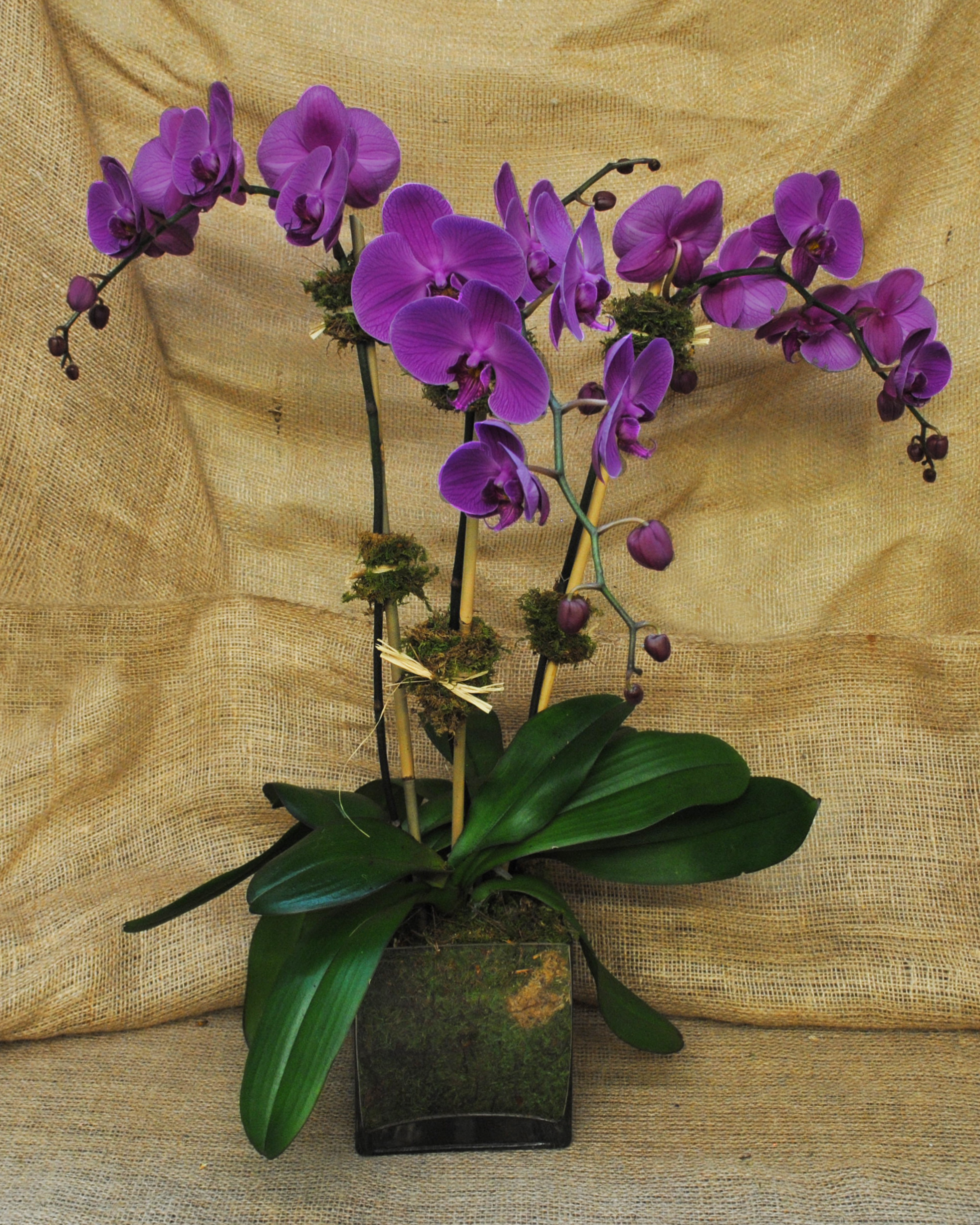
Triple Orchid Delight
What makes purple so special?
Purple is the color of harmony. It combines the spiritual aspect of blue with the powerful energy of red. This union of introspection and action makes purple flowers unique. They expand your imagination while simultaneously grounding you in reality. Purple flowers will connect you to your deepest thoughts, while quelling any anxiety that may arise alongside them.
For the Studio
Hydrangea and Orchids
Purple flowers are perfect for artists because they stimulate the imagination. Musicians, painters, designers, and all other creative types have a lot to gain from keeping a vase of purple flowers in their studios. Purple is the color of creativity. It encourages free and independent thought, thinking outside the box, and going against the grain. Purple flowers will bring a sense of the magical and mysterious into your studio. If you’re suffering from writer’s block, stop by and pick up a bouquet of purple flowers, and watch your imagination bloom.
For the Nursery
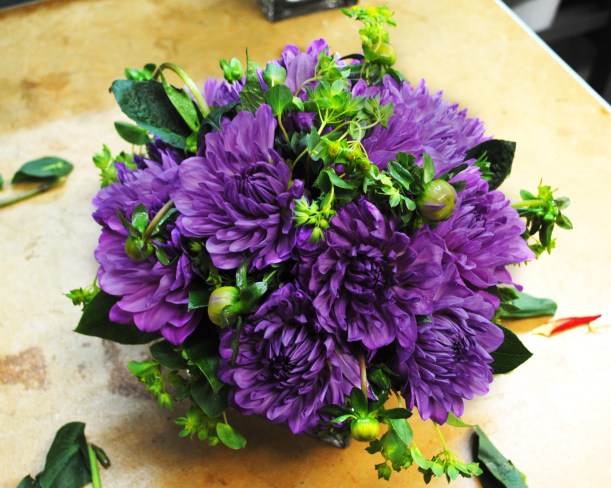
Purple Dahliahhh!
Purple flowers are a great choice for decorating a baby’s room. The color purple evokes unconditional love and selflessness. It also encourages sensitivity. Purple flowers in a nursery will help cultivate compassion in your relationships with others, especially your children, or other people who depend on you. Do you find it difficult to be giving in stressful situations? Keeping purple flowers nearby will enhance your sensitivity to the needs and emotions of the people around you. At the same time, purple is the color of power. Purple flowers in your child’s room will give you the wisdom you need to maintain help the elusive balance between flexibility and control.
For Body, Mind, and Soul
Purple Rain
Life is a constant struggle between highs and lows, the good and the bad, sickness and health, ups and downs. Purple flowers can help you find the middle road. They harmonize the body, mind, and soul. Purple flowers in your home or at work will help you feel grounded even in the craziest situations. They make the perfect centerpiece for your yoga studio or meditation space. Purple evokes the future while also grounding us in the present moment. Purple flowers will encourage you to chase your dreams instead of worrying about what could go wrong.
Looking for flowers in New York City? Visit our Event Gallery for inspiration. Or see our daily selection at Starbrightnyc.com.
















 Blooming Thoughts